

Here is a moment almost every expert gets completely wrong.
You finally win the client. The proposal comes back as a yes. The payment lands. You lean back, relieved, and think: done. They’re happy. They’re in.
They’re not.
The quiet panic right after “yes”
Right then, at the peak of what should be their excitement, most clients feel a small, sharp stab of doubt. Did I just make a mistake? Was that too much money? What if this doesn’t work?
We have a name for it: buyer’s remorse. And the bigger the purchase, the louder it gets. Most experts never even notice it, because they’ve already moved on. The sale felt like the finish line, so they relaxed, went silent, and turned to the next thing, at the exact moment their new client most needed to hear from them.
It isn’t doubt about you. It’s chemistry.
Here is the part that changes how you see the whole thing. That dip isn’t really about you, or your price, or your work. It’s how the brain is built.
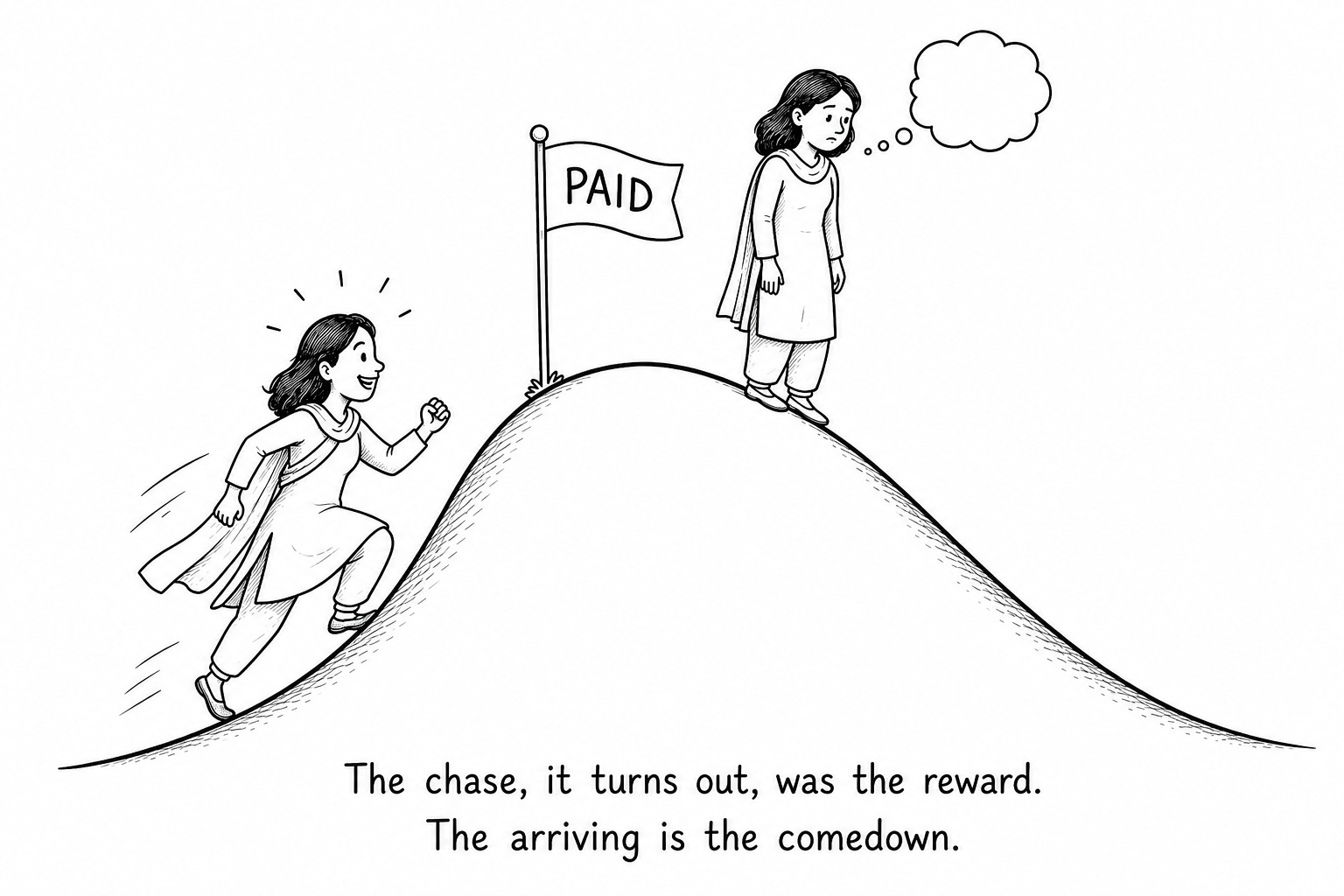
The brain’s feel-good chemical, dopamine, runs hottest while you want something, not when you finally get it. It builds through the wanting, the saving, the deciding, and it peaks the instant you commit and pay. Then the wanting is answered, the chemistry that carried you there drains away, and a flatness moves in to take its place.
Psychologists even have a name for that flatness. They call it the arrival fallacy: the strange letdown that follows a hard-won goal. You chase something for years, certain that reaching it will feel wonderful. Then you reach it, and a small voice asks, is that all? An athlete trains a decade for one medal, wins it, and within days feels oddly empty. The chase, it turns out, was the reward. The arriving is the comedown.
I learned this on a motorcycle
I didn’t get this from a textbook. I got it in my own driveway.
For years I dreamed of a particular motorcycle. I saved for it. I talked my family round to a purchase that size. And in the last week before I took delivery, I could barely think about anything else. Then I rode it home, parked it, stood back to look at it, and felt the floor drop away.
Is that it? Was that what all the wanting was for?
Nothing was wrong with the bike. Everything was wrong with what I’d expected arriving to feel like. The wanting had been the whole show, and now the wanting was gone.
Your client feels exactly this the moment after they pay you.
Why this should worry you
This one hour is where businesses bleed.
It’s the moment clients ask for refunds. The moment they go cold, stop replying, and talk themselves out of the very thing they just bought. Not because your work is bad. Because the excitement that carried them to “yes” has drained away, and doubt has rushed in to fill the space.
Sit with how unfair that is. You can do everything right to win a client. You can be the best choice they could possibly have made. And you can still lose them in the first hour, to nothing but brain chemistry, if you aren’t there to catch them.
Most businesses have no idea this is even happening. They treat the sale as the end. They celebrate, exhale, and disappear, right when their client is deciding whether they were a fool.
The fix costs you minutes
Here is the good news. Once you can see the fragile moment, it’s almost embarrassingly easy to handle.
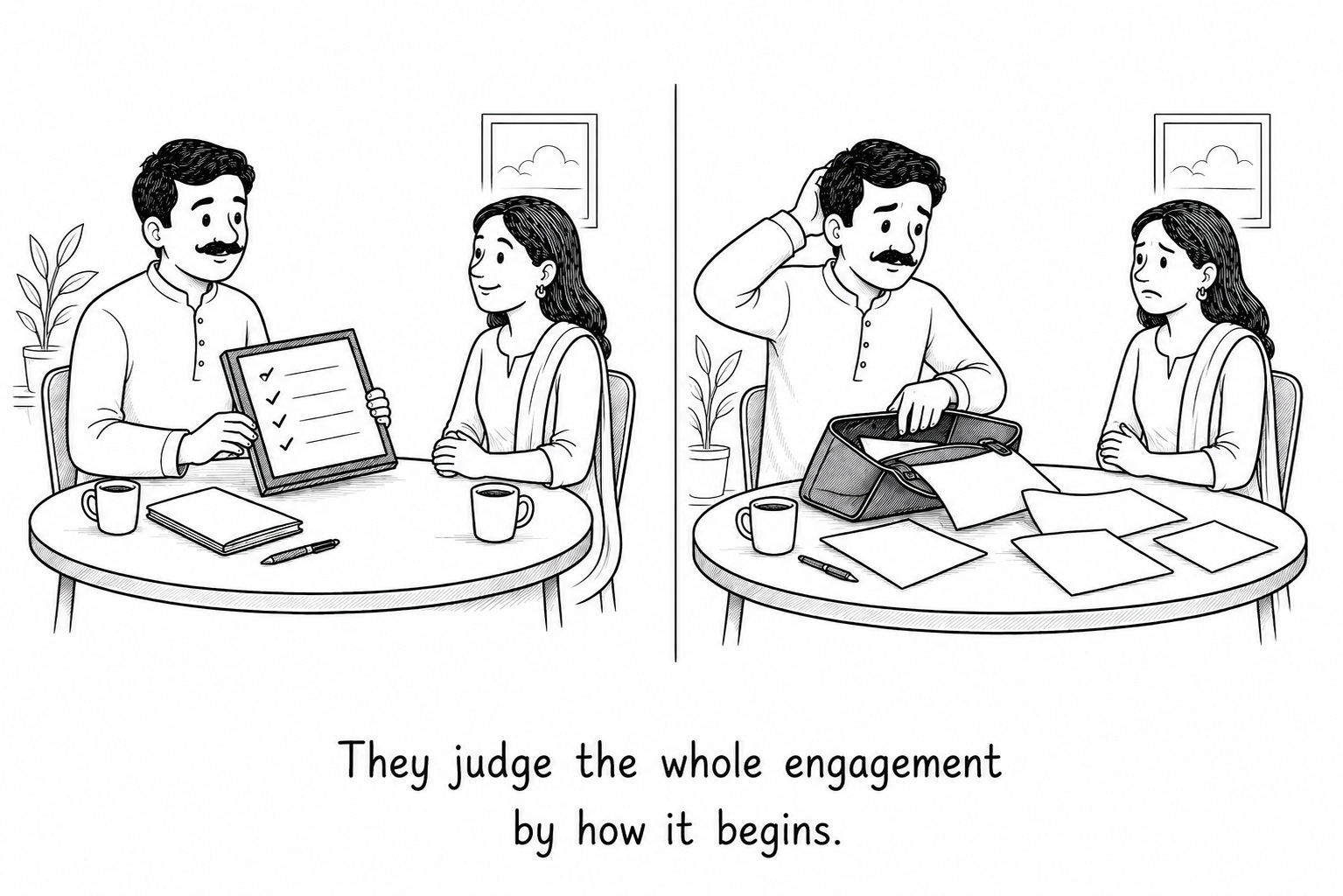
You meet it with warmth, fast. A real, human welcome that lands within the hour. Not a robotic “your order is confirmed,” but a note that says, in plain words: you’ve made a great decision, and you’re in good hands now. Here’s what happens next.
That’s it. Do it, and the doubt turns into relief, and the relief turns into excitement. The client who was panicking is now proud of what they did. Miss it, and you spend the next month fighting a refund you caused yourself, with silence.
There’s a deeper twist here too, one I’ll only hint at. That flash of “was this too much?” is often a sign you priced it right. A purchase big enough to make a serious person think twice is a purchase big enough to make them show up and do the work. The discomfort you’re rushing to soothe is part of what makes your service succeed. But that’s a whole other chapter.
The sale was never the finish line
That single moment has a name. It’s called onboarding, and it’s the first thing that should happen after the sale, not the silence most people offer instead.
And it’s one small piece of a much bigger idea.
Because the fragile moment reveals something most marketing refuses to admit: winning the client was never really the goal. Keeping them, serving them, and truly transforming them, that is where the real business lives. That is where the money is, and the referrals, and the reputation. And it’s the exact stretch where almost everyone stops paying attention.
That whole arc, from turning a stranger into a client, to turning that client into someone who sends you ten more, is what my book is about. It’s called Deep Marketing. The fragile hour is one page of it.
If a single overlooked hour can cost you a client you already won, it’s worth asking what the parts you’ve never thought about are costing you.

Start with the next client you close. Watch the first hour after they say yes. You may never see the sale as the finish line again.
Deepak
If this made you think of your own clients, forward it to someone who needs it. And if you’re new here, subscribe, this is where I write about building a business on trust instead of noise.