

UPDATE: Siddharth heard about this piece and sent me a long voice note in reply. He corrected several things, and on the biggest one he is right and I was wrong. I have left the original article exactly as published and added his corrections in place, marked like this one. There is a full section near the end where I go through what I got wrong and why. A friend who answers a public critique with his actual numbers deserves to have those numbers printed.
Every few weeks somebody in the coaching business asks me the same question, usually in a slightly lowered voice, as if it were indelicate.
How does Siddharth actually do it?
They have seen the numbers on his stage. They have watched a tarot coach say she did a crore and a half in a single session. They have seen the reviews pile up faster than most businesses collect customers. And they cannot work out whether they are looking at a machine, a movement, or a very good magic trick.
So I went and looked properly. I sat through forty seven of his customer talks, end to end. I read the reviews. I mapped the ladder.
Siddharth is a friend, and I am not writing this to take him apart. I am writing it because he has built one of the most complete pieces of business machinery in this country, most people cannot see it, and the parts you cannot see are the ones that will hurt you if you copy the wrong ones.
Everything below in quotes comes from his own customers, on his own stage. I have not softened any of it.
The ladder, from the outside
Start with what a stranger sees.
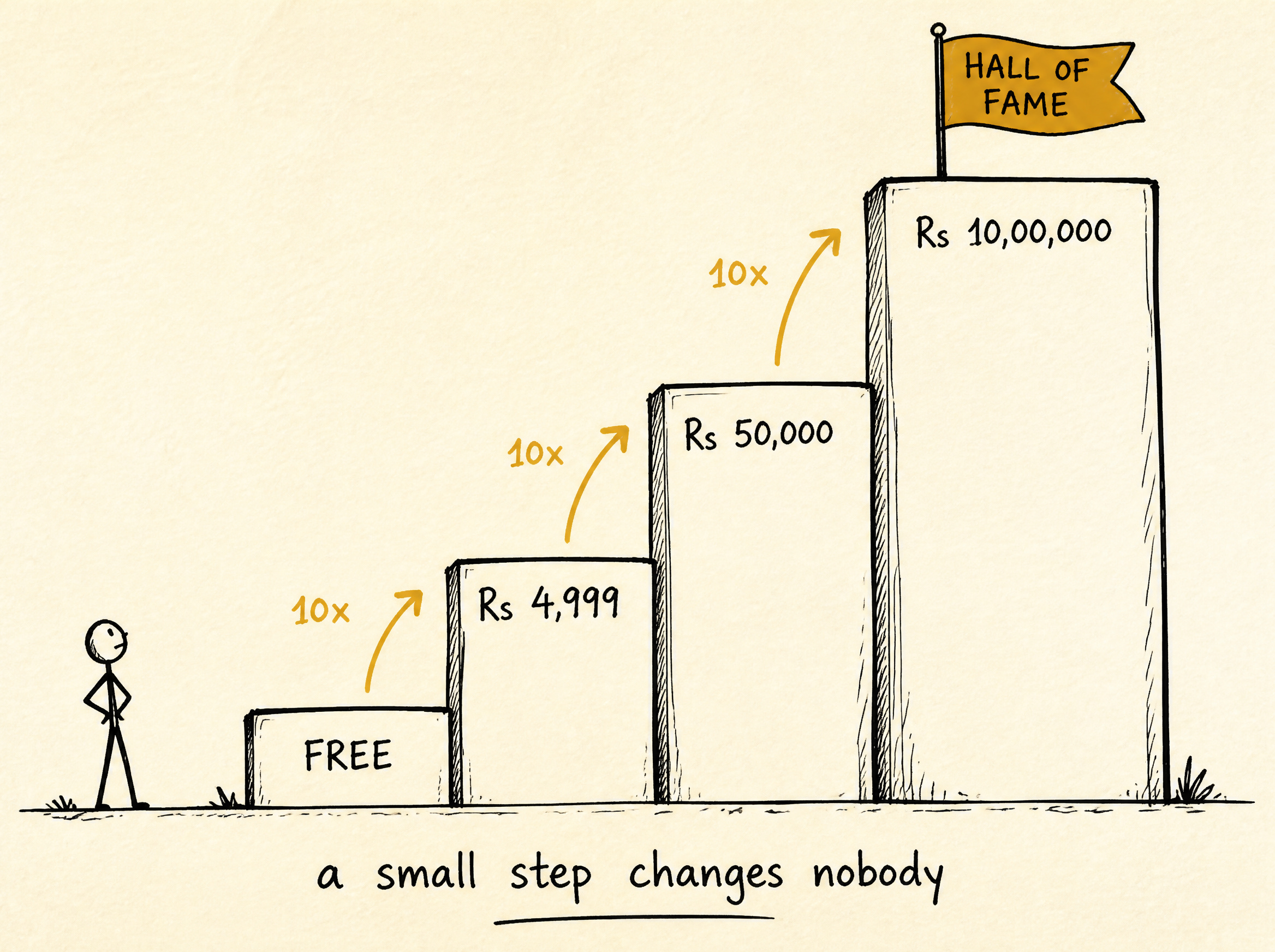
A free webinar. Then silver at 4,999 rupees with a bundle of courses inside it. Then gold. Then a diamond membership, which starts near three lakhs and climbs. Then quantum, which is ten lakh rupees a year.
And then something that is not a product at all. Hall of Fame. The Crore Club. A front row seat at the annual event, and a spot on the stage.
Look at that ladder again. Free, five thousand, fifty thousand, ten lakh. Each step is roughly ten times the last one. That is not greed, it is arithmetic. Every step has to be big enough that the person taking it has genuinely changed their mind about themselves, because a small step changes nobody.
Most Indian coaches build two rungs and then wonder why nobody climbs.
The ladder, from the inside
Here is the part almost nobody notices, and it is the whole business.
Once you are in, he does not teach you tarot. He does not teach you baking. He teaches you to build the exact ladder he built.
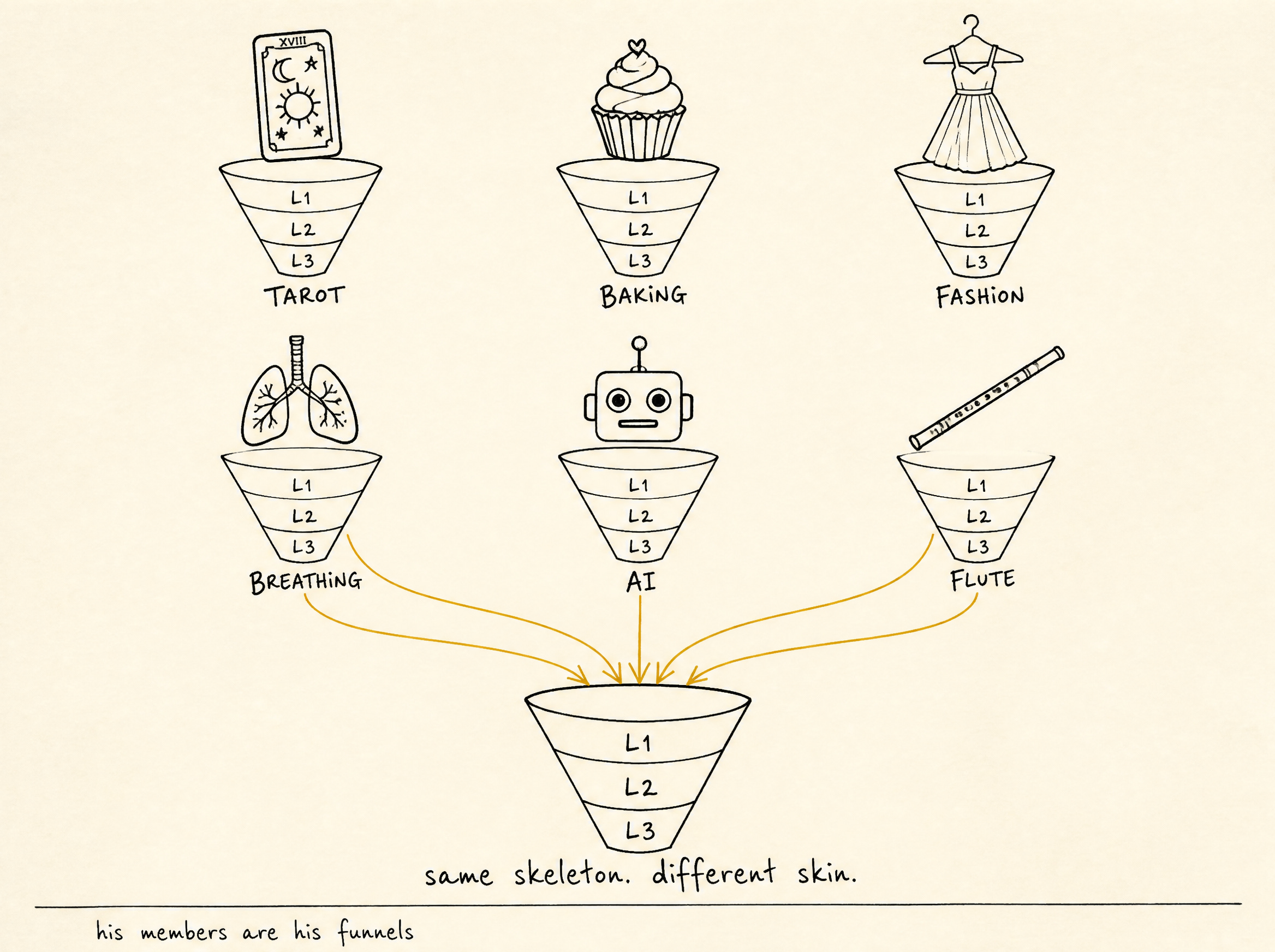
Every member runs the same three step structure. A free level one webinar. A level two low ticket offer. A level three high ticket diamond. Then they go and sell it in their own subject.
Listen to how internalised the language is. A breathing fitness coach describing her own turning point says her problem was “no focus on L3 sales.” Then she instructs the room, “focus on L3, never lose your focus from L3.” A former Tata finance director, now a business coach, says of her early days that she “didn’t have an L1 L2 product just 6-8 months back.”
These are not customers describing a course. These are franchisees describing an operating manual.
A woman teaching breathing runs it. A mother and son teaching tarot run it. A fashion coach runs it. A European baking chef runs it. An AI coach runs it. A flute teacher runs it. A handwriting analyst runs it.
Same skeleton. Different skin. Forty seven times over on one stage.
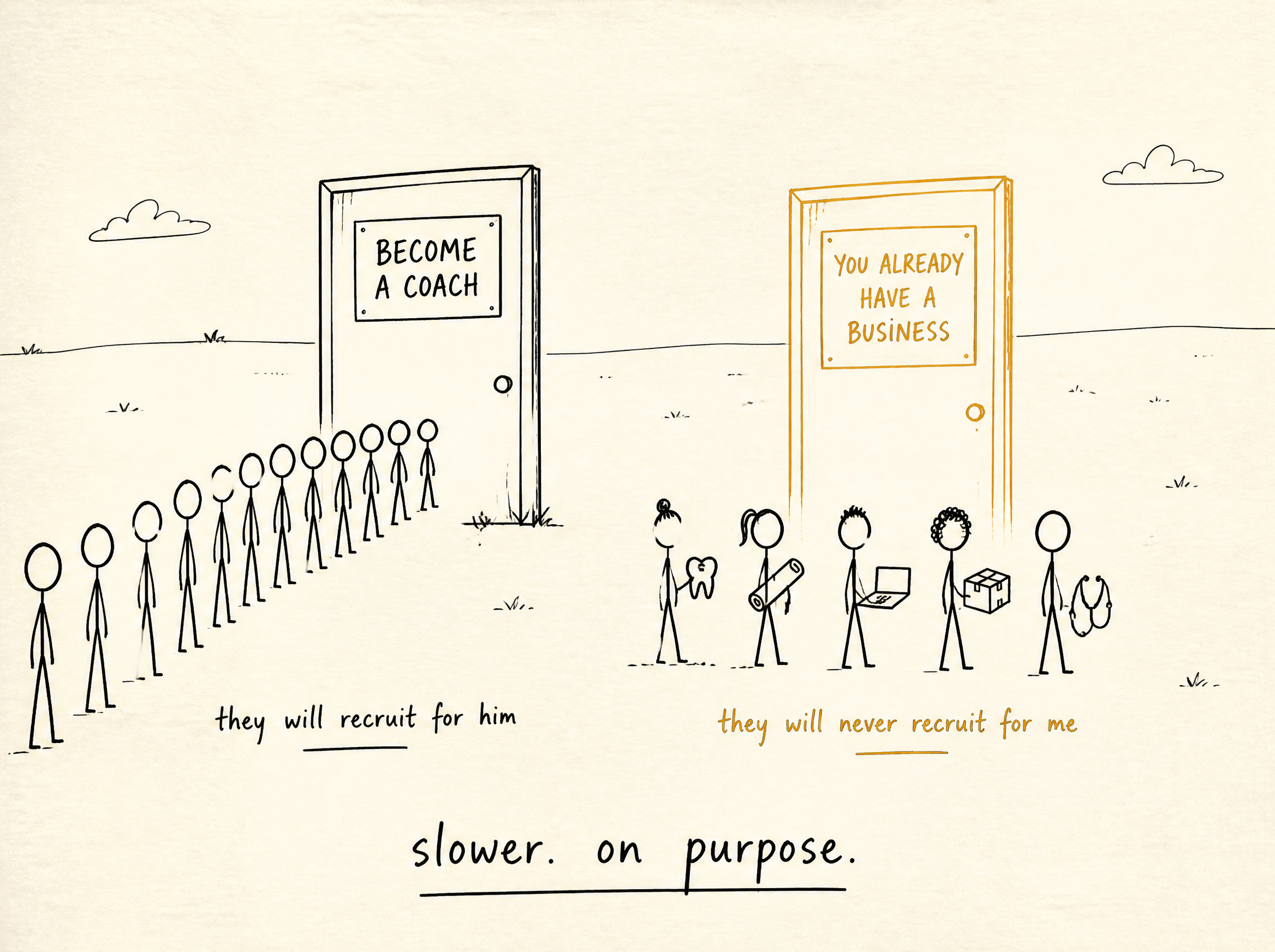
So when people say Siddharth has a wide funnel with many entry points, they have it backwards. He has one door. Become a coach. What looks like variety is not his product line at all.
His members are his funnels.
He did not build sixty businesses. He built one architecture, licensed it to thousands of people, and takes ten lakh a year from the ones who make it work. Their tarot business is also his case study. Their baking academy is also his advertisement.
Nobody in Indian coaching has built anything as leveraged as this. I want to say that plainly before I say anything else.
The webinar is the entire machine
Underneath the ladder there is one engine, and it runs on live webinars.
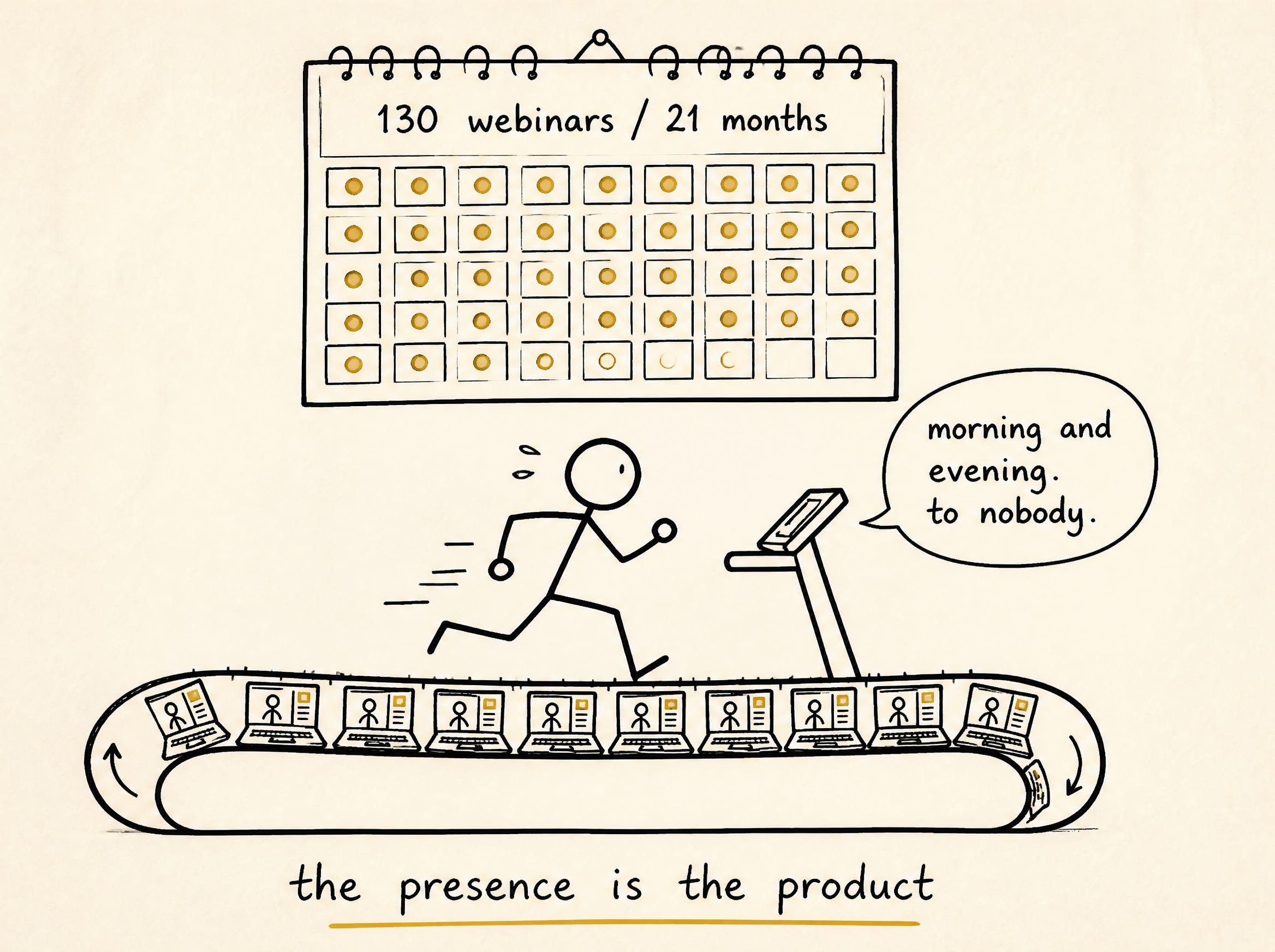
A fashion coach, three years in, describes her volume like this. “130 live webinars” in twenty one months. Work that out. More than six a month, sustained for nearly two years, while raising a child and running two other businesses.
She is also the only speaker in forty seven talks who gives you both sides of the equation. Her line is “3.8 crores by just spending 77 lakhs.” That is a real five times return, stated with the cost included, and I have enormous respect for anybody who says the second number out loud on a stage.
Another member, before he had any audience at all, ran two webinars a day into an empty Zoom room. Morning and evening. To nobody. He says it took twenty of them before he could hold a smile all the way through. During that same stretch he says he “cut off the evening tea just to save 10 rupees every single day.”
That is the real curriculum. Not the funnel diagram. The willingness to talk to nobody until somebody shows up.
And here the model starts to show its shape. The webinar cannot be delegated. It cannot really be recorded, because the conversion comes from the person being there, warm and live and slightly nervous. The presence is the product.
Hold that thought. We are coming back to it.
CORRECTION Read that section again and you will notice something I did not flag clearly enough. Every webinar number in it belongs to a member, not to Siddharth. He tells me he has not run a single live webinar since 2024. His runs on automation, daily, to two or three hundred attendees, adding twenty to forty people to the community every day without him being present. So the treadmill is real. He is just not the one on it. That turns out to be a far more interesting fact than the one I wrote, and I come back to it at the end.
What the machine actually fixes
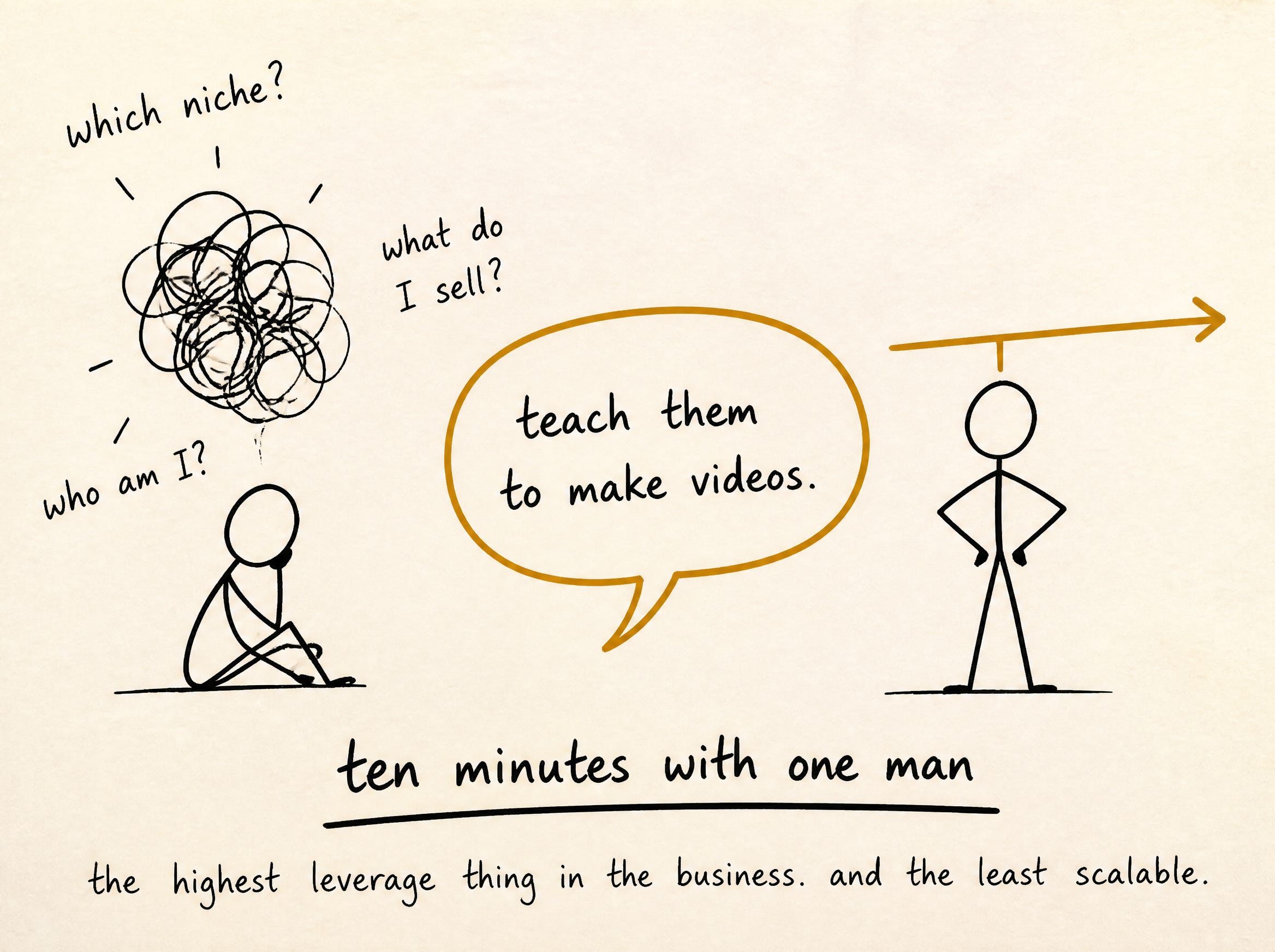
Read enough of these talks and a pattern appears. The intervention that people credit is almost never a tactic. It is a sentence.
The fashion coach spent six months stuck on her niche, drowning in the question she puts as “who will come and listen to me.” Then, she says, “everything made sense in just 10 minutes talking to this master.”
The business coach was burning eighty thousand rupees a month across ads and agencies and still could not get eight people into her level one. Her words for that period are that she was “literally drowning in panic.”
What changed was one question from Siddharth about the single thing she could teach entrepreneurs. She answered that she makes videos. He told her to teach that. She says the headline he wrote for her has not changed since 2023.
The breathing coach was running five sessions a week for her diamond members and wanted to add more. Siddharth told her she would “burn out” and made her restructure instead of expand.
The agency owner who had never sold anything above five thousand asked how he could possibly bring in a fifty thousand rupee customer. The answer he got was “shoot first aim later.” He launched a diamond membership and admits, on stage, “even I don’t know what I’m teaching in the diamond membership.”
Notice what all four have in common. The product was not the fix. The positioning was the fix, and it arrived in one conversation with one man.
That is the highest leverage thing in the entire business. It is also the least scalable.
Why the meta niche eats the specific niche
Here is the part most coaches get wrong and Siddharth gets very right.
He is not in the coaching business. He is in the business of selling the coaching business. In India, that difference is worth a hundred times more than it should be.
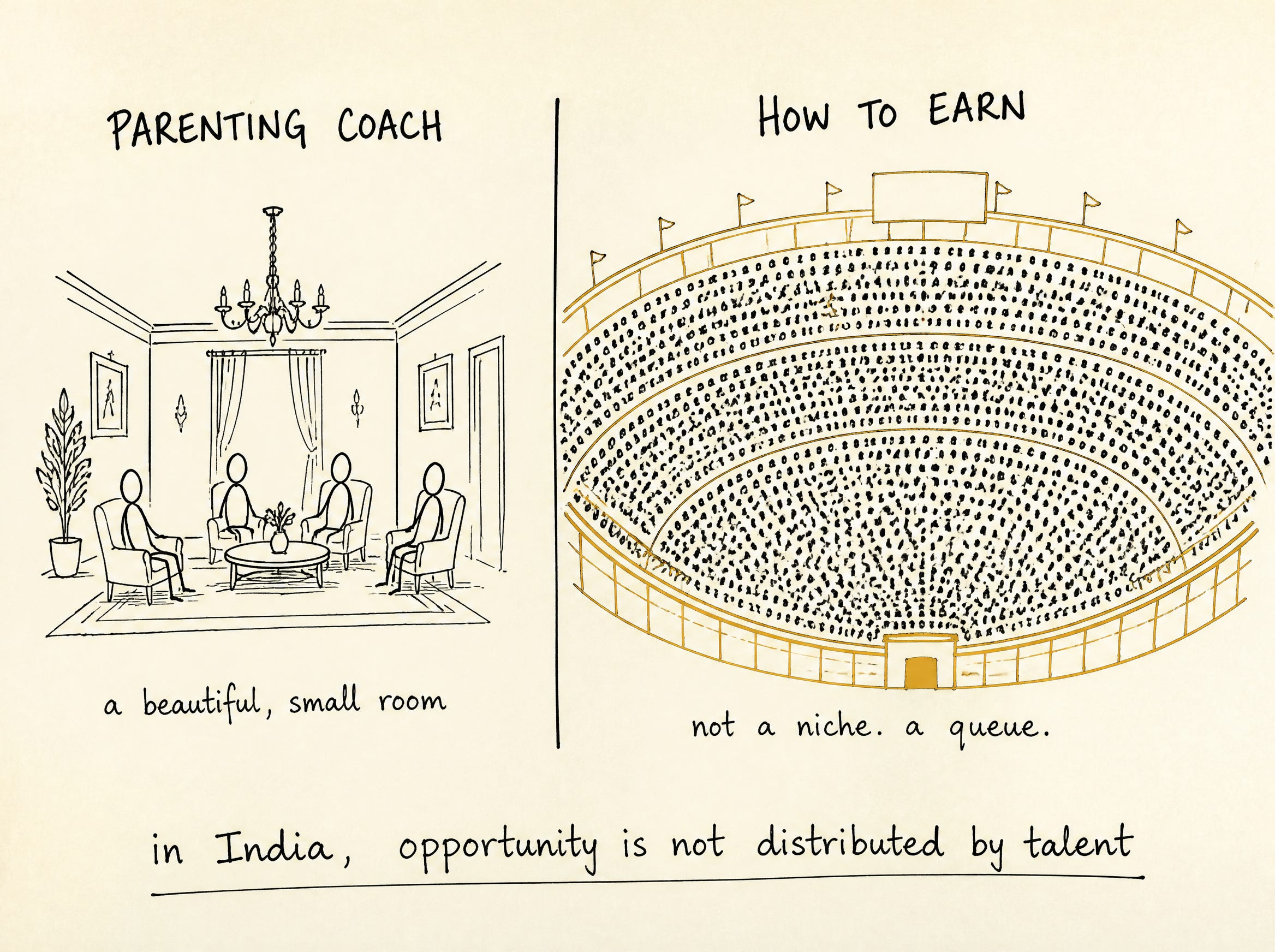
Think about who pays for a parenting coach. Someone with time, money, and a belief that parenting is a skill you can study. That is a real market. It is also a small, urban, affluent pocket.
My parents never took a course on how to raise me. Nobody in my street did. There was food on the table, a roof, and a general instruction to study. That was the parenting model, and by the standards of what my parents had available to them it worked. Most of this country still lives closer to that than to a parenting curriculum.
Now think about who pays for a way to make money.
That is not a pocket. That is the country.
India is a place where opportunity is not distributed by talent. It is distributed by the luck of your birth, your city, your surname, and whether the system happens to work on the day you need it. A capable young person can lose three years to job portals nobody reads. A shopkeeper can do everything right and lose a year to a compliance problem he did not create. The gap between what people can do and what they are permitted to do is enormous, and everybody living inside it can feel it.
You hear that gap in these talks constantly, and it is the most moving thing in the whole corpus.
One member describes two years of his childhood living in a cowshed with his parents, two brothers and a sister. When the school fees came due, his father went to a neighbour and asked to borrow against the coming harvest. Another describes a family verdict he grew up hearing, that business “hamare DNA mein nahin hai,” because everybody in the family had done service, never business.
These are not people optimising a career. These are people trying to get out.
So when someone stands up and says there is a way, and it needs no capital, no degree, no licence, and nobody’s permission, they are not selling a course. They are selling a door in a wall that most people had accepted was solid.
That market is not a niche. It is a queue.
If you have chosen a specific, elegant, affluent niche, understand that you have chosen a small room. Beautiful, maybe. Small. The meta niche, teaching people how to earn, is a stadium. Siddharth did not stumble into the stadium. He walked in on purpose.
The loop that feeds itself
Now the uncomfortable arithmetic.
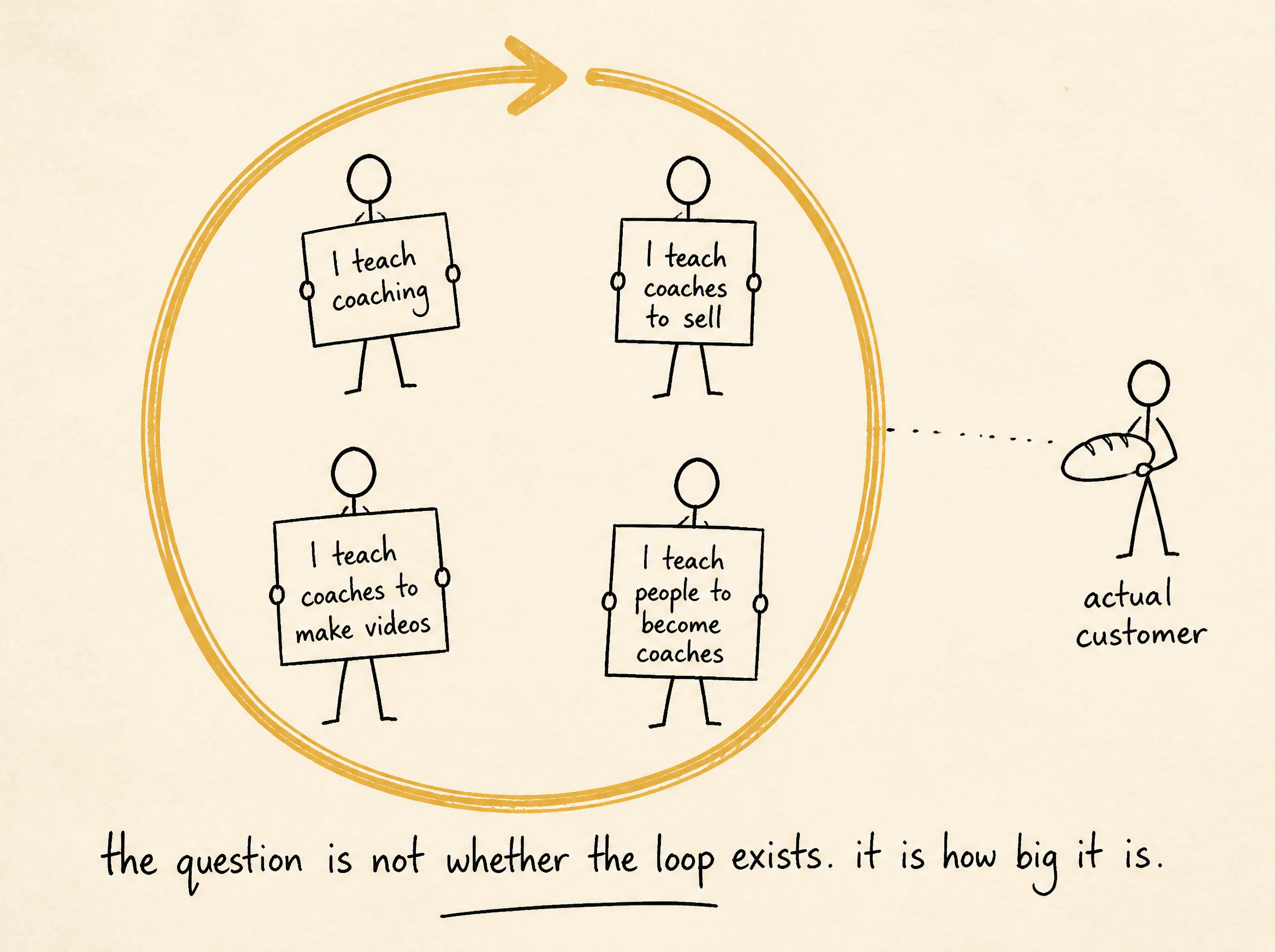
Look at what his top earners teach. A clarity coach for business owners. A business coach who teaches entrepreneurs to make videos. A man helping IT professionals become digital coaches. A woman helping women become fashion coaches.
A meaningful share of the people at the top of the pyramid teach people to do what he taught them to do. The output of the machine is more operators of the machine.
The lazy version of this criticism is unfair, so let me not make it. Every education business has recursion in it. Universities produce professors. Agencies teach agency work. If a model works, some of the people it works for will teach it.
The honest question is not whether the loop exists. It is what fraction of the whole it represents.
If nine out of ten successful members are out in the real economy teaching baking and tarot and fitness to ordinary customers, the loop is a healthy minority and the business is genuinely productive. If it is the other way round, you have built something that mostly consumes its own supply, and it holds up beautifully right until new entrants slow down.
I do not have that number. Nobody outside his company does. But it is the one number I would want if I were him, and I suspect he knows it.
Can you build freedom out of showing up?
I GOT THIS SECTION WRONG: This is the part of the article that does not survive his reply, and I want that visible at the top rather than buried at the bottom. I built this section out of things his members described, and then wrote about them as though they were his week. That was sloppy, and the conclusion I drew from it does not hold. His actual week, in his words. No live webinars since 2024. Three calls a week. Diamond members on Monday, hackathon on Tuesday, inner circle on Thursday. Quantum members once a month across two groups. Two to four hours of work on three or four days. A four day week. On top of that he has built an AI trained on seven years of his own content, which members now speak to for an average of fifteen minutes before they ever reach him. And forty five city clubs where more than a hundred and fifty meetings have run without him in the room. He also takes thirty days off every year, completely, and says the engine keeps running on recordings while he does. So the line I built this whole section on, that he sold freedom and spent his own, is not true. Please read the rest of the section knowing that.
Now the question I keep turning over, and the reason I have not copied this model.
It is called the Freedom Business Model.
And the man who built it appears to have less freedom than almost anybody in it.
Look at what the machine demands of him.
Live webinars.
Retreats.
One on one hot seats.
Audit calls.
Hall of Fame interviews.
Stage after stage.
Personal attention at a level most people would not sustain for a quarter, let alone for years.
His members describe those interventions in almost devotional terms. Ten minutes that fixed a niche. One question that rewrote a headline. One instruction that stopped a burnout. A fashion coach recalls sending him a message when she hit her first crore, and getting back a target of three crore by October. Her reaction, in her own words, is that “he has more belief in us than we have in ourselves.”
Those are wonderful stories. They are also a job description.
Because none of it can be replaced. Not by a course, not by a team, not by a document. The reason those ten minutes worked is that it was him in the room. The whole machine runs on his presence, his judgement, his energy, and his face on the ad.
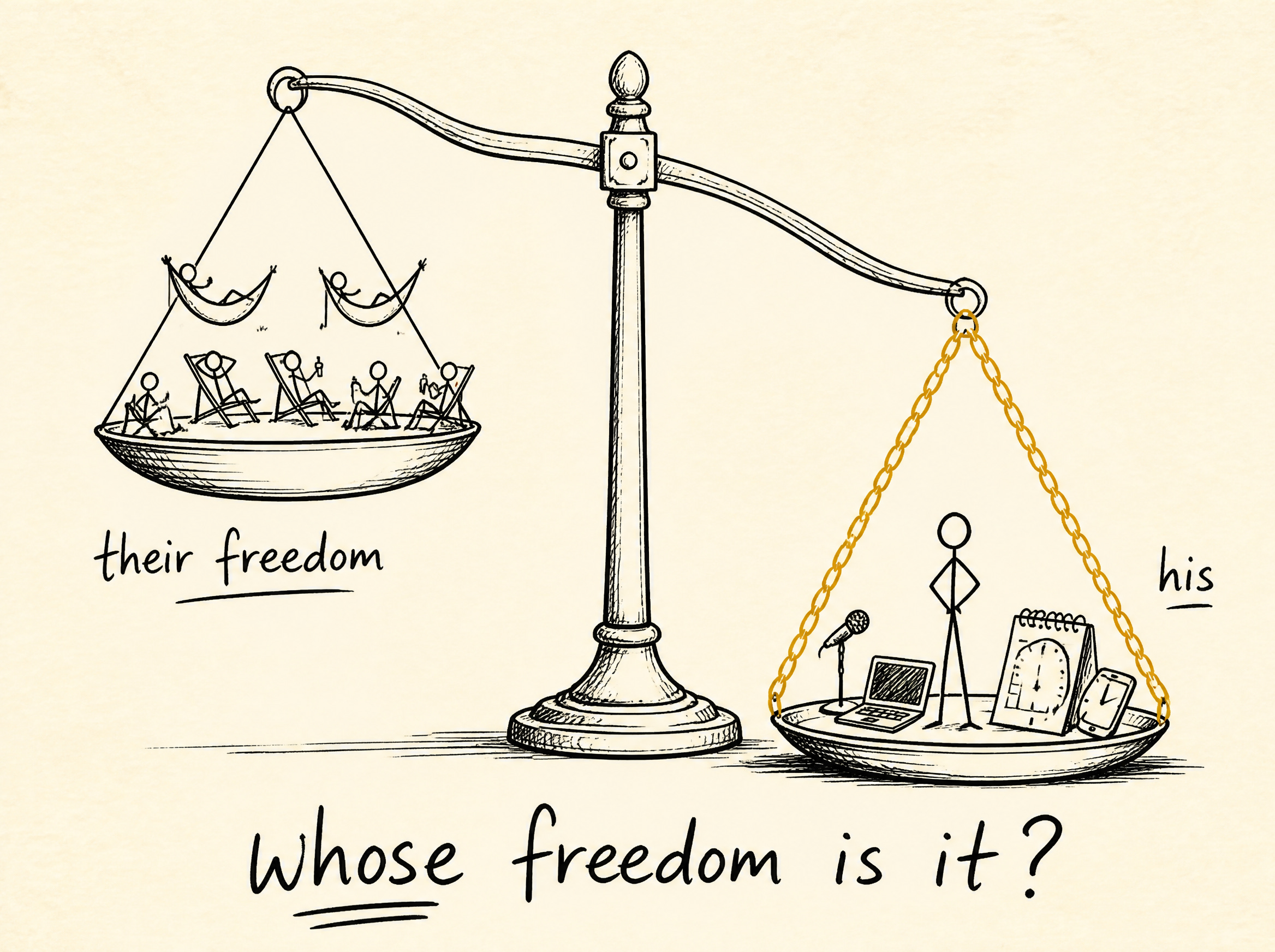
So ask it honestly. If the founder of a freedom business cannot disappear for three months without the machine slowing down, whose freedom is it?
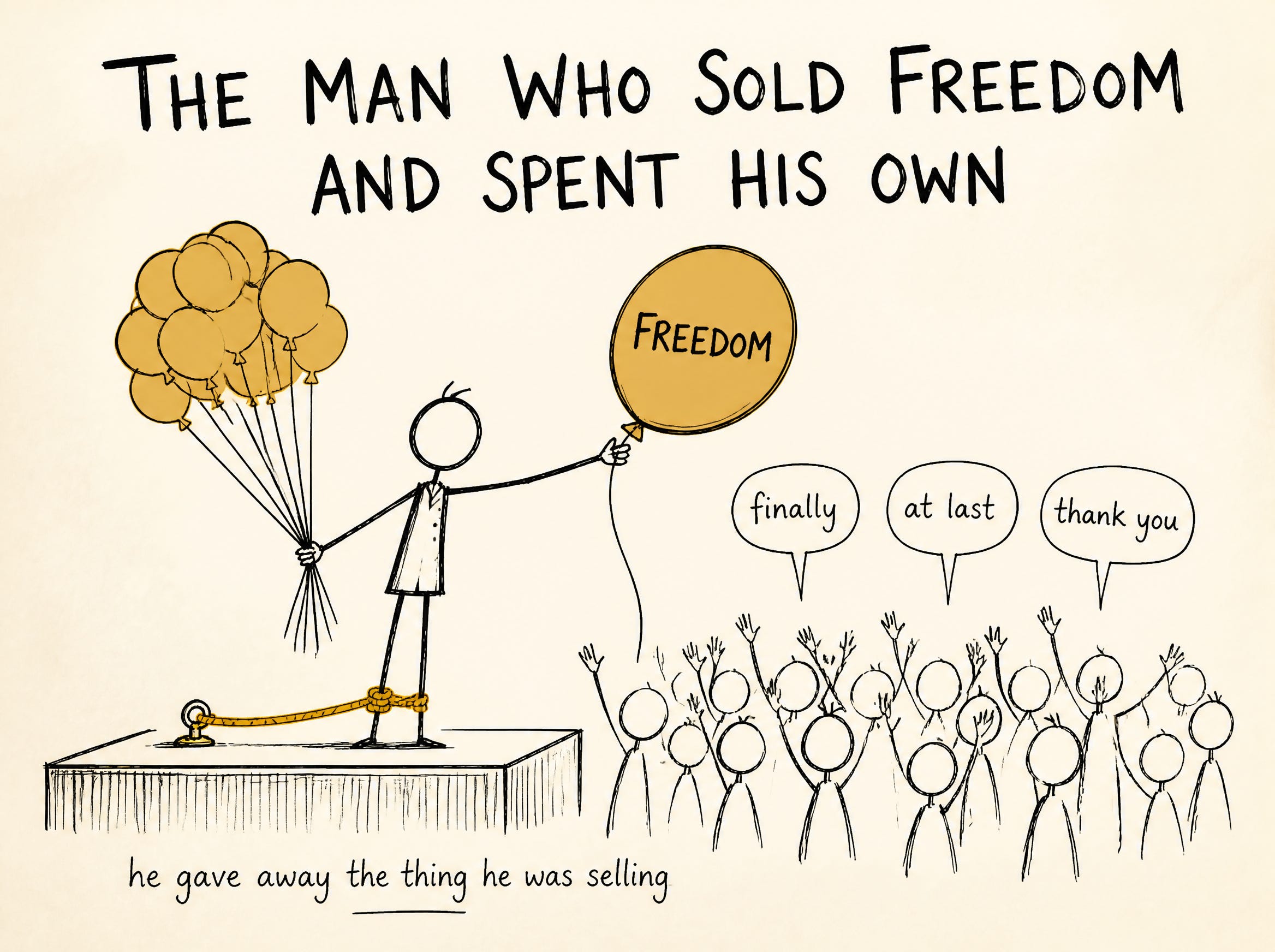
I think the answer, and I say this with real affection, is that Siddharth sold freedom and paid for it with his own. Thousands of people have more control over their week because he has less control over his.
That is not a criticism. That is close to a definition of service. But it is a warning label, and if you are a coach thinking of building this, read it before you sign.
Now let me argue against myself
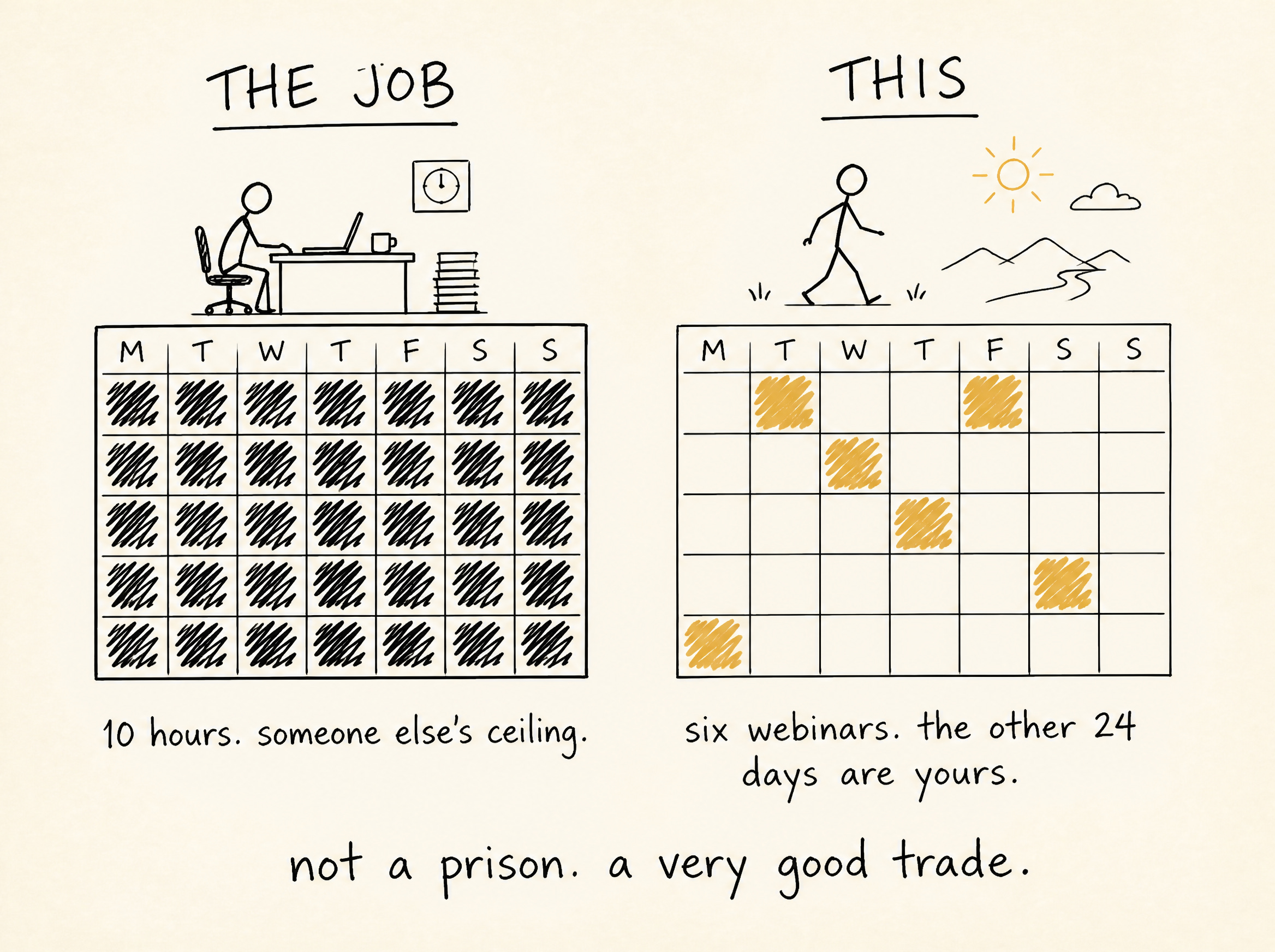
Everything above is true, and it is also slightly unfair, and I want to correct for that.
Compare it to what most of his members actually left.
A corporate job. Ten hours a day, plus commute, plus the weekends when your mind is still at the office. Eight percent a year if you perform and nothing if the company has a bad quarter. A ceiling you can see from your desk.
One member describes it exactly. A dream job after an MBA, everything good from the outside, and inside “I did not know what is the purpose of my life.” Nine in the morning to six in the evening, in a city away from his family, not knowing what he was doing.
Against that, running six webinars a month and owning the other twenty four days is not a prison. It is a very good trade.
The line that has stayed with me longest came from the agency owner who took a loan to get in. He says he “worked 10 months to pay one year quantum membership,” and that now, if he works for one month, he can pay for ten years of it.
Whether that holds or not, look at what he is describing. The leverage moved. That does not happen inside a salary.
And there is something a job cannot give you at all. Members keep describing other people’s outcomes as their proudest results. A homemaker who did not know the basics of baking, launched a dessert cart, and crossed ten lakh in revenue. Two hundred success stories documented by one couple in the food niche. You do not get that from a quarterly deck.
So the honest version is this. The Freedom Business Model does not deliver freedom in the way the brochure implies. It delivers something narrower and still valuable. More control than a job, similar or better money, and the specific satisfaction of watching somebody else get out.
I just want a coach to know which of those they are buying.
What I admire, without qualification
Put the accounting aside for a moment.
Siddharth has a public reputation that is very hard to buy. People do not write about him politely. They write about him with something closer to devotion. In a category absolutely full of noise, that does not happen by advertising alone.
It happens because he shows up. Relentlessly. Year after year. He answers the same beginner question for the ten thousandth time as though it were the first. He puts his members on the stage instead of standing there himself. Watch how his own hosts introduce people, listing their impact and earnings before the person has said a word. He built a system where recognition flows outward, and then protected it while it grew.
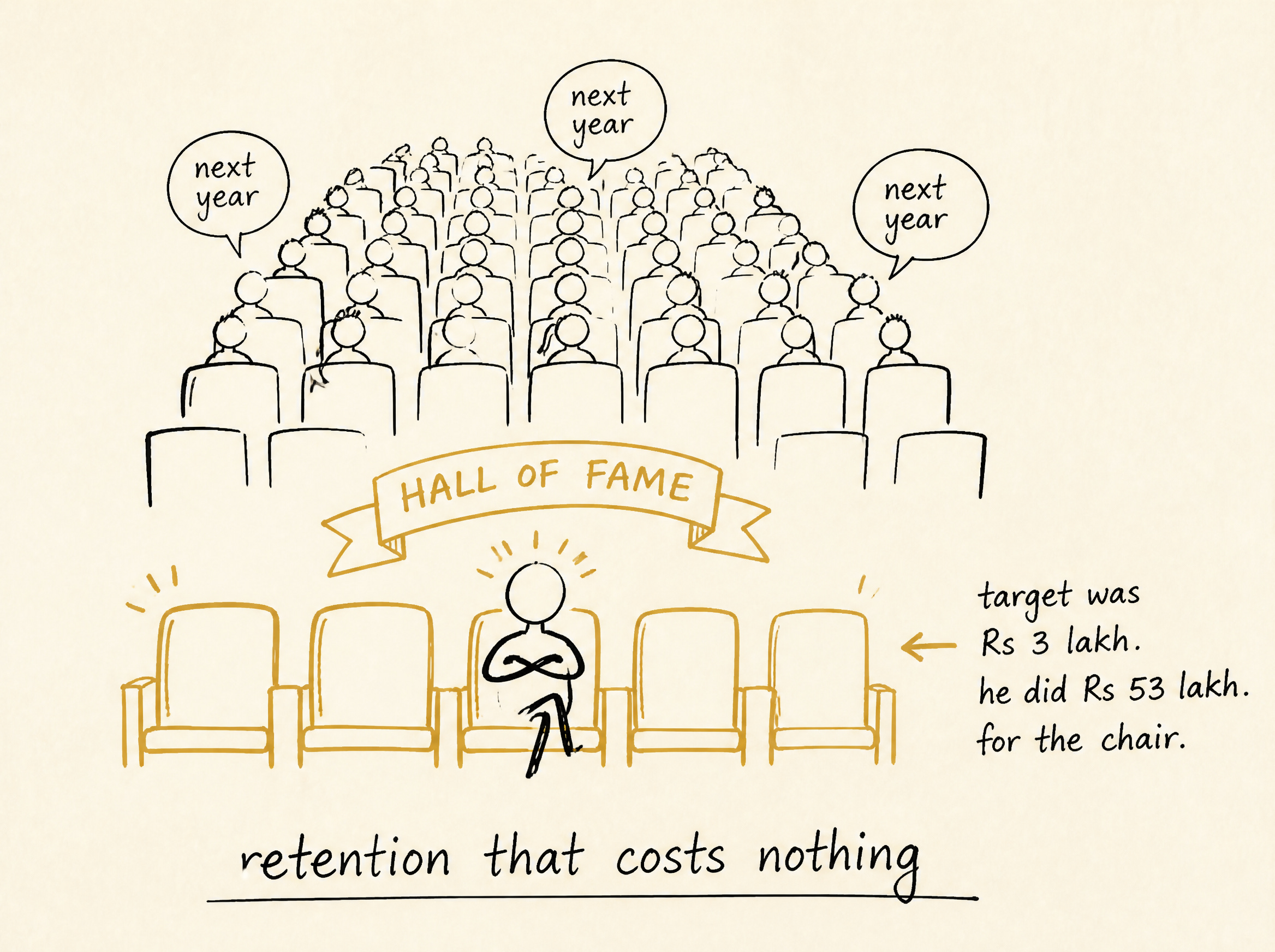
The recognition mechanic is worth studying on its own. One member describes the Hall of Fame threshold as three lakh, says he cleared it with fifty three lakh, and then, with total honesty, says the reward he wanted was “occupying the front row.”
That is a retention system that costs nothing and works better than a discount.
I know what all of this costs, because I run a much smaller version and I feel the drag. Most coaches, including me, would quietly stop around the third year. He did not.
Whatever anyone thinks of the model, the man earned his position by working harder than his competitors for longer than they were willing to. That is not marketing. That is just true, and it deserves saying before I say the harder things.
ADDITION: Since publishing, I have learned the part of this I most underrated. He has been systematically removing himself. The webinar went to automation in 2024. He built an AI on seven years of his content so members get a first conversation without him. He took the BNI chapter idea and turned it into city clubs across ten regions, run by member leaders, with his own involvement down to a monthly call. His stated core team is five people. A content manager, a community manager, an operations manager, and support. Ads split across three agencies and a freelancer, all pointed at the same webinar, competing with each other. I wrote an article about a man trapped by his own machine. He had spent two years quietly engineering his way out of it. That is my miss, not his.
Where I part ways, one: the missing science
My first real disagreement is about method, not ethics.
Sit through enough of these talks and you notice the explanations are not really explanations.
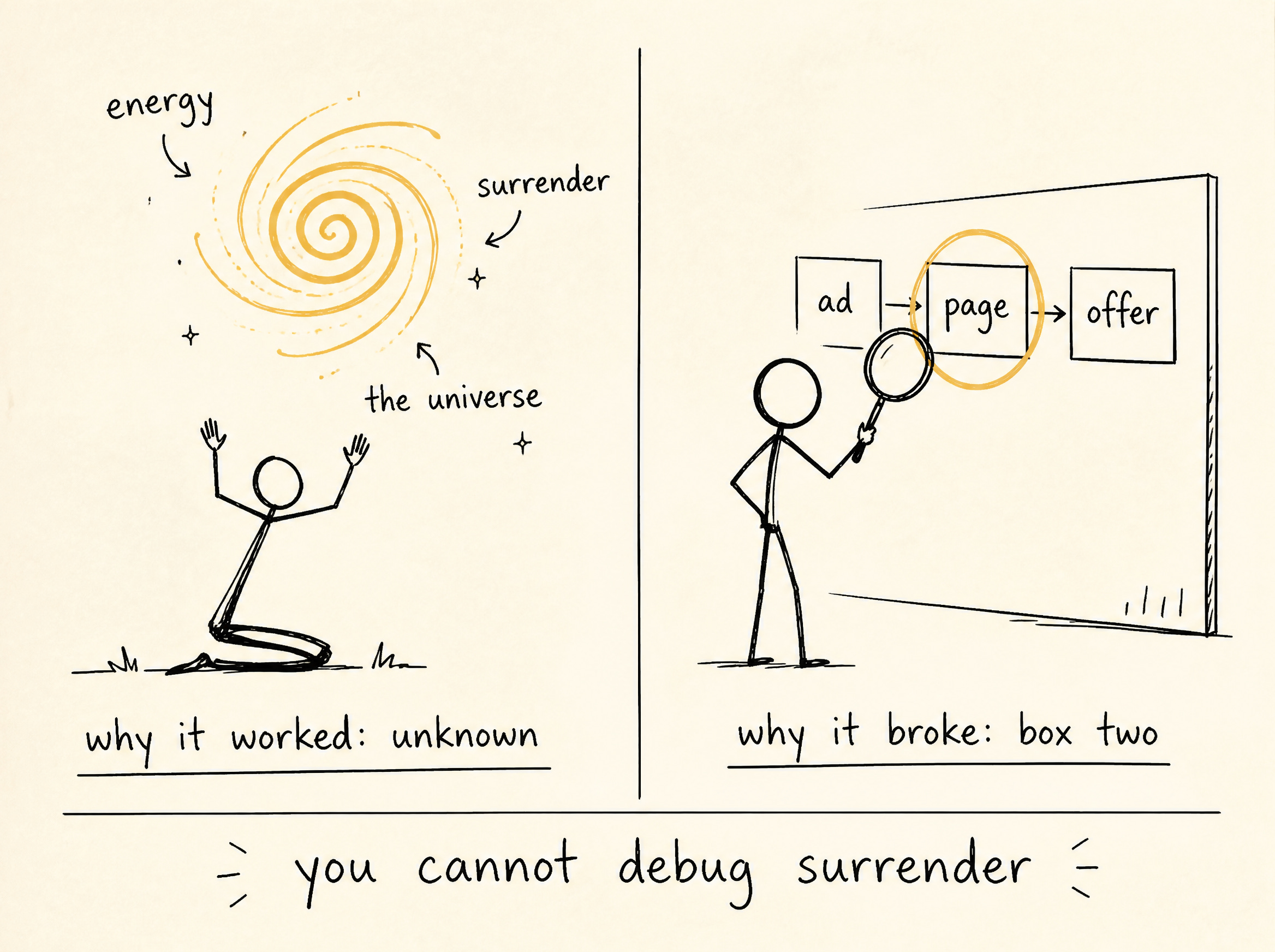
Quantum energy. Surrender. Manifestation. The universe deciding. The master appearing when the student is ready. It is not decorative. It is doing the explanatory work.
The breathing coach describes her decision to join at ten lakh a year in exactly those terms. She says she sensed a “quantum energy,” found no fear in it, and simply committed. Elsewhere she says plainly, “I surrender to my mentor.”
And the tarot coach who did a crore and a half in a single session is remarkably honest about the limits of her own understanding. She lays out the mechanics, one hundred and fifty attendees, fifty eight sales at two and a half lakh, three at three and a half. Then she says that if she claimed they had planned it, “I’ll be lying to you.”
That honesty is refreshing and it is also the problem. If you do not know why it worked, you cannot repeat it, and neither can anyone you teach.
I come at this from the other side. Marketing is causes and effects that can be tested. What was the cost per lead. What was the conversion. What changed when you changed the headline. Which of the four things you did on Tuesday actually moved the number. If you cannot name the mechanism, you do not have a system, you have a story about a system.
The spiritual framing is not stupid. It does something real. It gives people the nerve to act while frightened, and most people fail from paralysis rather than ignorance. Surrender is a very efficient way to stop somebody arguing with the process and get them to run the process.
But it comes with a cost. When results collapse, the framework has no diagnostic. You cannot debug surrender. What tends to fill that gap is an explanation about insufficient belief, and that is the point where a business philosophy quietly turns into something else.
I would rather my members could tell me exactly why their funnel broke. Even if it makes for a worse stage moment.
CLARIFICATION: His reply changed my mind about the target of this criticism, though not about the underlying point. He talks in unit economics when he is not on a stage. He runs the front end at a deliberate loss, around 0.6 to 0.7 times, because it is automated and therefore costs him no time. He blends out at two and a half to three times overall on the back of a scalable high ticket certification. He quotes fifteen to twenty percent conversion in a two hour showcase rather than a full day bootcamp, and attributes it to the nurture that happens in the weekly calls before it. That is not a man who does not know why things work. So the honest version of my criticism is not that the mechanism is missing. It is that the mechanism is private and the spiritual framing is public. Two languages, one business, and the audience only ever hears one of them. Whether that is good teaching or a gap in it is a fair question, and it is a different question from the one I asked.
Where I part ways, two: the money people do not have
This is the one I feel strongly about, and I am going to say it directly.
A pattern shows up more than once in these talks, and it is celebrated every time.
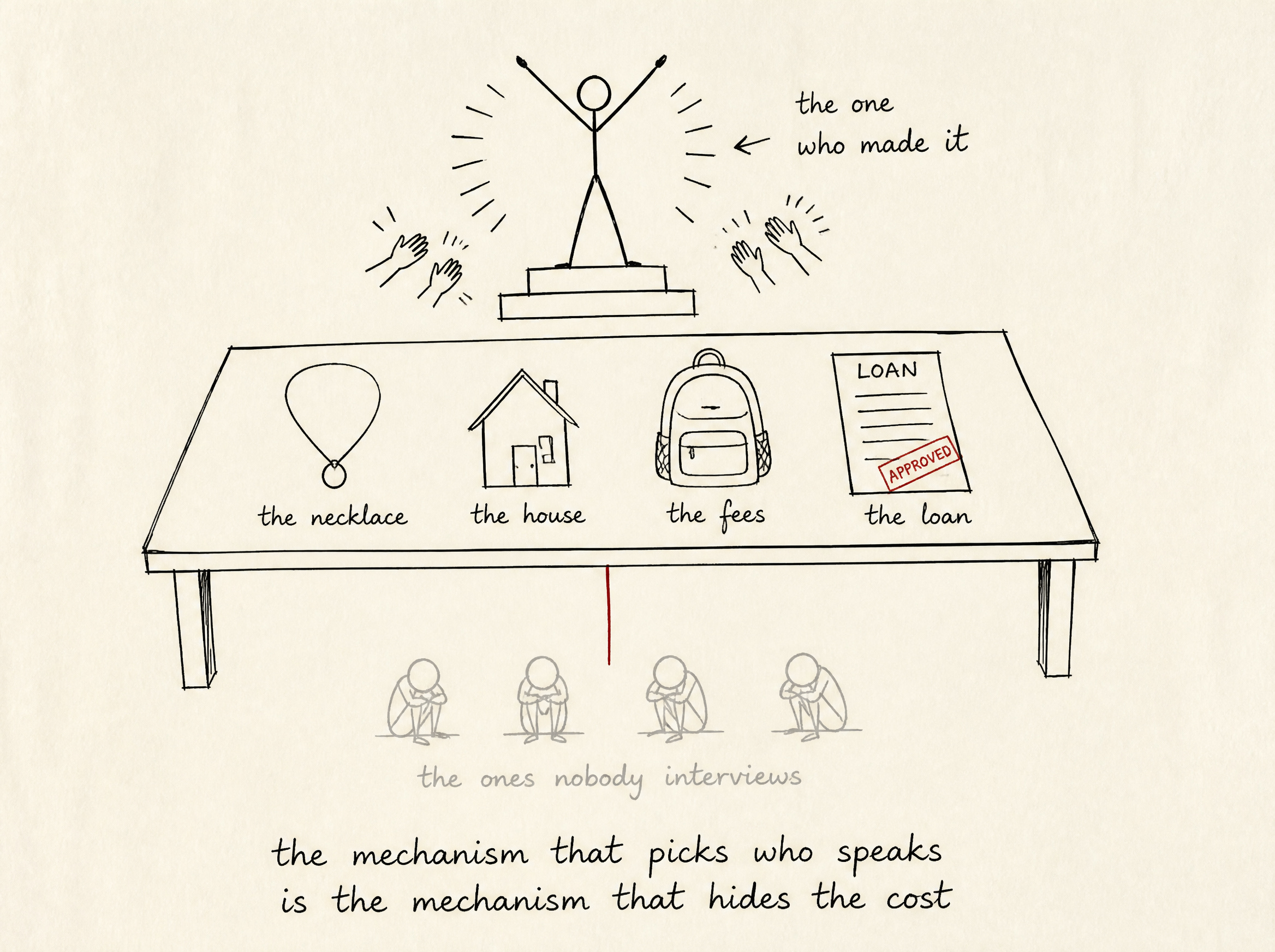
One member sold the setup of the agency he was closing, at a fraction of its worth, to fund a diamond membership. He is candid about the position he was in. His words, twice, are “no money.” Later, facing a ten lakh quantum fee with sixty thousand rupees to his name for both family and business, he paid fifty thousand as deposit and took a loan for the rest.
Another describes reaching the end of everything and asking his wife for the last thing they had left. He calls it “the holy thread.” She gave it without asking a question. He took a gold loan against it and joined diamond.
Another, whose husband had lost his job during covid, had money set aside for her son’s school fees. She wrote to the school to withdraw his admission for a year, and wrote to Siddharth asking that the same money be used to upgrade her to diamond.
Another was two and a half crore in debt, sold the house, and sold her wedding ring.
Every one of those is told as a story of commitment. The room applauds. I understand why. From inside, it looks like the purest possible expression of belief. And in each of these cases the person went on to succeed, which is exactly why they are on the stage.
Here is what troubles me. The person who did the same thing and did not succeed is not on the stage. They are at home, with the loan, and without the business. Nobody interviews them. The mechanism that selects who speaks is the same mechanism that hides the cost.
So let me state my own rule, because criticism without a standard is just complaining.
If somebody wants to pay five lakh to work with me, I will take that money on one condition. It has to be money they already have. Sitting in an account, or available on a card without wrecking them. If it has to come from gold, or a loan against the house, or a child’s school fees, or anything holding up their actual life, the answer is no. Not a softer plan. No.
Two reasons, and I will give you both, including the selfish one.
The first is obvious. I cannot guarantee anybody’s result. Nobody in this industry can. Taking money somebody cannot afford to lose, against an outcome I cannot promise, moves the risk from me to the person least able to carry it. I do not want to build on that.
The second is colder, and every coach reading this should think about it. A customer who has bet everything is a liability.
If it works, they will love you beyond all proportion. If it does not, that love does not fade quietly. It flips. The same intensity comes back at you as fury, in public, and they will be right that something went wrong even if you did everything correctly.
Love and hate are not opposites. They are the same voltage running in different directions. The customer most desperate to believe in you is the one most capable of destroying you.
I would rather lose the sale. Every time. My stage will be less dramatic for it. I will sleep better next to the business.
HIS ANSWER, AND WHY I STILL DISAGREE: He addressed this directly, and I want to represent him fairly before I hold my ground. His position is that he invested in Blair Singer’s programs when he did not have the money, and that it changed everything for him. He says there are many people who transformed at exactly the moment they had no resources, and that this is the human potential game rather than a financing question. I take that seriously, and I have no doubt it is true for him and for others. Here is why it does not move me. He is the man on the stage. The person who made the same bet and lost does not send a voice note explaining why the bet was correct. Neither of us hears from them. So his own experience, however genuine, is the exact evidence that cannot settle this question, because the selection process that produced it removed the counter examples first. I am not saying he is wrong about human potential. I am saying I am not willing to be the one holding the money when it does not work out. That is a difference in risk appetite, not in ethics, and I would rather state it plainly than pretend we agree.
The thin line
Underneath all of this sits the real thing, and it is not a tactic.
When you have distribution and you know how to write, you acquire an unusual power. You can sell hope.
Not products. Hope. The genuine physical sensation in another person’s chest that their life could be different from how it currently is. It is the most valuable commodity there is, because everything else people buy sits downstream of it.
There is nothing wrong with selling hope. Hope is frequently the thing that is actually missing. Somebody who believes their situation can change will do work that somebody who has given up will not do.
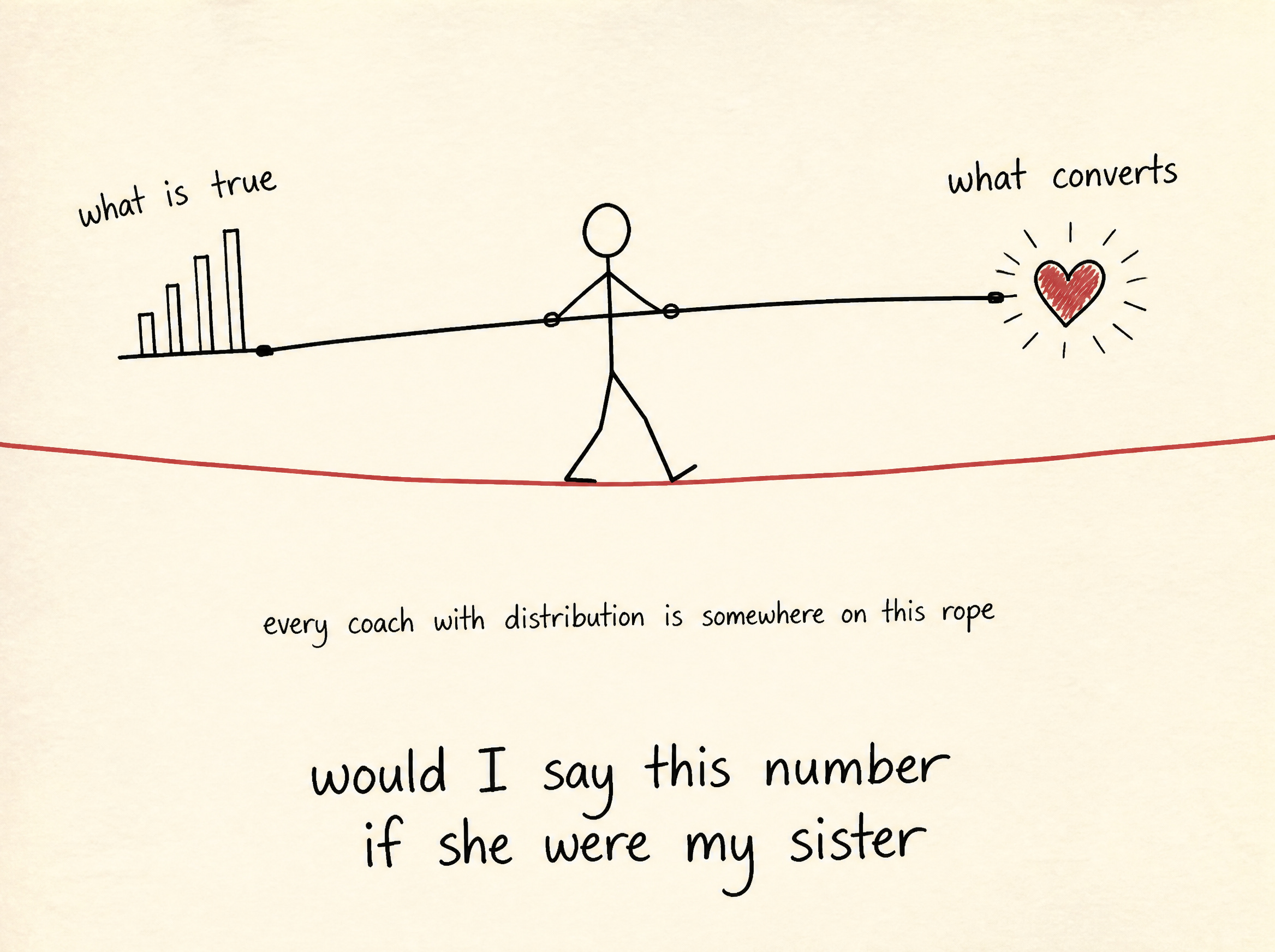
But there is a line running through hope, it is thin, and it moves.
On one side, hope is a prediction. You are telling someone something true about what is possible for them, based on evidence, and you are prepared to be held to it.
On the other side, hope is a feeling you generate because generating it converts.
You do not cross that line in one obvious step. You cross it slowly, one webinar at a time, because the more emotional version worked slightly better last Tuesday and you are only human.
Every coach with distribution is somewhere on that line right now, including me. The only protection I know is to keep asking the uncomfortable question out loud. Would I say this number if the person in front of me were my sister.
That is the whole ethics of this industry in one sentence, and no framework will do it for you.
What I am doing instead, and why
I am not building what Siddharth built. Not because it is wrong. Because it is not mine.
His door says become a coach. Mine says you already have a business, and something in it is stuck.
That means my customers are a dentist, a yoga teacher, an agency owner, a growth hacker, an Amazon seller, a doctor who counsels new mothers. They will never recruit for me, because they are not in my business. That is a real disadvantage and I have accepted it, because it buys me something I want more.
Nobody can accuse me of running a machine that mostly produces more machine operators. My members are out in the actual economy, and their customers are patients and clients and buyers rather than aspiring coaches.
It also means I grow slower. I am trading compounding for altitude. I know what that costs and I have decided to pay it.
And it means being honest about my own record, because a critic who hides his numbers is just a competitor with a keyboard. I have trained fifteen thousand people through the Digital Deepak Internship Program. At one point I was spending twenty lakh a month on advertising. Out of all of that came a couple of hundred people into my high ticket program. Two percent. That is the real conversion rate of a wide net, and anybody who tells you theirs is dramatically better is either measuring something else or selling you something.
He Replied: I sent this piece into the world and he sent a voice note back. A long, generous, slightly amused voice note with his actual numbers in it. Very few people in this industry would do that, and it is worth pausing on. Here is what he corrected, and what I now think. On freedom, he is right and I was wrong. I covered this above. He has a four day week, no live webinars since 2024, three calls a week, and a thirty day break every year. I described the machine and mistook it for his diary. On leverage, I underrated him badly. Automated daily webinars. An AI trained on his own content, which handles fifteen minute conversations before members reach him. Forty five city clubs, more than a hundred and fifty meetings, run without him. A core team of five. He has been building distance between himself and the work for years while I was writing about his lack of it. On the economics, he is more precise than I gave him credit for. A front end deliberately run at a loss because it is automated. A blended return of two and a half to three times. A high ticket product designed so it does not scale by adding his hours. He says two thousand people could join the high ticket product without burning him out, and having seen the structure, I believe him. On the money question, we still disagree, and I have set out why above. That one is not going to resolve and it does not need to. On the recursion loop, he did not respond, so I am leaving my question where it stands. But the correction that matters most is the one I did not expect, and it is better than anything in my original piece. He got off the treadmill. His members are still on it. He automated his webinar in 2024. The fashion coach in this article did a hundred and thirty live ones. The agency owner ran two a day into an empty room. Meanwhile the man who taught them both was down to three calls a week. I do not think that is cynical. I think it is a sequencing problem, and every teaching business has some version of it. You learn something the hard way, you solve it for yourself, and the curriculum you built along the way still describes the hard version because that is the version you survived. But it is the question I would ask him if we were sitting across a table. Not whether the model works. It obviously works. Whether the automation that bought him a four day week is being taught with the same urgency as the webinar that filled his first room. That is a much better question than the one I published, and I only have it because he replied.
The last thing
If you take one idea from this, take this one.
Siddharth built a machine that turns other people’s expertise into businesses and takes a share. It is elegant, it is durable, and most of the people criticising it could not build a tenth of it.
He built it by spending himself for years, and then he spent two more getting himself back out. The freedom he sells is real for the people who buy it, and he has clearly worked out how to keep some for himself.
You are allowed to admire that and still not want it. That is not disloyalty. That is being clear about which life you are trying to build.
Because in the end we are all selling the same thing. A different tomorrow.
The only question that matters is whether we would still sell it on a day when nobody was buying.
I have been doing digital marketing in India for more than a decade, and I have trained fifteen thousand people through the Digital Deepak Internship Program. Siddharth is a friend. I wrote this from the outside, he replied with the inside, and the corrections above are his. Every quotation from his customers is from his own stage. Next time I will call him first.
I've known DD since his motorcycle blogging days
2018 is when I started going through Siddharth Sir's webinars
Become an All Access Member of DD Sir in 2020
Become an ILH Member in 2021, Diamond Member in 2022
Met DD Sir in person for the first time in April 2023 in Siddharth Sir's event
Since then life took over, genuine reasons why I couldn't fully commit to Siddharth Sir's model
I fall under the sceptics category however that's my personal belief. Personally I believe in the 10x rule, I only pay someone X, if I feel they can help me earn 10X. The student is only as good as the teacher.
I'm a Proud ILH Diamond and DD All Access Member, and I'm absolutely happy to take things at my own sweet pace.
This post was a magical share of calling a spade a spade🥰
A wonderful read. Thanks for sharing this, Deepak.
I have been a customer of Siddharth & DigitalDeepak and have been part of the coaching and marketing industry, so this really connected.