

Start with what is missing
I want to begin with something you will only notice if you watch a lot of these videos in a row.
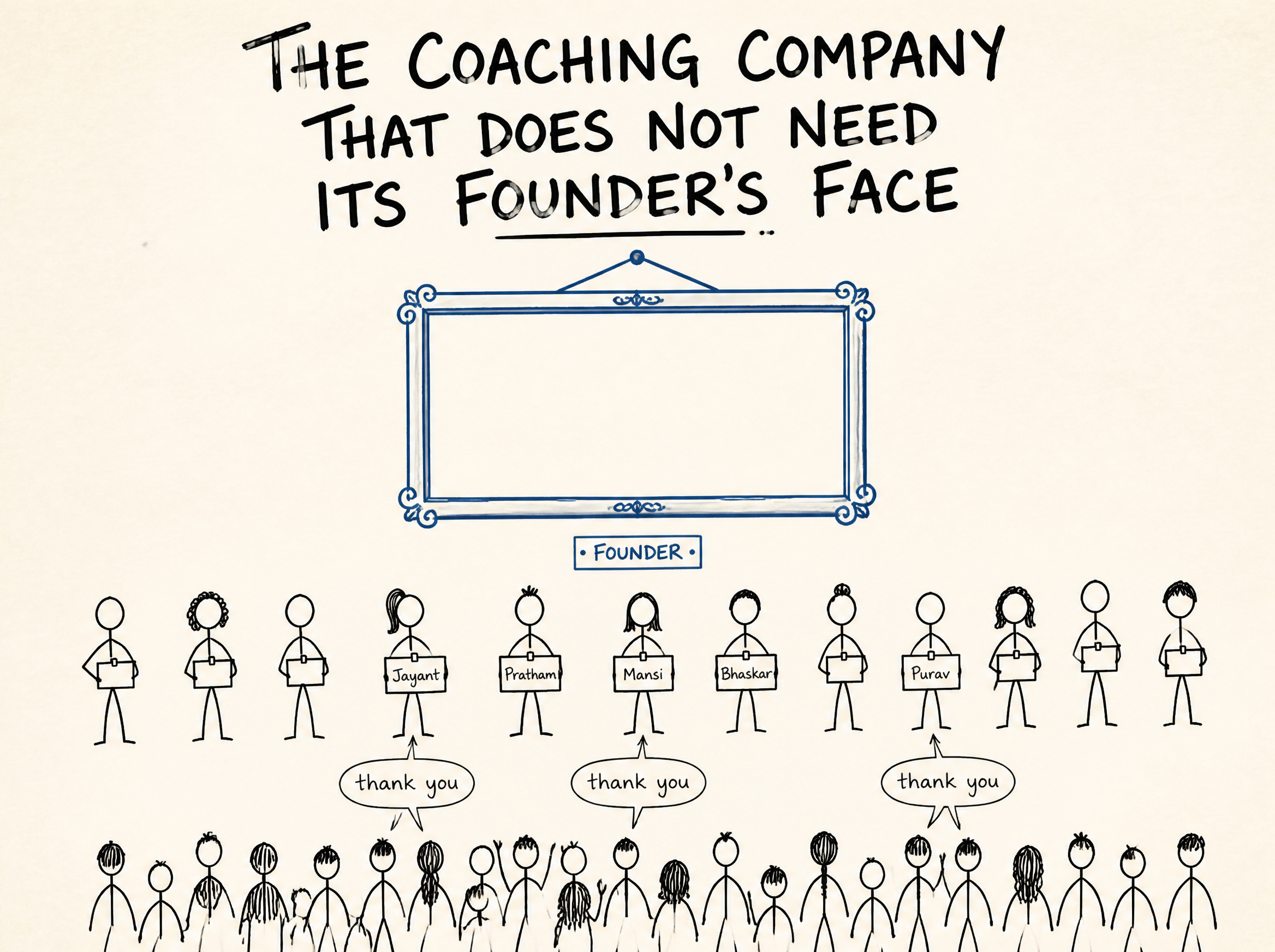
Rohan Dhawan is barely in them.
He founded the company. He is on stage at the events. And across thirty six published customer interviews, he is one name among a dozen. Customers thank Jayant. They thank Pratham. They thank Mansi, Bhaskar, Purav Rathod, Ajit, Gautam, Mufid, Jeet, Gunjil. Several of them spend their closing minute on their account manager rather than on anybody who owns the company.
If you know this industry, you know how unusual that is.
The default architecture of an Indian coaching business is one face, one voice, one guru, and a thousand people paying for proximity to him. It works. It scales to genuinely large numbers. And it has a structural problem that nobody in the category likes to say out loud, which is that the whole thing is one person’s calendar and one person’s health.
UAbility appears to have built the other thing. And that is the case study, more than the funnel, more than the frameworks, more than the numbers.
So this piece is a breakdown of how it is put together, written for people who are building funnels and looking at UAbility as a reference point. Every quote is from a customer speaking on their own published video. I have named them because they named themselves.
The ladder
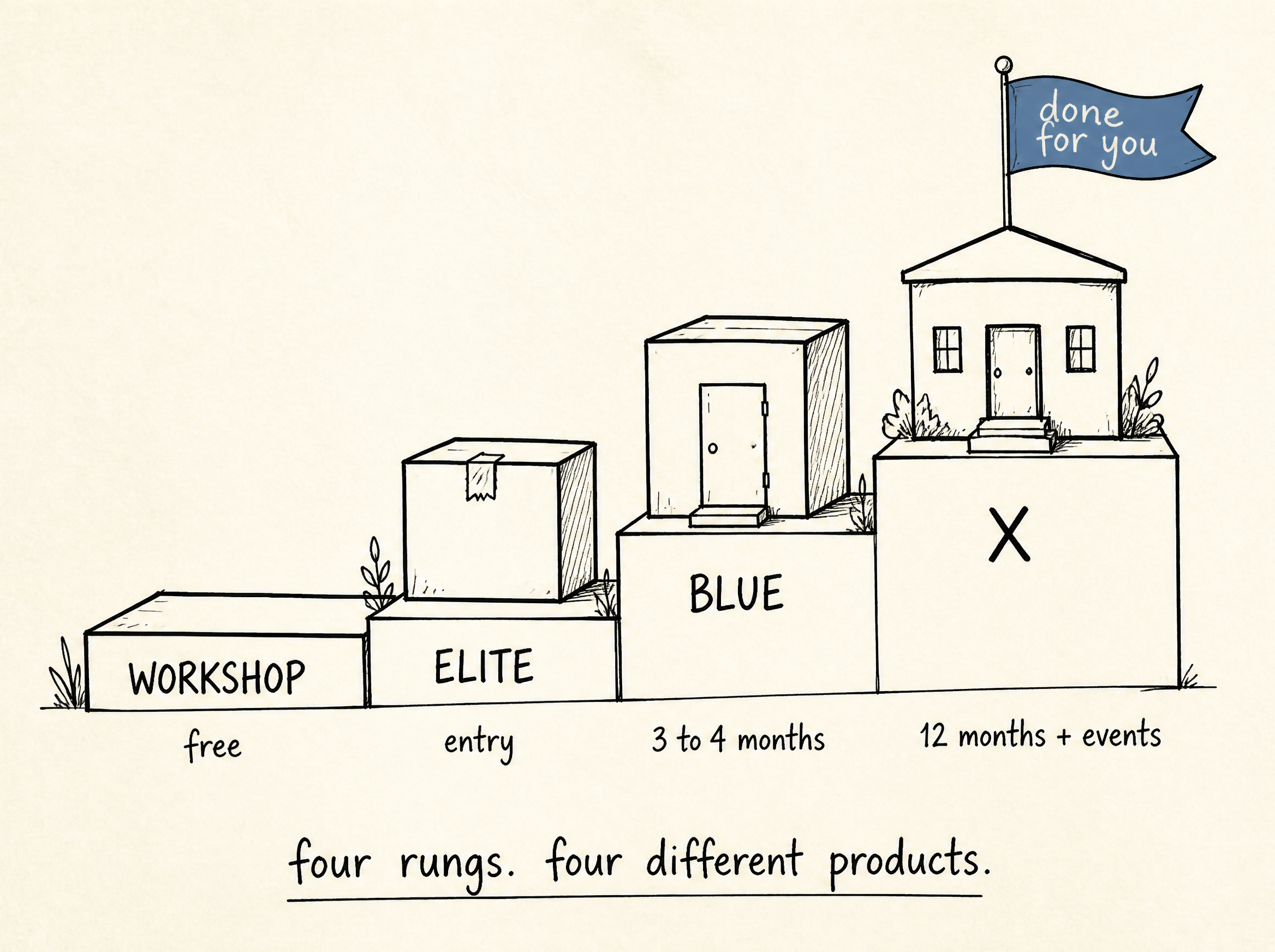
Free or low cost workshop at the top. They run it as the One Page Business Plan workshop, and as something called the High Ticket Tournament.
Then Elite. Then Blue, which is a three to four month program. Then X, a twelve month mastermind with offline events twice a year. Udaipur in December. Gurgaon in September. Then done for you services at the top.
Most customers describe the same route. Blue first, X second. Dr Murali, a Lean Six Sigma consultant, describes exactly that path and says he now works directly with Rohan and Pratham.
Four rungs, clean, and each one is a genuinely different product rather than a bigger version of the last one. That sounds obvious. Go look at how many coaching ladders are just the same content with more calls attached.
Three frameworks, one language
Here is the first real signal that this is a system and not a personality.
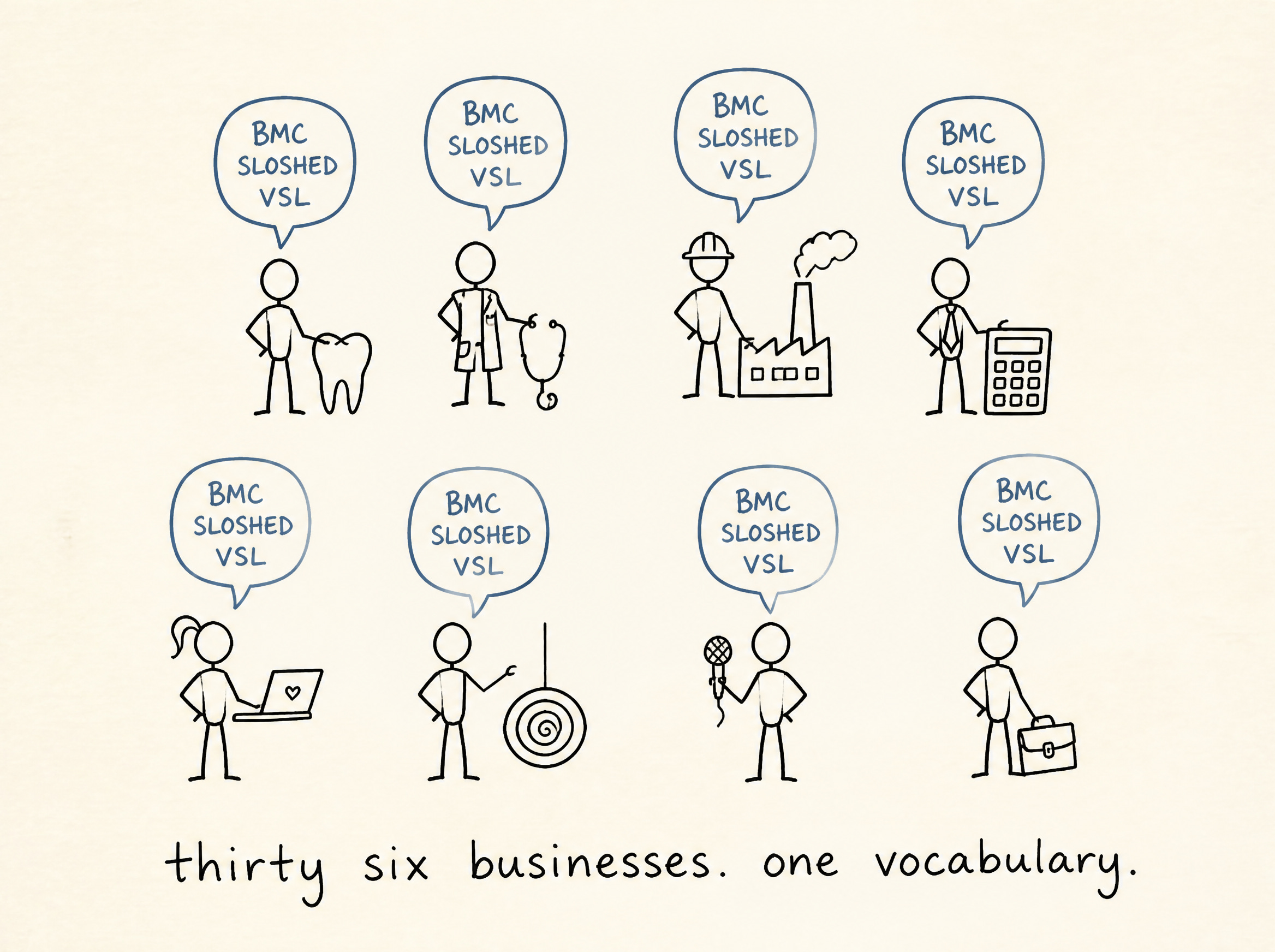
Watch thirty six people from thirty six completely different businesses, and they all use the same three words.
BMC. Business Model Canvas. Niche, customer, offer.
SLOSHED. The sales framework. People say slosh, sfrost, slashed. Nobody pronounces it the same way and everybody swears by it.
VSL or VSSL. The video sales letter funnel.
A dentist, a psychologist, a manufacturer in Goa, a virtual CFO, a hypnosis coach, an IT consultant in Wisconsin, all reaching for the same three terms without being prompted.
That is what installed knowledge looks like. Most coaching businesses cannot get three customers to describe their method the same way. This one has thirty six.
The product is a price increase
Now the part that took me about six interviews to see properly.
I kept treating the pricing stories as a side effect. They are not a side effect. They are the product.
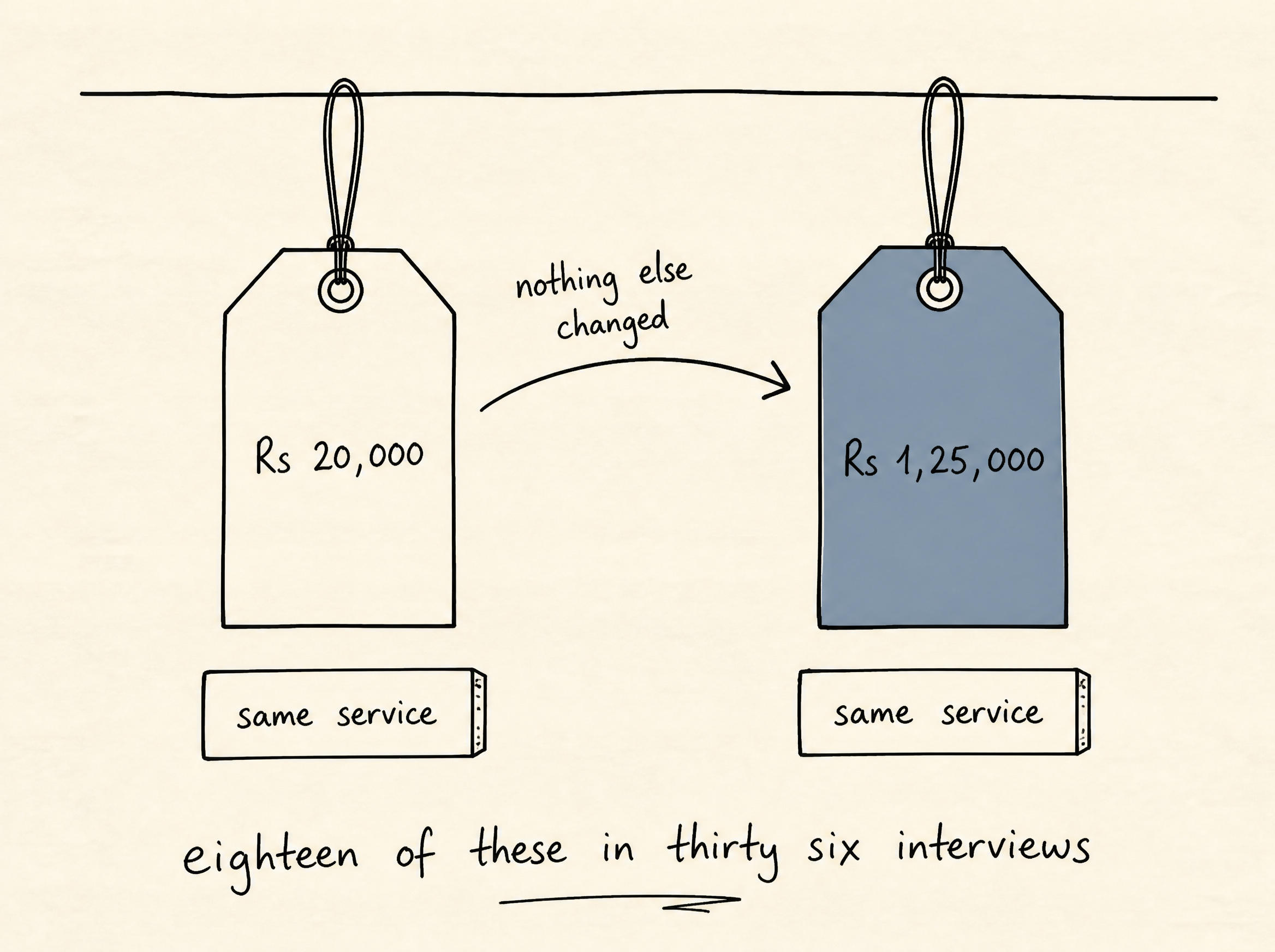
Almost every customer tells the identical story. I was charging X. I now charge five to ten times X. I did not change the service.
I counted eighteen.
And the revenue that follows.
Mukesh, a Google Ads specialist in Bangalore with eight years behind him, went from fifty thousand to one lakh a month, to five point three seven lakh a month. He shows the sheet on camera. He also mentions, almost in passing, that it cleared his debt and bought his first flat in Bangalore.
Pranjal Jain and his wife were about to close the business. One to two lakh in revenue, fifty to seventy five thousand left after spends. His wife told him to take one last chance. They are now at sixteen point eight lakh a month, and the service, in his own words, has not changed.
“Operationally, honestly, nothing has changed. We are providing the same level of service.”
Nipuna Goel used to see twenty to thirty clients a month for one and a half lakh. She now sees three clients for the same money. Her summary of what that bought her is the single best line in the whole corpus.
“Earlier I used to take two three sessions in a day. Now at least I can see time.”
That is the offer. Not more clients. Fewer clients, more money, and your week back.
The diagnosis underneath it
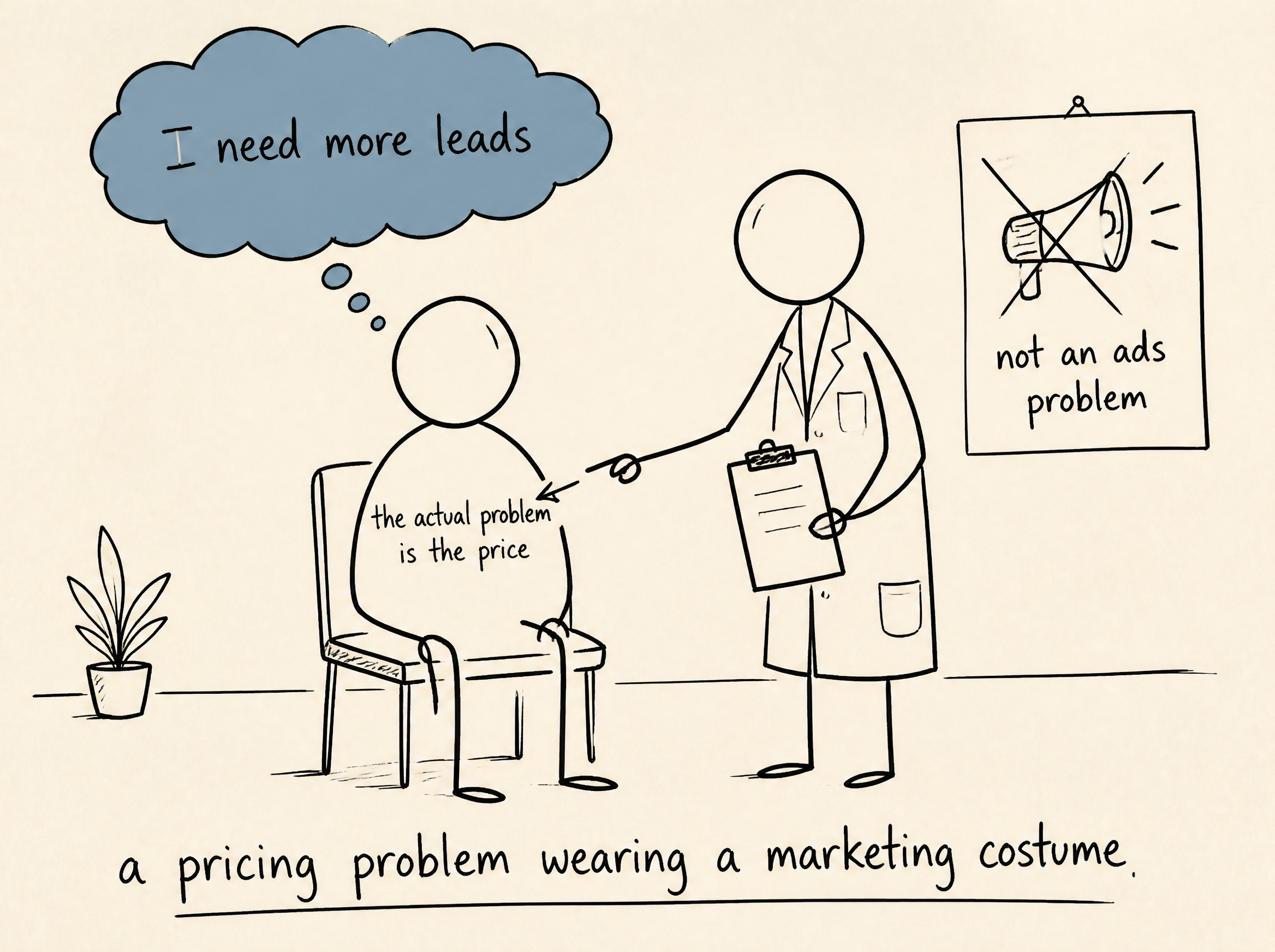
The reason the pricing move works is that UAbility appears to have correctly identified something most people in this market get wrong.
Their customers do not have a marketing problem. They have a pricing problem that presents itself as a marketing problem.
Look at who is actually in these videos.
Dr Rajiv Chitguppi, a periodontist. Dr Mona Gulati, a psychologist with twenty five years of practice. Rajeshwar Naidu, who has manufactured industrial voltage stabilisers in Goa for twenty eight years. Shiva Punyamurthi, running an IT consulting firm from Wisconsin with a delivery centre in Chennai. Shelpi, fifteen years in B2B sales, who turned forty and started her own LinkedIn agency. Ishant Pahuja, running healthcare marketing for hair transplant surgeons since 2020.
These are not beginners looking for a business. These are competent people with a ceiling.
And the ceiling is emotional as often as it is technical. Dr Mona Gulati describes it precisely.
“I know I can provide the value, but asking them for that money, that part was very difficult for me.”
Sapna Sanghi was doing image consulting, personal styling, wedding styling, colour analysis, all of it, and no prospect could tell what she was an expert in. Nipuna Goel wanted fewer clients and more revenue and could not work out how to package it.
None of those is an ads problem. All of them were being treated as ads problems by the people selling to them.
The BMC is the real asset
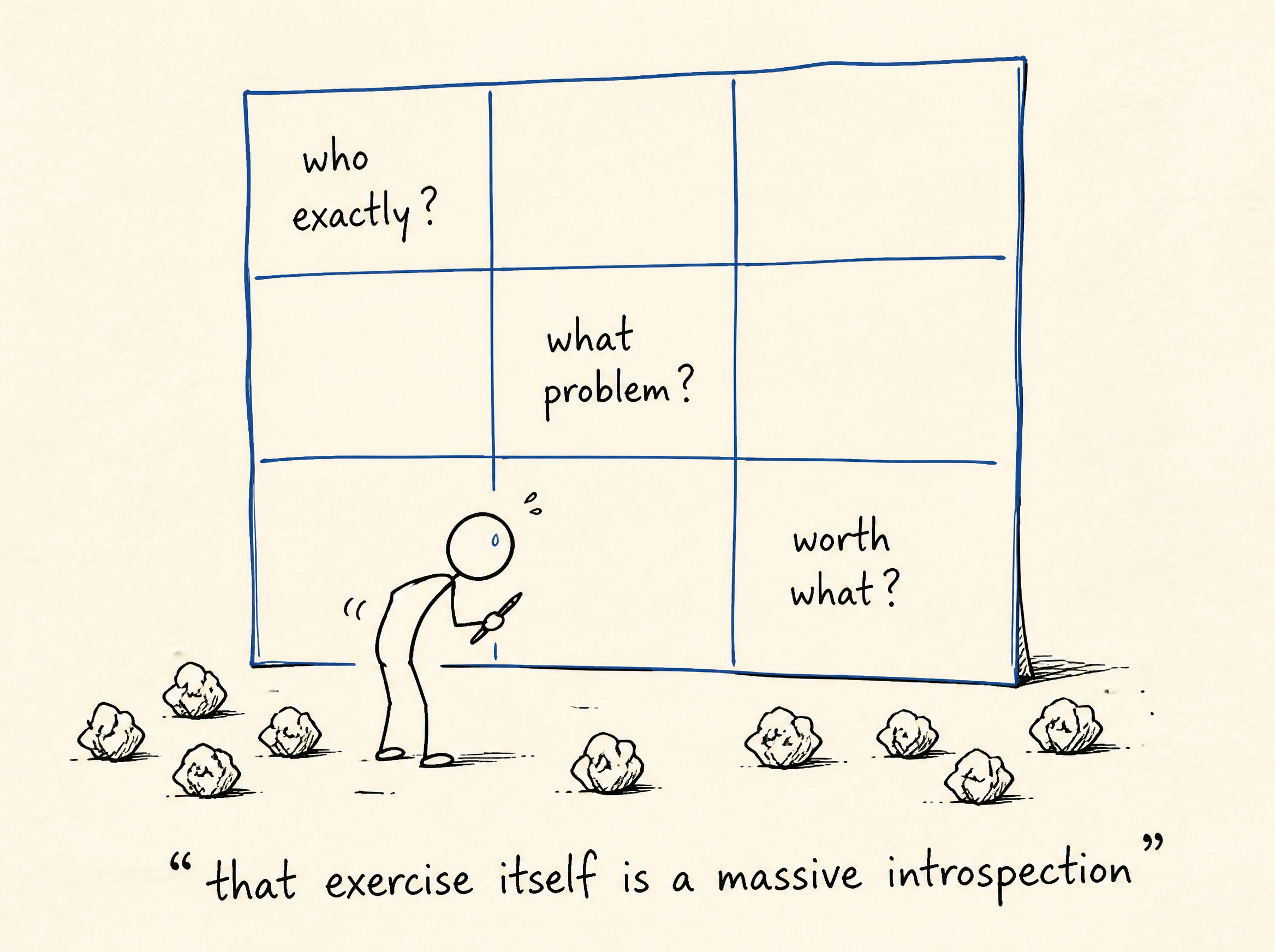
If I had to name the single strongest thing in this business, it is not the funnel. It is the Business Model Canvas exercise.
Dr Rajiv Chitguppi, the dentist, puts it better than any marketer could.
“Business model canvas, that rips you apart. Until you don’t write those things in words, that exercise itself is a massive introspection.”
Sapna Sanghi says it was the hardest thing she has done, that she sat with herself for hours, and that her family went berserk at the volume of research. Her conclusion is that she finally found the core of a company she had already been running for three years.
Nipuna Goel calls it the game changer and says it is what she had been looking for the whole time.
Vignesh, who builds custom learning platforms, had run entirely on referrals until the referrals stopped. He built the direct appointment funnel and did fifteen point eight lakh in the first month.
This is positioning work, done properly, on people who needed it and could pay for it. It is not a growth hack and it does not pretend to be one.
The sales system
Shashikant reports a forty five percent close rate on his sales calls and then says he is frustrated it is not eighty. Sapna Sanghi closed four large clients in a single month having barely practised the script.
The mechanics are worth studying regardless of what you sell.
Varsh Agarwal, twenty one, running a LinkedIn lead generation agency in Delhi, gives the clearest description of the shift.
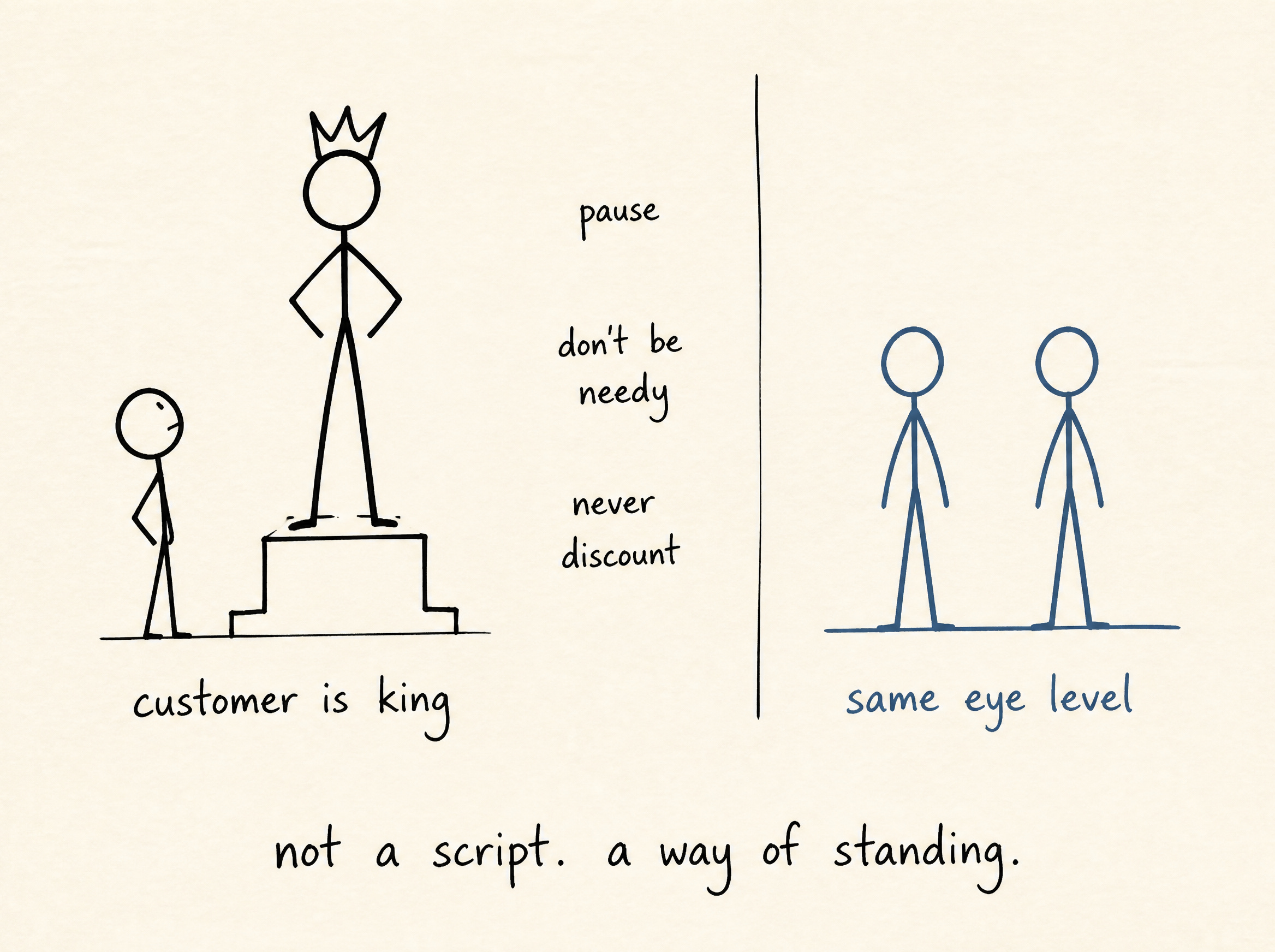
“In India there is this mindset, customer is king. People go on sales calls with the mindset that the prospect is untouchable.”
The replacement posture, in his words, is that the person in front of you needs help and does not yet realise it.
Around that sit small, specific things. Nipuna Goel was told by Pratham that the pause matters, that silence is needed, and she says she had never understood the value of silence before. Jyotismita Das learned not to appear needy and, very specifically, not to tilt her head, which she wrote on a note above her desk. Sapna Sanghi was told never to discount, because negotiating is an admission that you have not positioned yourself.
Notice what that adds up to. It is not a script of clever lines. It is a set of instructions for how to hold yourself in a room. That transfers across niches, which is why a hypnotist and a virtual CFO can both use it.
The wide top and the narrow middle
Here is a structural observation that took me a while to see.
If you read the public reviews, you find a lot of workshop attendees. Short reviews, written days into a free or low cost program, full of words like clarity and structure.
If you watch the customer interviews, you find something completely different. Established practitioners with years behind them and real revenue.
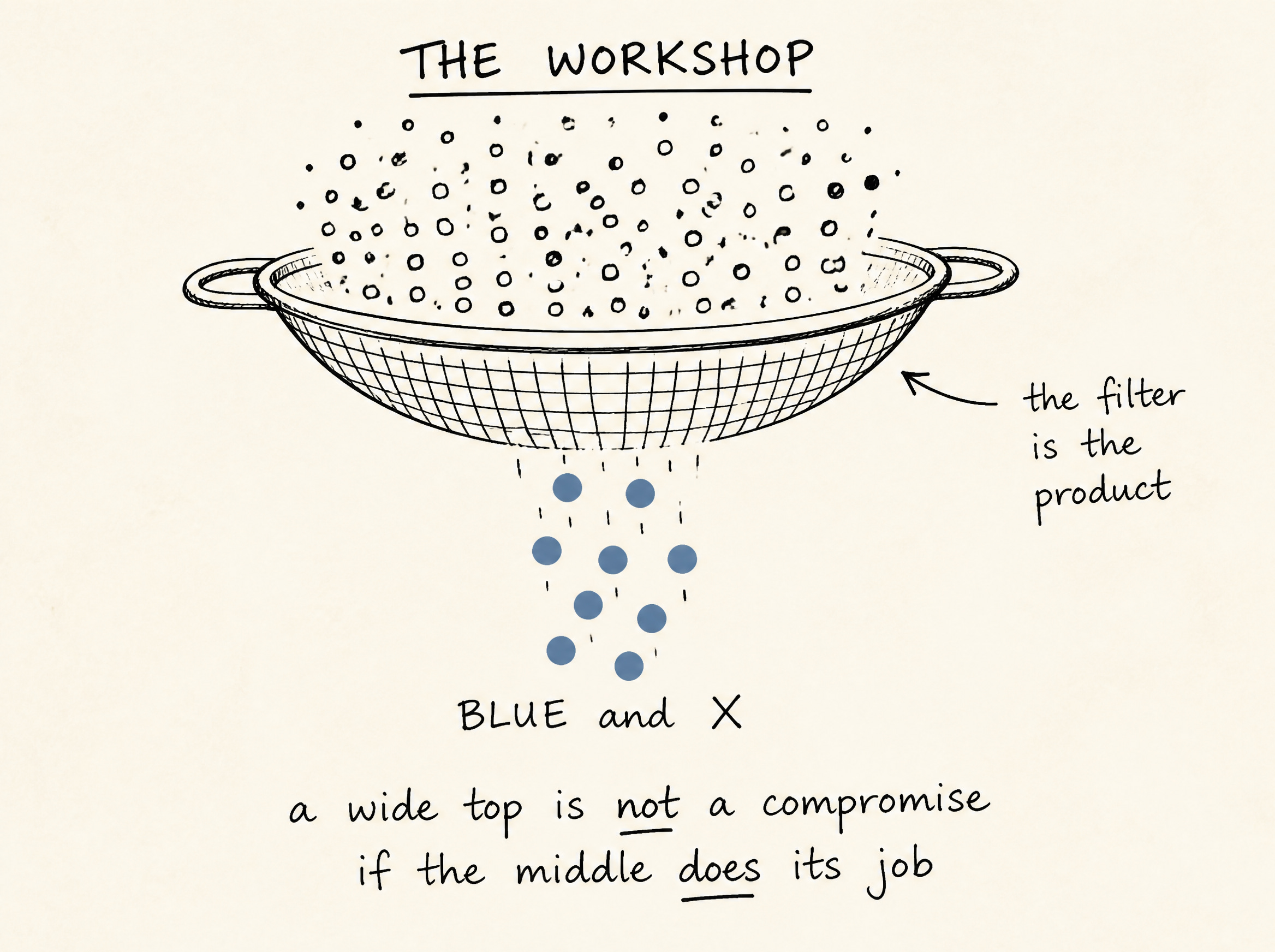
Those are two different populations, and they are both real. The workshop pulls a wide, mixed audience at low cost. The programs are where established experts concentrate.
Read uncharitably, that is a gap. Read as design, it is a filter, and a fairly elegant one. The workshop is doing qualification work at close to zero marginal cost, and the people who convert into Blue and X are visibly a narrower and more capable group than the people at the top.
Any operator building a ladder should look hard at that. A wide top is not a compromise if the middle is doing its job.
Delivery is delegated, and that is the whole story
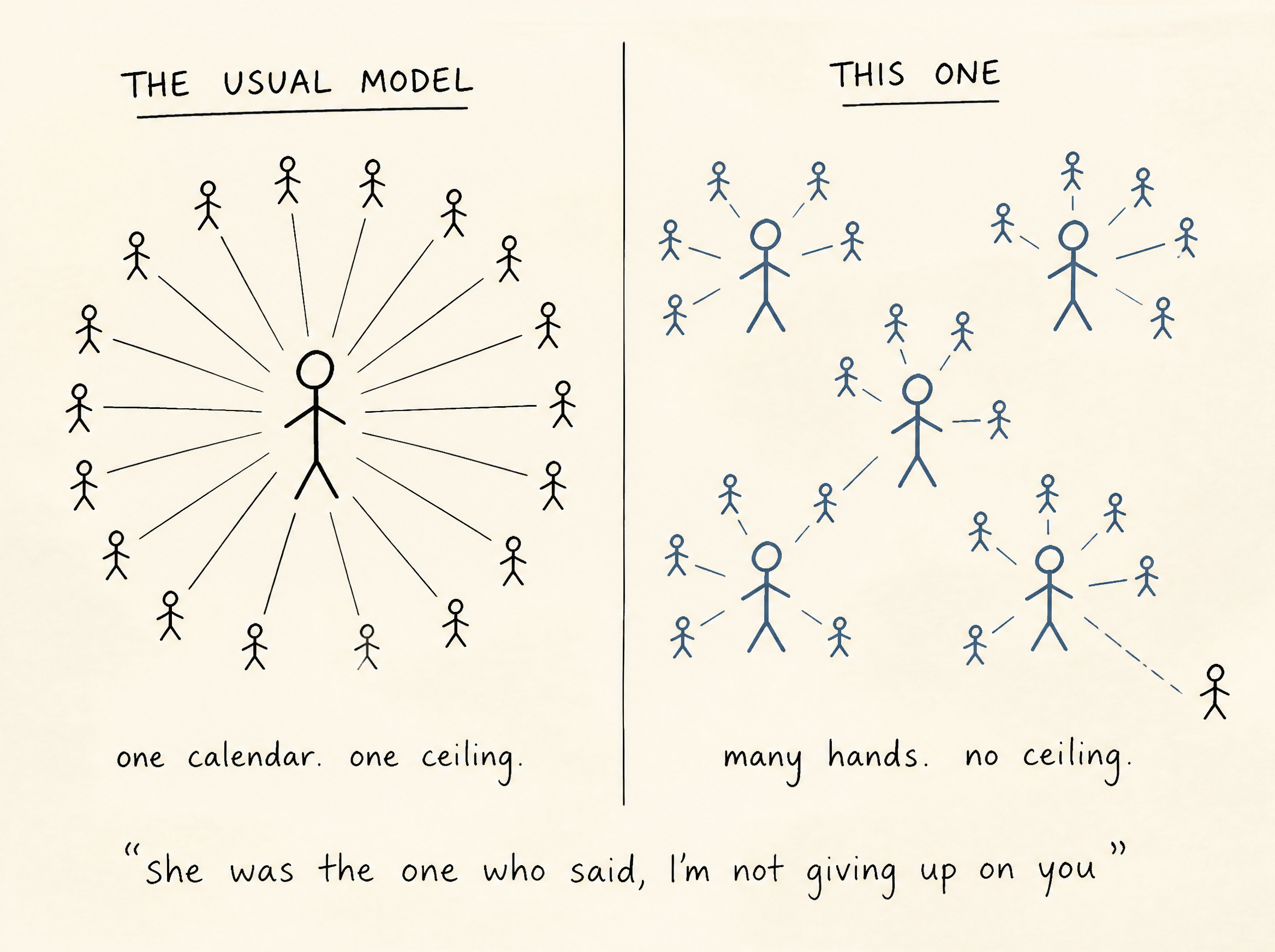
Back to where I started, because this is the part I think people miss.
Read the interviews and count how often somebody thanks an account manager by name.
Varsh Agarwal spends his final minute on his, not on the founders.
“She was the one who said, I’m not giving up on you. That one sentence literally changed our trajectory within a matter of 15 to 20 days.”
Mukesh names his account manager and describes being chased constantly.
“He was following me like anything. That pushes you and takes you a level up.”
A nutrition client describes calling her account manager when she felt low and says it became something closer to a sisterhood. Another says openly that the reason he is still with the company is one specific person.
That is not a marketing detail. That is the business model.
A guru business sells access to one person. It scales by raising the price of that access, and it stops when the calendar stops. A delivery business sells a system operated by many people. It scales by hiring, and it survives its founder having a bad month.
UAbility has clearly chosen the second, and has spent years building the bench for it. The customer who says the only reason he is still there is his account manager is not describing a weakness. He is describing a company that successfully transferred the relationship off the founder.
What the model actually costs to run
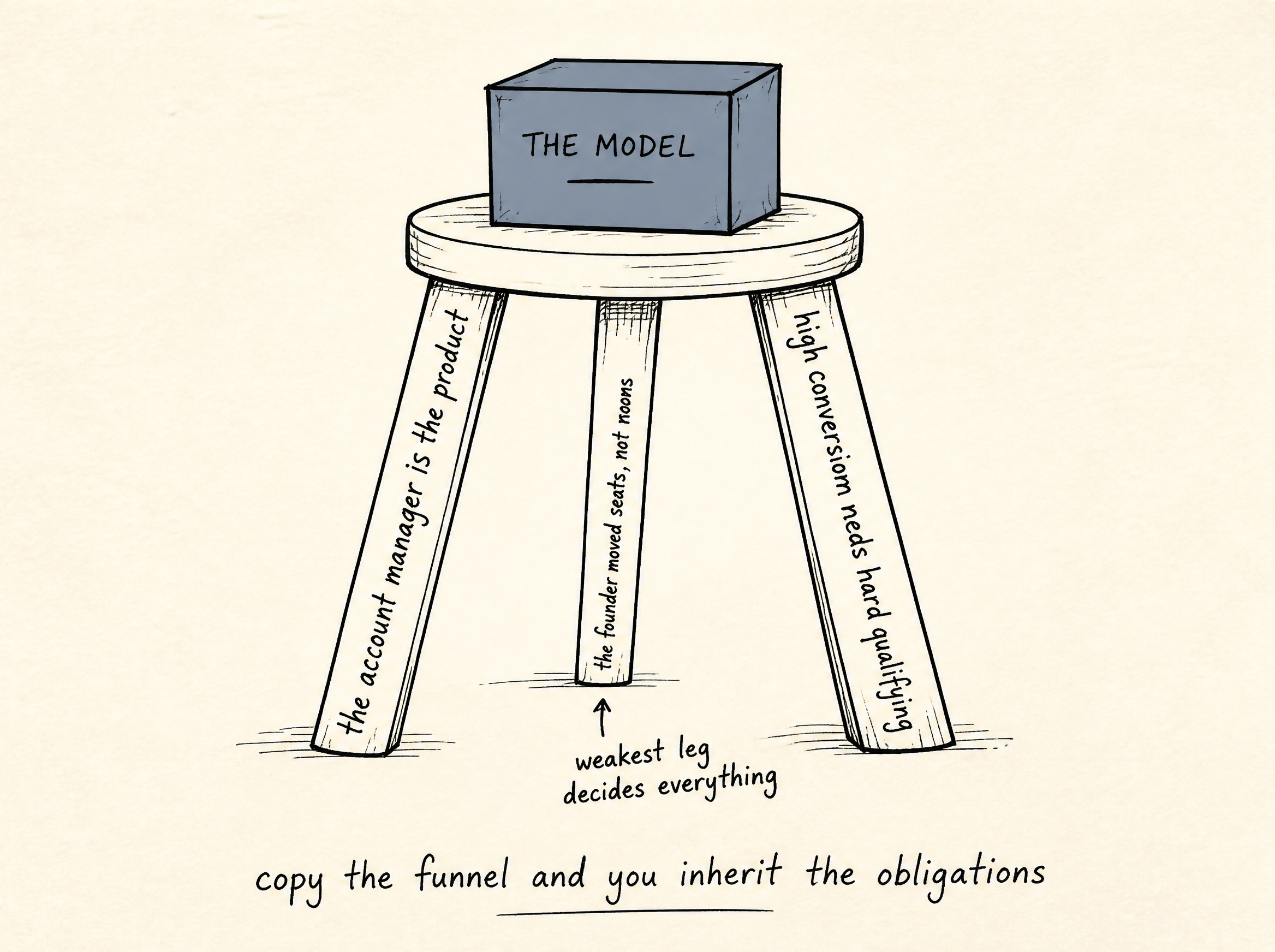
None of this is free, and I think it is worth being clear about what this architecture demands, because the people copying it usually copy the funnel and not the obligations.
The account manager is the product. If delivery lives with named individuals, then your hiring, training and retention are not support functions. They are the entire quality control system. One weak account manager is not a staffing problem, it is a churned customer with a story. Notice how many of these interviews credit a single person by name, and then imagine the inverse.
The founders are still in the machine, just in a different seat. Rohan is not fronting the ads or hosting the daily webinar, but he is in sales conversations, in one to one strategy calls, on stage at the events, and in the hot seats. Pratham is closing and coaching closers. Jayant is deep in product. The presence moved from the marketing to the operations. That is a much better place for it. It is not the same as being absent.
A system that converts at that rate carries a matching obligation. Anything that reliably removes a prospect’s hesitation has to be paired with a serious qualification process at the front, because the same machinery that gets a hesitant good fit over the line will also get a hesitant bad fit over it. Their customers describe rejecting applicants and grading leads, which suggests they know this. It is the permanent tax on any high converting sales system and it never goes away.
What an operator should take from this
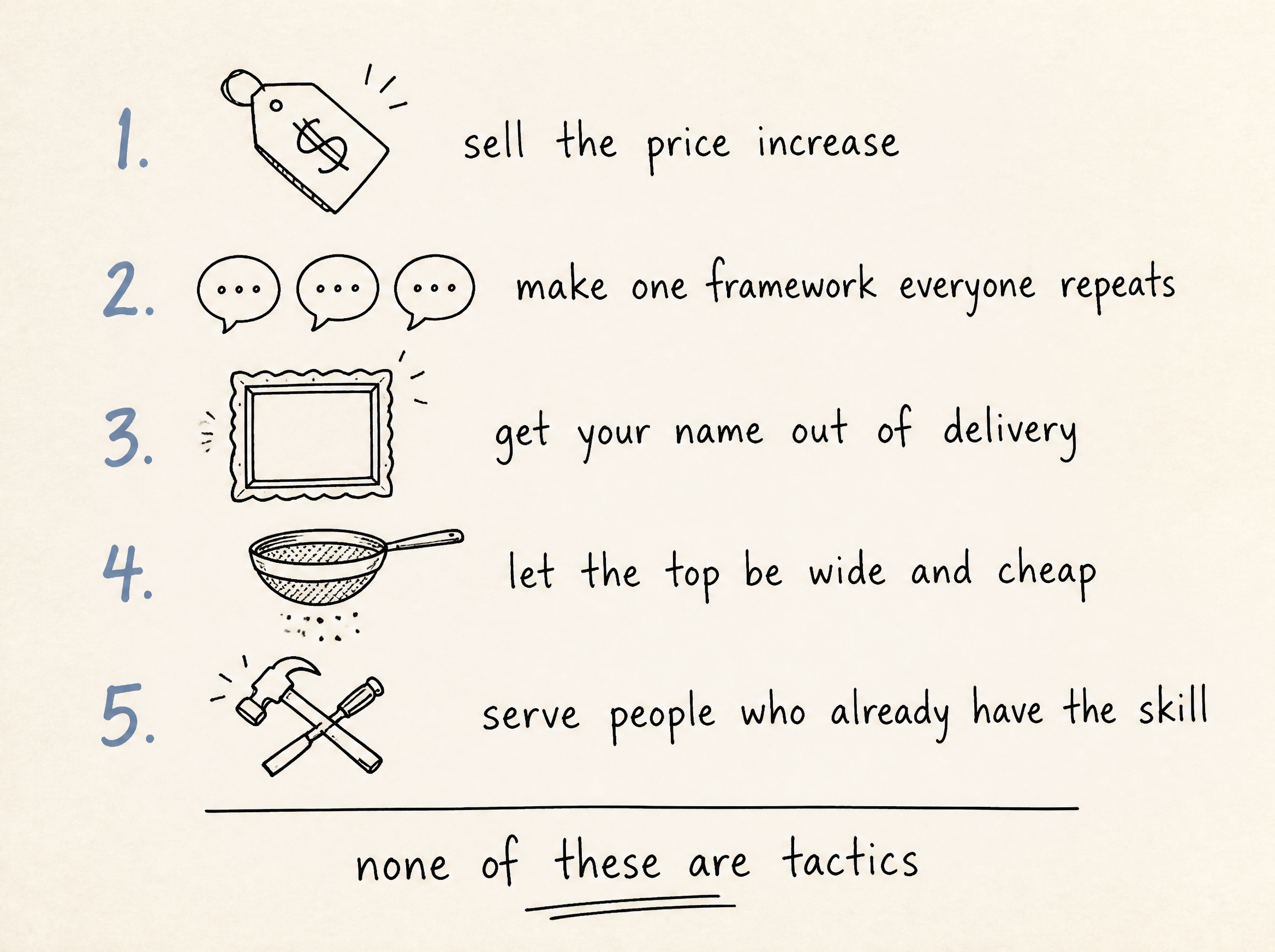
Five things, and none of them are tactics.
One. Sell the price increase, not the marketing. Most experts are underpriced and cannot see it from inside their own business. Fixing that produces a visible result faster than any funnel will, and it costs you nothing to deliver.
Two. Make one framework that everybody repeats. The proof that UAbility’s system is installed is that thirty six people in thirty six niches say BMC without being asked. If your customers cannot name your method, you do not have one.
Three. Get your name out of the delivery. The fastest way to cap a coaching business is to make yourself the thing being bought. The fastest way to uncap it is to build people your customers will thank instead of you.
Four. Let the top of the funnel be wide and cheap, and let the middle do the filtering. Do not confuse a broad workshop audience with your customer. Confuse them and you will build products for the wrong person.
Five. Serve people who already have a skill. Every transformation in this corpus starts with somebody who could already do the work. UAbility did not teach a dentist dentistry or a psychologist psychology. It repriced and repackaged what was already there. That is a much shorter path to a result than building somebody from zero, and it is available to anyone willing to pick a harder customer.
The last thing
Reading thirty six of these back to back, the emotion that comes up most is not ambition. It is relief.
Dr Mona Gulati finally able to ask for money after twenty five years of not asking. Nipuna Goel seeing time in her week. Pranjal Jain and his wife not shutting the business down. Mukesh buying a flat in Bangalore after years of debt. Sapna Sanghi finding the core of a company she had already been running for three years.
Whatever anyone thinks of this industry, those are real people whose weeks look different now, and the mechanism that changed them was not a growth hack. It was somebody sitting them down and making them answer who they serve and what it is worth.
That is not a new idea. It is a very old one, executed with unusual discipline, by a company whose founder does not particularly need you to know his face.
In a category built almost entirely on faces, that is the most interesting thing about it.
Every quotation is from a UAbility customer speaking on a publicly published UAbility video. I have no commercial relationship with the company and was not asked to write this.
Loved the detailed breakdown. Missed your thoughts on the cons of this model. The Customer Acquisition Cost, the challenges the Account Manager faces. The promise vs delivery paradigm :)
Loving these breakdowns!