

This is the third post in this series. First I showed you how to publish a book in 2026 with AI. Then a case study on filling rooms with your book. This one is about the other engine: paid traffic and funnels.
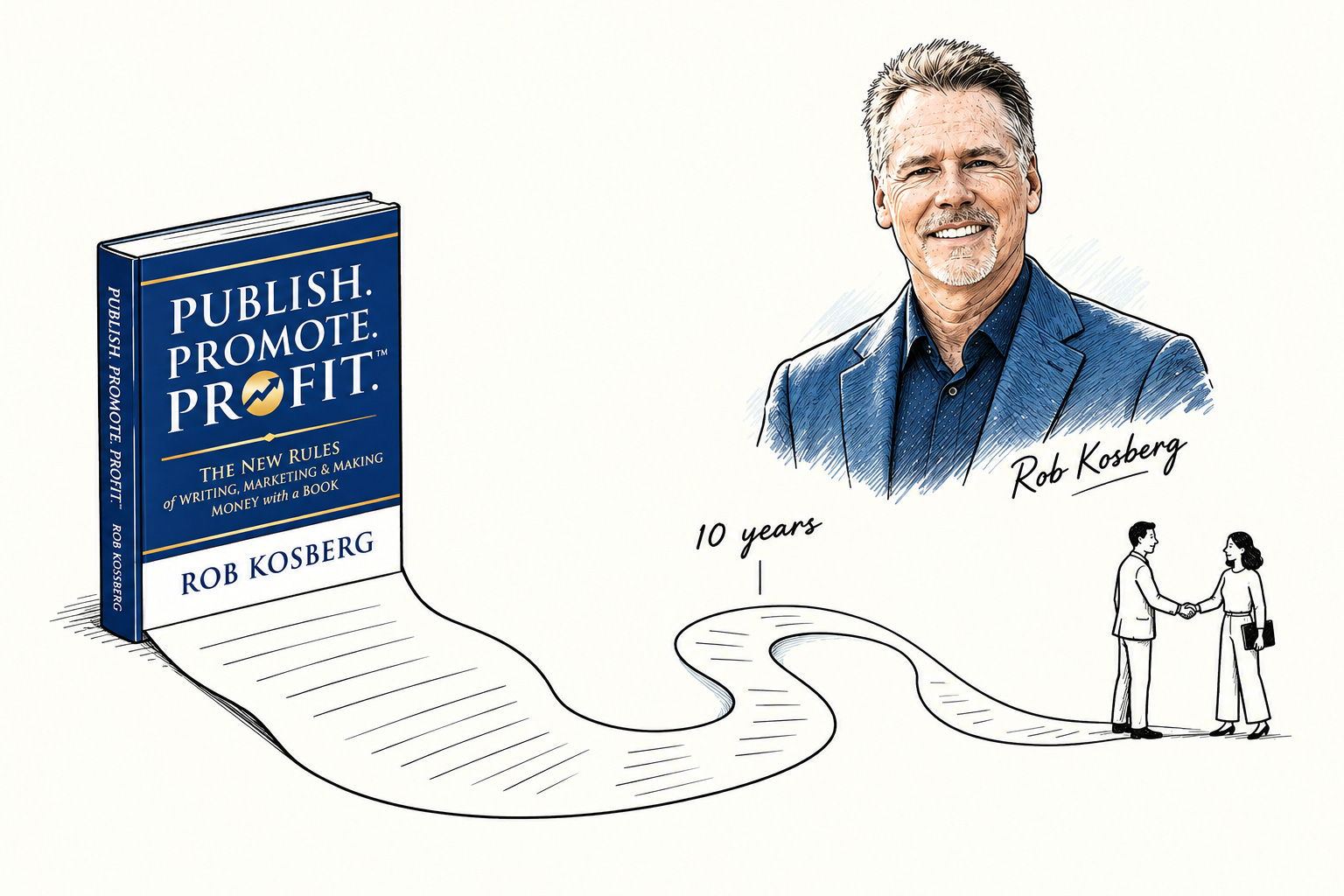
Rob Kosberg runs Best Seller Publishing. He wrote Publish. Promote. Profit., a Wall Street Journal and USA Today bestseller about turning a book into a long term business asset, and he has spent about a decade helping experts publish and then sell with their books. I listened to him on ClickFunnels Radio, and the interview is unusually practical, because he talks about the part almost nobody talks about: what happens between someone picking up your book and someone paying you lakhs.
Everything he says about his own numbers is his own claim, not an audited figure. Read it that way.
He wrote a book in two days to prove a point
He had spent two years building AI writing software for authors who cannot afford a fifty thousand dollar ghostwriting package. At an Inner Circle meeting, he asked Russell Brunson what he would do with it. Russell told him the obvious thing: if the software is that good, go write a book with it in three weeks and show everyone.
He didn’t want to. It’s a lot of work. And to make the proof honest, he could not use his own team, no ghostwriters, no editors, no proofreaders.
He wrote it in two days. Two full working days, because the stories and examples were already his. The book is Write with AI: Conquer Writer’s Block, Unleash Your Creativity, and Write Your Book Using Artificial Intelligence. There was no launch. He simply published it while a book funnel was already running, and he says it has sat at number one in its category ever since.
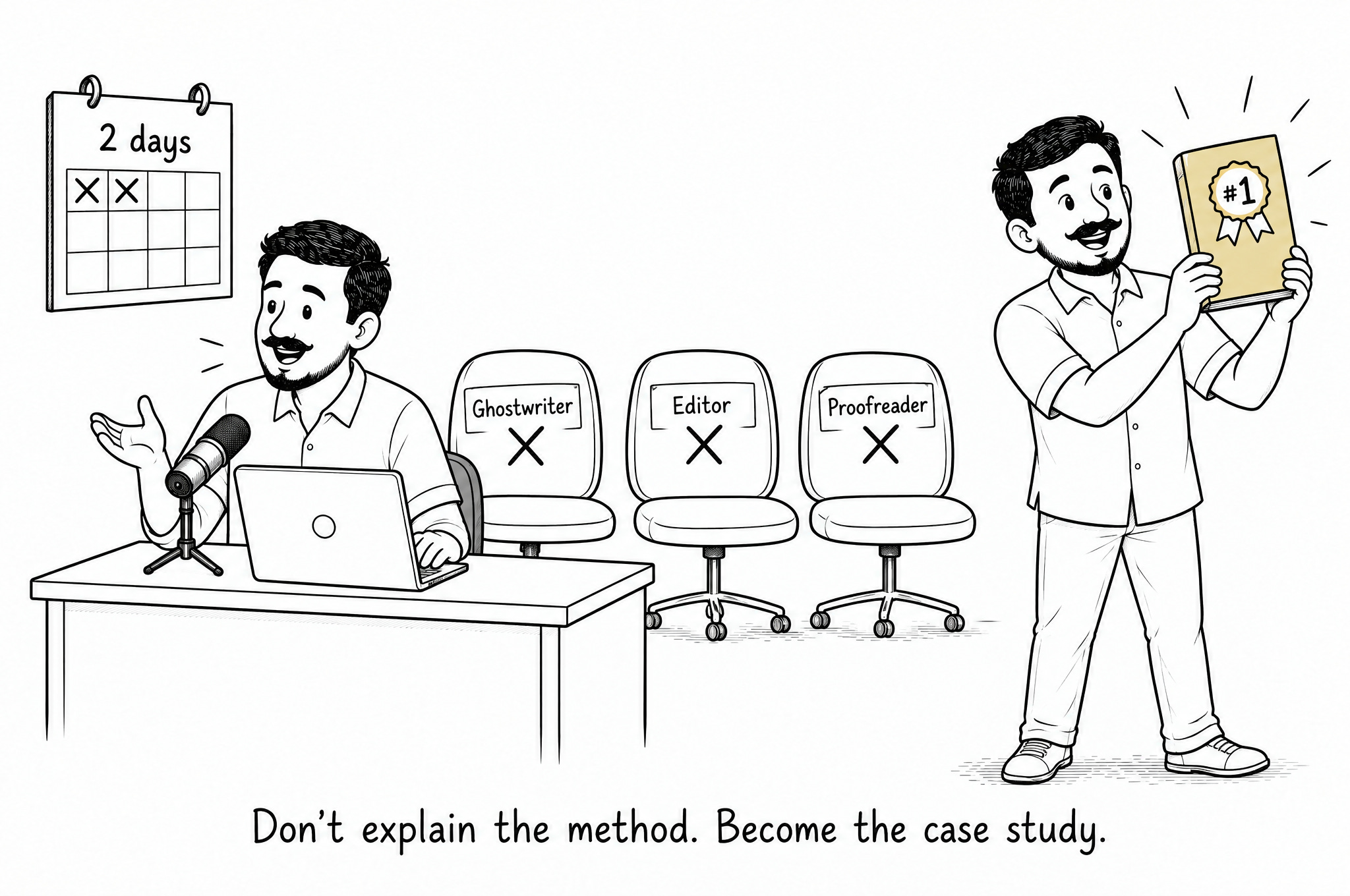
That is the first lesson, and it has nothing to do with AI. He became his own case study. He did not explain the method, he demonstrated it, in public, with his own name on the cover.
AI-generated and AI-assisted are not the same thing
His sharpest line is about the ads you have been seeing. He says the problem is not that they overpromise. It is that they overpromise the wrong thing. “Write your book in seconds” is not a thing anyone should want, for two reasons.
First, it will not be your book. Your stories, your client examples, your way of explaining things do not exist anywhere in the model until you put them there. Nothing you did not feed it can come back out.
Second, Amazon has drawn a line. KDP requires you to disclose AI-generated text, images or translations when you publish a new book or republish an edited one, and it defines AI-generated as content an AI tool actually created, even if you edited it substantially afterwards. You do not have to disclose AI-assisted content, where you wrote the work and used AI to refine it.
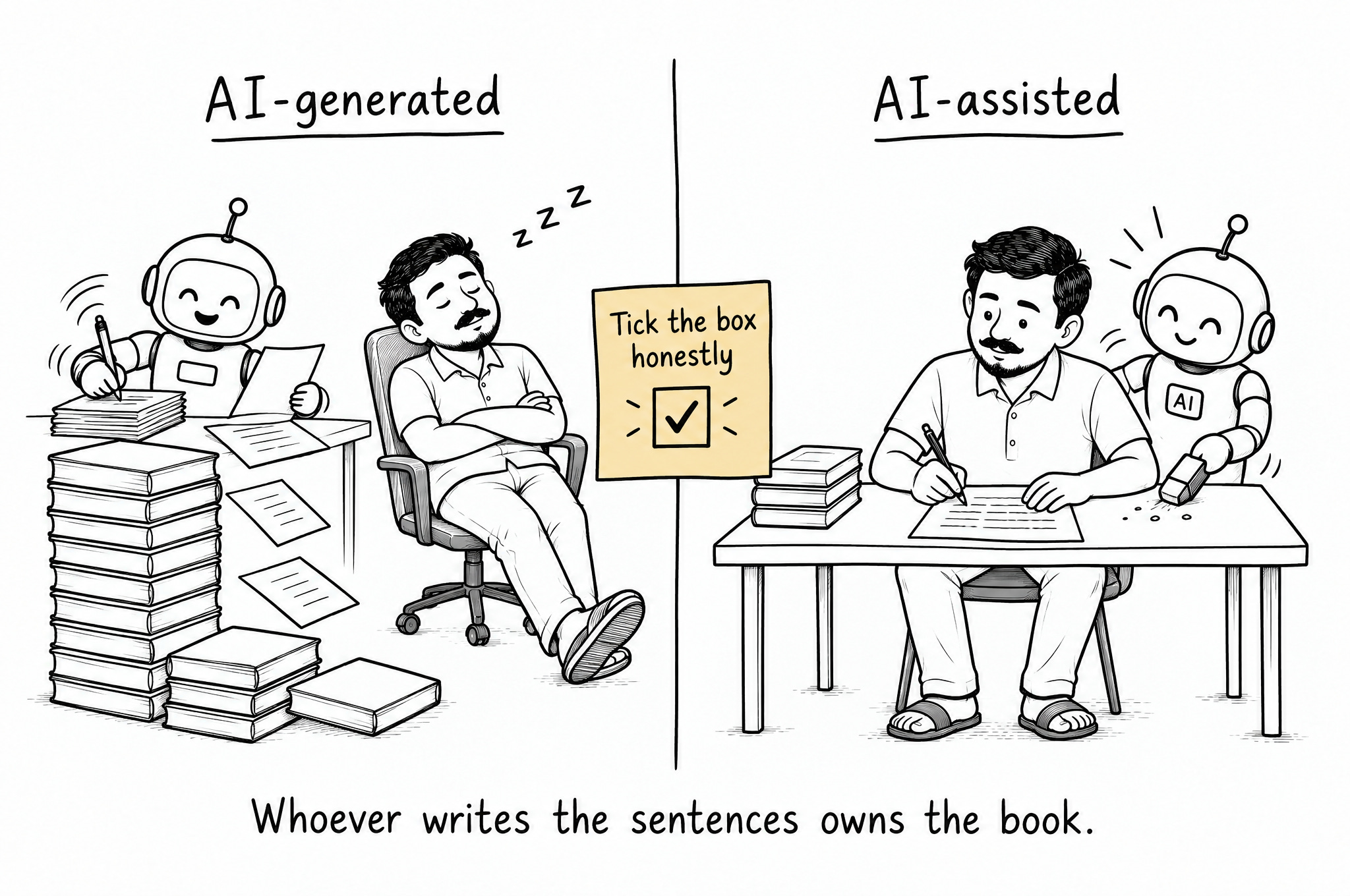
Read that definition again, because most Indian coaches are about to get this wrong. Amazon does not ban AI. The disclosure is internal, it does not show up on your book’s page, and Amazon has said it does not affect royalties or ranking. What gets books blocked is not disclosing. And Amazon caps new title creation at three a day, which it added because of AI spam.
So the practical rule for you: if Claude or ChatGPT drafted the sentences, tick the box honestly and stop worrying. If you wrote the sentences and AI tightened them, you are in the clear. Either way, the policy is not what should scare you.
What should scare you is his other story. He once bought a book on YouTube advertising and found it was a glorified transcript. He did not just stop reading. He decided not to work with that person, on the logic that shoddy work in the book means shoddy work as a service provider.
Your book cuts both ways. A good one earns trust you could never buy. A lazy one tells your best prospect, in 150 pages, that you cut corners.
Speak your book, don’t type it
This is the part I want you to actually copy.
He pulled up his own PowerPoint decks, opened the speech to text feature, and talked. The software then rewrote his spoken words as written prose: short sentences, correct grammar, in his voice. He says he changed almost nothing, and his editors found it near perfect.
The insight underneath is worth more than the tool. The spoken word and the written word are different formats. You speak in one long thirty-line sentence. Nobody reads that way. Readers want short lines, sub-headings, a point per paragraph. So the fastest path is to speak the material you already teach, then let AI convert format, not content.
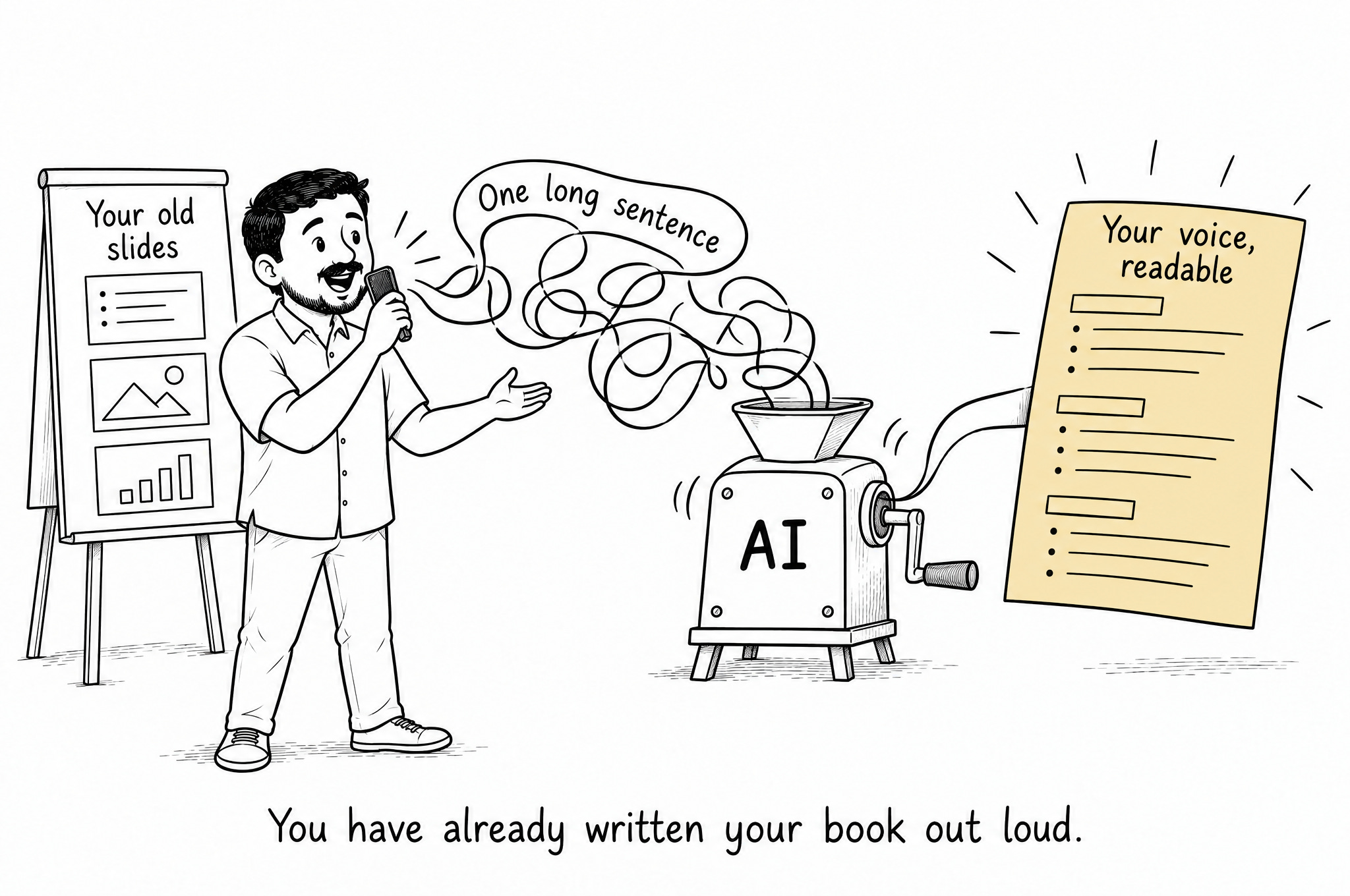
I told you the same thing in the first post, in a smaller way: record a five-minute voice note into Claude and say “integrate these thoughts into the chapter.” He runs the whole book that way. If you have taught your topic on calls, on stage, in webinars, you have already written your book out loud several times. You just never captured it.
Take your existing slides or your last three workshop recordings. Speak your way through them. That is your raw manuscript, and it is genuinely yours.
Start with the reader, not with chapter one
Before a single word of his book gets written, the process builds two things: a reader avatar and a mission statement.
Who is your ideal client, their age, their situation, their problems, what they are trying to solve, what the book must therefore deliver. Only then does the working title and subtitle come, because the title is the hook. Only after that do the chapters get laid out. The content comes last.
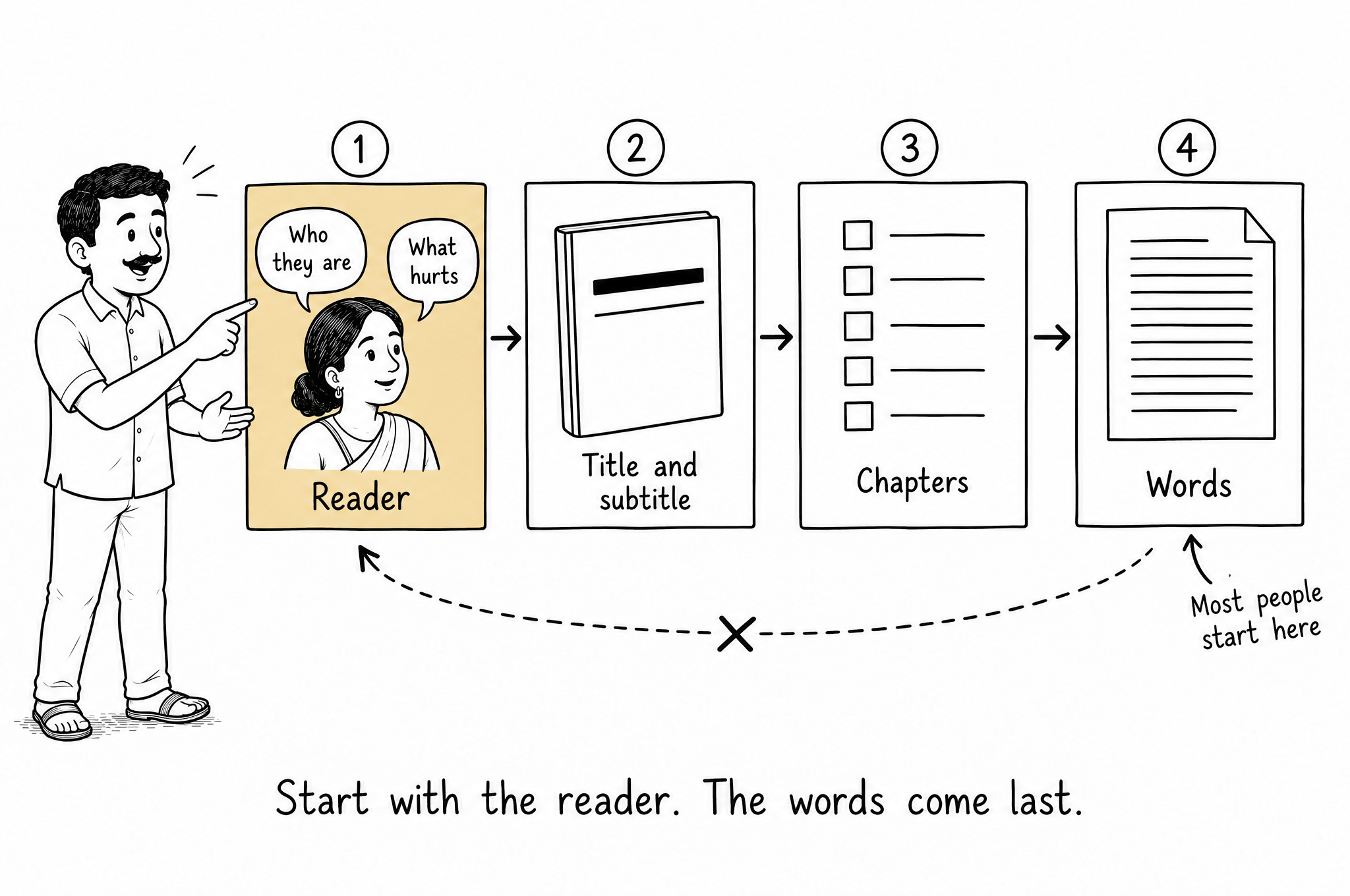
That is the same sequence he uses with a fifty thousand dollar client, except that what takes a month across calls now takes a few minutes. The platform is called Manuscriptr, built to help authors outline, draft and refine while keeping their own voice.
And when a client has no idea what to write about, his first question is lovely in its simplicity: tell me about your best customer, the one you want more of. Their demographics, their pain, how you serve them. If the answer is “I hate serving those people,” the book is the wrong problem; you need to decide what business you want to be in first.
He says the people who think they have nothing to say almost always end up with too much. The real work is narrowing.
If you want a practical version of this, write the avatar and the one line mission of your book before you write anything else, and keep both at the top of your manuscript file where you can see them every day.
Why a ₹199 buyer beats a free download
Here is the piece that changes how you value a book sale.
He runs a book funnel two ways: a free plus shipping offer for the physical book, and a digital version. Apart from the people who have already paid a deposit, the buyers from that funnel are the most qualified people his team speaks to.
Why would someone who paid the equivalent of a few hundred rupees be qualified? Because it is hard to sell anything on the internet. Getting a stranger to take out a card and type the digits is the single biggest hurdle in this business. That is the entire reason order bumps and upsells exist. Somebody who crosses that line is a buyer, and as Dan Kennedy kept saying, a buyer is a buyer is a buyer. A freebie seeker is a completely different animal.

One Indian adjustment. UPI has made small payments almost frictionless here, so a ₹199 payment filters a little less than a card payment does in the US. It still filters. And do not offer cash on delivery for a book funnel, however tempting. COD removes the exact commitment you are trying to buy.
The book funnel, step by step
The structure is almost boringly simple, and he says it has produced tens of millions.
Someone buys the book, physical or digital. Then come the upsells: the audiobook, a course. Then an unadvertised bonus, which is a 45-minute training that walks through his entire process. Directly under that training sits a link to book a call. If they don’t book, the email sequence keeps pointing them back: read the book, watch the training, then talk to us if you want help.
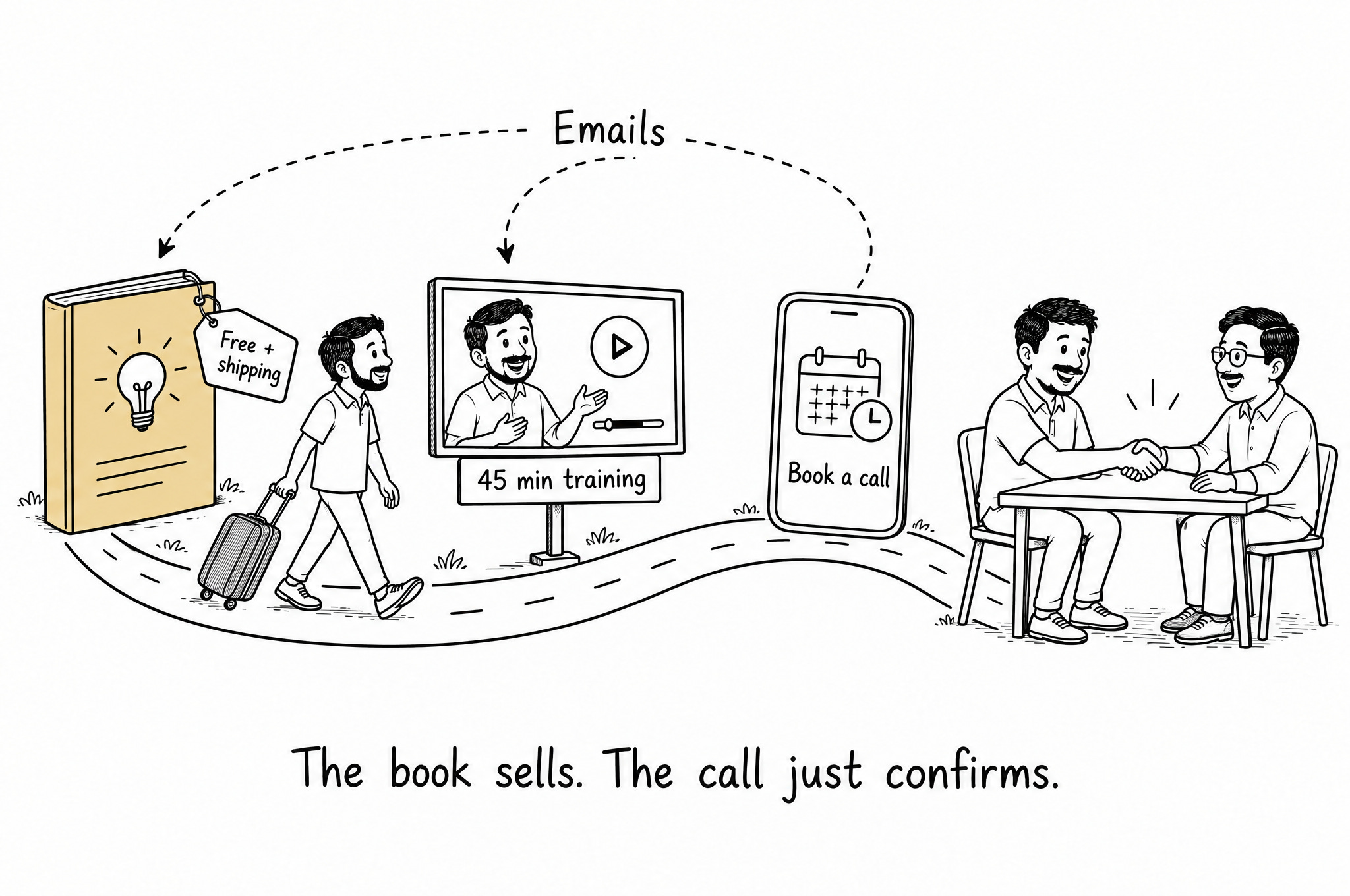
Notice what he is doing. The book and the training do the selling. By the time someone reaches out, he says they are three quarters of the way to buying. They know him, they have seen the method, they believe the case studies. All that is left is details and numbers.
This is why I keep saying your book is not a product. It is the beginning of a path. Deep Marketing does that job for me, and the 30-day course that goes with it keeps the conversation running.
The deposit trick I would steal tomorrow
His webinar funnel is the unusual one.
Two hour live event, cold to warm traffic. He states the prices on the webinar itself, eight thousand and fifteen thousand dollars. The only way to buy is to book a call. And he will not give you a call unless you pay a one thousand dollar deposit, fully refundable.
Roughly nine out of ten people who book that call, close.
Read that again. He is not filtering with a form. He is filtering with money, before anyone from his team spends a minute on the phone. And it works because by then the prospect has spent two hours with him and already knows the price, so the deposit is not a leap. The call becomes a conversation about payment terms and a few personal questions, not a pitch. Some people do get refunded because they hoped he could pull a rabbit out of a hat, and that is fine.
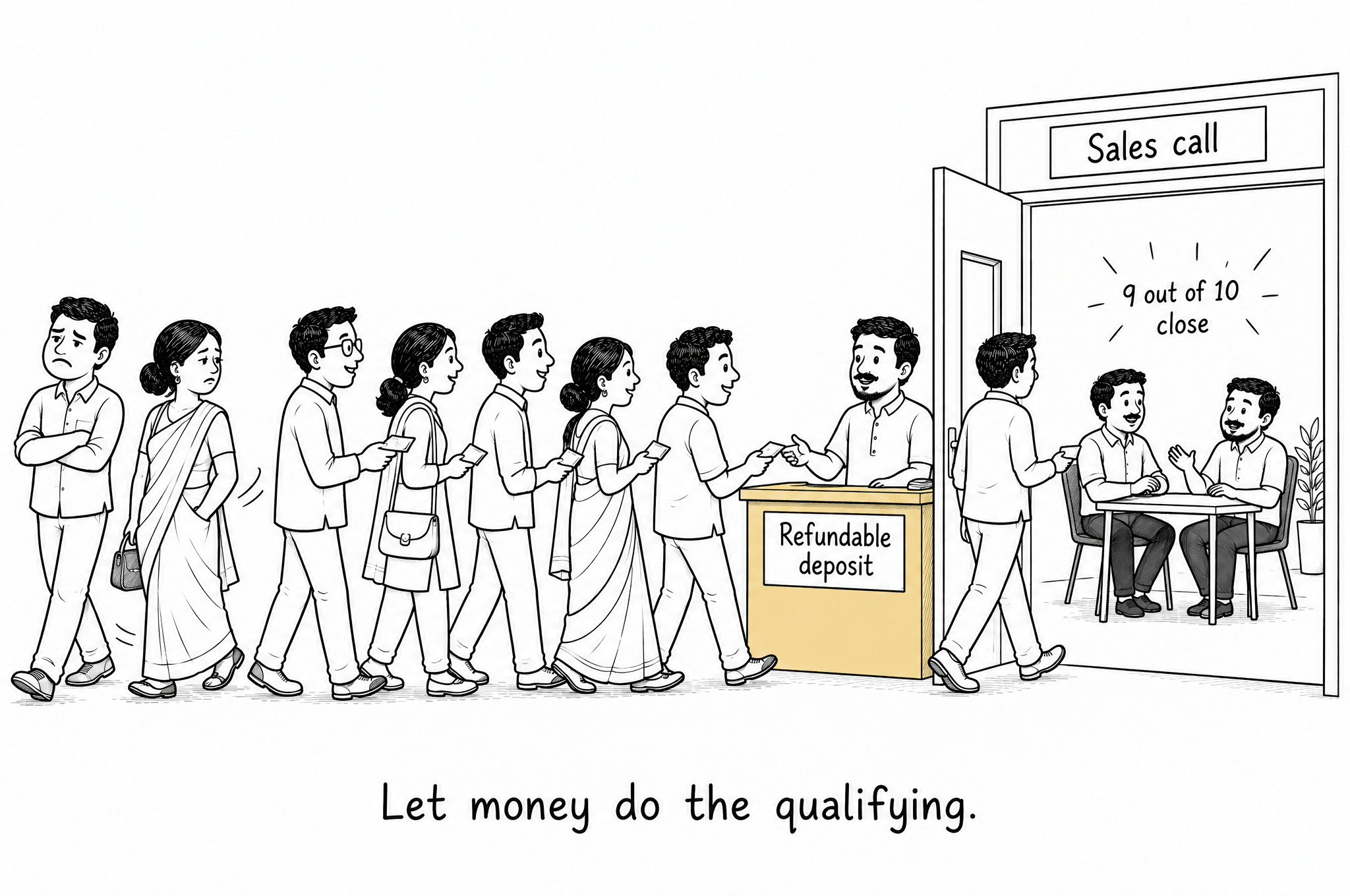
For India, I would not start at a thousand dollars. But the principle transfers exactly: state your price publicly, then ask for a small refundable commitment before the call. Even ₹2,000 to ₹5,000, adjusted into the fee, will cut your no-shows to almost nothing and hand your team only serious conversations. The alternative is what most coaches here do, which is book forty free calls a week and let the team drown in twenty of them.
The financial adviser who retired into a bigger business
His best story is about a man in his early sixties who was selling his financial advisory firm and wanted to get his knowledge out anyway. They made a book on tax saving and financial planning. Rob told him it was easily a one crore a year business.
He was wrong. The man built a book funnel with ordinary Facebook and Instagram traffic and, by Rob’s account, is doing five to seven million dollars a year from it. Rob says he looked at the funnel and picked it apart, because it is not special in any way. His client’s real problem now is that he cannot hire advisers fast enough. He is busier after retiring than before.
The pattern is not the funnel. It is the arithmetic. When one client is worth lakhs over their lifetime, a book that costs you ₹110 a copy is almost unfair. In India, that describes wealth managers, CAs, insurance advisers, estate and succession specialists, doctors and dentists running cash practices, architects, and any B2B consultant. Rob’s own line is that experts like these hit singles, doubles and triples all day, while the dramatic memoir is either a home run or a labour of love. Even a book that becomes a film is no guarantee of income.
Give away the what, charge for the how
He is unambiguous about moving the free line. Give your best material away in the book.
His reasoning is the best I have heard. Nobody reads a specific book on a specific topic for pleasure. They read it with a goal. So when you hand them your best thinking plus the case studies that prove it works, the right reader does not think “great, I’ll do this myself.” The right reader thinks “this person clearly knows exactly what they’re doing,” and then asks what it costs to get there faster and without mistakes. The people who understand that their time is worth more than their money are exactly the clients you want.
Chandler Bolt said the same thing in the last post in different words. Give away all your best stuff, and people will pay you to tell it to them again, in person, applied to their business.
There is also a practical limit. A book only holds so much. He wants his clients’ books at 150 to 200 pages, built on stories rather than a manual, because nobody is buying a textbook. That sits comfortably inside the 200 to 300 pages I recommended you aim for.
Three jobs your book does
He boils the return down to three.
Trust, which is the whole game if you sell anything expensive. Your methodology, your process, your thinking, your examples, in one object a prospect can hold and check.
Media. Editors, producers and podcast hosts need people to put in front of an audience, and their biggest fear is putting up someone who turns out to be a fraud. A book clears that check before anyone has to take a risk on you.
And the funnel, which is everything above.
One nuance he adds is about narrowness. Being generally trusted is pleasant. Being the trusted person for one specific problem is what makes money. Not “a good marketer”, but the person who wrote the book on this exact thing for this exact audience.
What to do this week
Write your reader avatar and a one line mission for your book before you write anything else. Open your last three workshop recordings or your existing slides and speak your way through them to get a raw manuscript in your own words. When AI drafts sentences for you, tick Amazon’s disclosure box honestly, and spend your effort on making the book good rather than hiding how it was made. Then build the simple path: book, a training that shows your process, a way to talk to you, and emails that keep pointing back to both. If you sell anything above a lakh, put a small refundable deposit in front of your sales calls and watch what happens to your close rate.
And remember what a book actually buys you, which he described better than I could. When someone reads your book, you are inside their head, uninterrupted, for hours. No ad, no reel, no webinar gets that. You just have to earn it with something worth reading.