You sign a new client. There is money in the bank. You feel like the business is finally moving.
Then an existing client leaves.
You replace them. Another client reduces their budget. Someone else stops responding when the renewal is due.
You are working every day. Your team is busy. Your calendar is full. Yet the business keeps returning to the same place.
When this happens, the obvious answer seems to be more leads. Run more ads. Publish more content. Hire someone to close more sales.
But before spending more money to bring people in, look at what happens after they become clients.
That is where a lot of service businesses lose the growth they worked so hard to create.
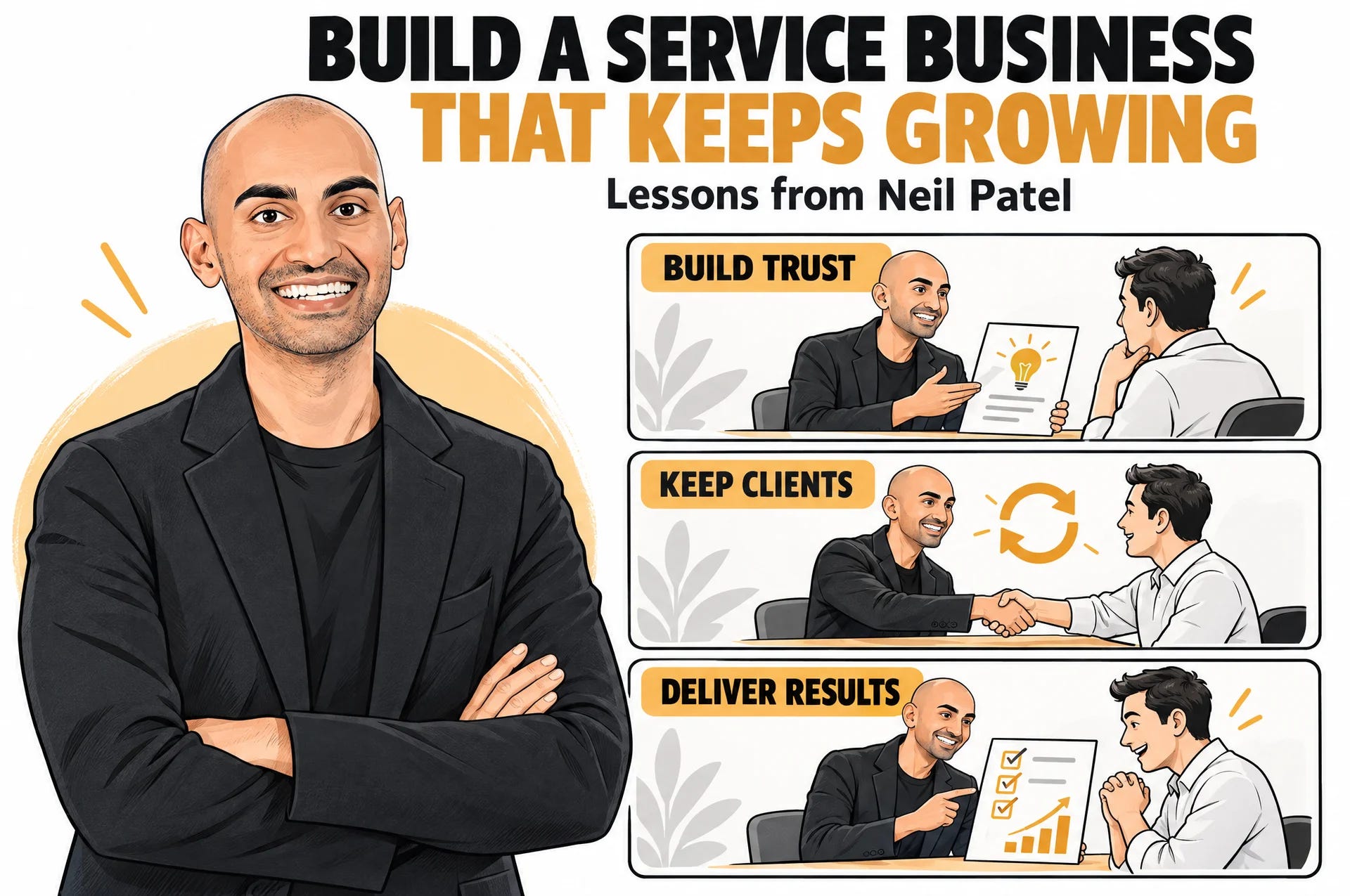
In an interview about building his agency, Neil Patel shared several useful lessons. They apply to consultants, freelancers, and experts who want to build a business around their knowledge.
The first lesson begins before you even create your offer.
Pay attention to what people already want from you.
Neil described how his content attracted enquiries from people who wanted help with their marketing. When those enquiries went to other agencies, there was a mismatch. People had developed trust in his approach. They wanted that approach applied to their business.
The demand was already there.
Many experts do this in the opposite order. They create a service, build a website, decide on a price, and then start looking for someone who wants it.
You can learn a lot by listening before building.
What do readers reply to your emails about? What do people repeatedly ask during consultations? Which problem do they understand well enough to consider paying for help?
A question that keeps coming back deserves attention. So does a client asking whether you can help with something beyond your current service.
Of course, interest alone does not prove demand. Someone saying an idea sounds good is different from someone willing to pay for it. Have the conversation. Understand the problem. Test a clear offer.
Repeated requests can reveal an opportunity you would miss while brainstorming alone.
Content helps people understand your thinking before they hire you.
An offer becomes stronger when it answers a problem buyers already recognise.

This is closely connected to what I write about in Deep Marketing.
Content attracts attention. Useful content, shared consistently with the right people, helps build trust. That trust makes a transaction possible.
But receiving the payment creates a new responsibility.
Now the client gets to compare what you promised with what they experience.
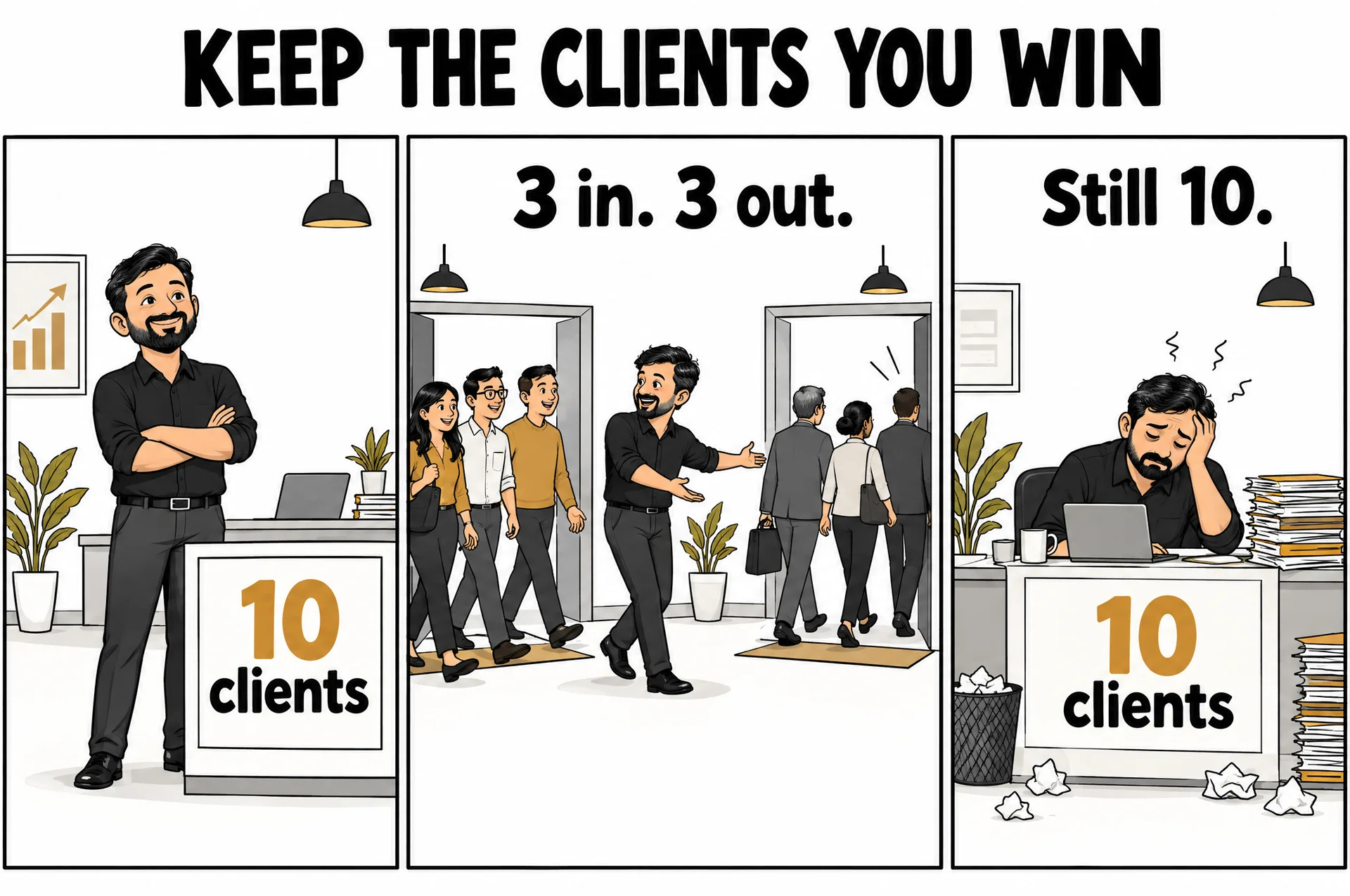
Imagine you have ten clients. This month, you sign three new clients and lose three existing ones.
You can celebrate the three sales. You can share the new client logos. But you still have ten clients.
You also have three new relationships to onboard, understand, and manage.
Now imagine signing the same three clients while keeping the original ten. You end the month with thirteen.
This simple example explains why retention deserves as much attention as acquisition. If clients keep leaving, a large part of your marketing budget is paying to replace lost business.
Look closely at the last few clients who left. Speak to them if you can.
Was the problem poor results? Unclear expectations? Slow replies? A change in their business? Did they understand the progress being made?
Each answer points to a different fix. Publishing more reels will not solve a communication problem inside your delivery team.
There is another question worth asking: are you solving enough of the client’s problem for your work to make a difference?
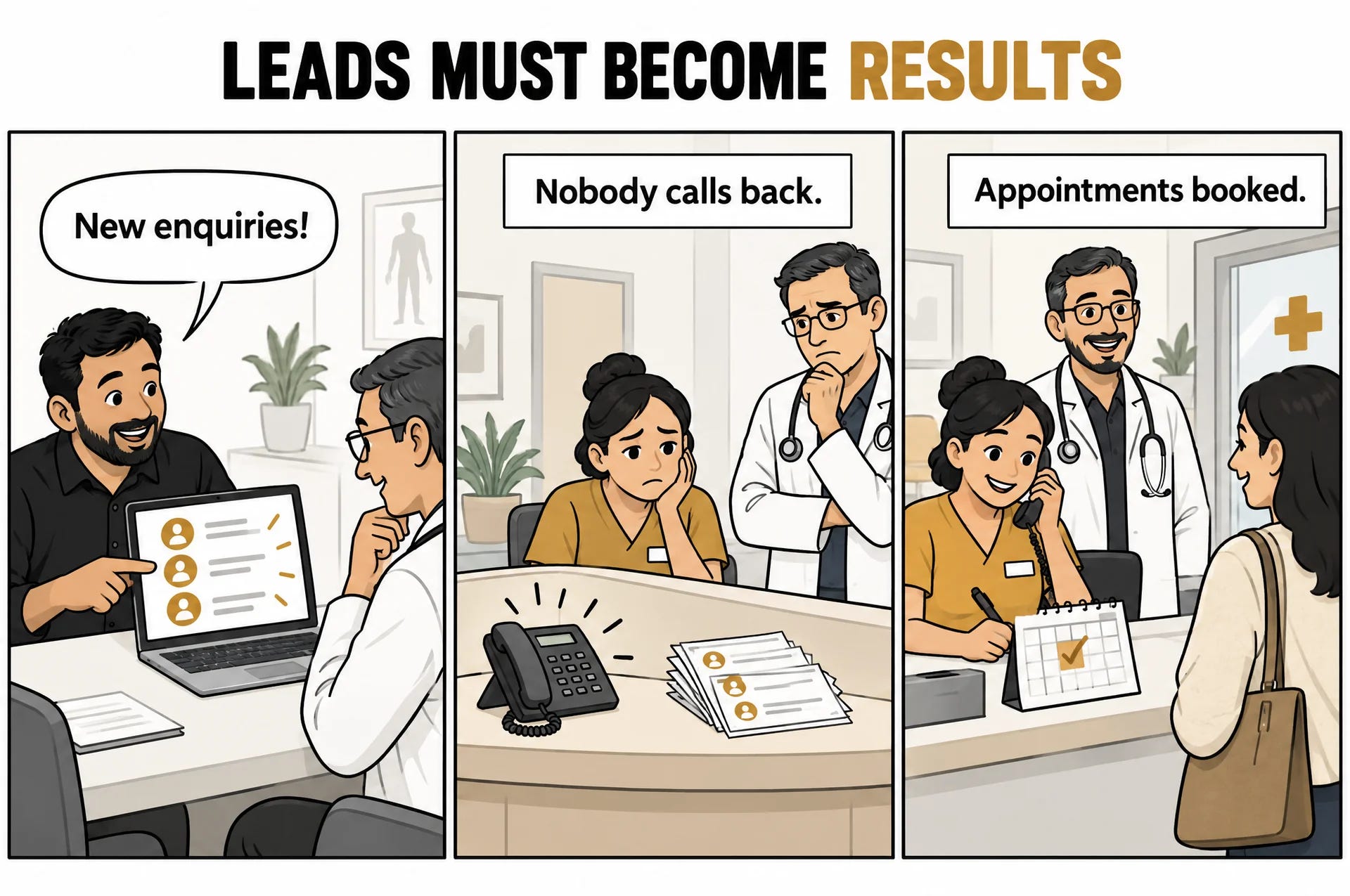
Suppose you run advertising for a clinic.
The campaigns generate enquiries. Your report looks good. But the clinic’s team takes two days to call people back. Some calls are missed. Nobody follows up.
The doctor sees money going out and very few new appointments coming in.
You can explain that you delivered the leads. That may be true. The commercial problem still exists.
A useful next step is to help the client see where the enquiries are being lost. Perhaps they need a better follow-up process, clearer responsibilities, or someone who knows how to handle appointment calls.
You do not have to take responsibility for everything inside their business. You do need to understand how your work connects to the result they hired you for.
When you notice a problem outside your scope, discuss it. Agree on who will solve it and what additional work, if any, is required.
That conversation can improve the result and reveal a valuable opportunity to serve the client further.
It also changes how the client sees you. You understand their business well enough to look beyond your monthly report.
This is how a small engagement can grow.
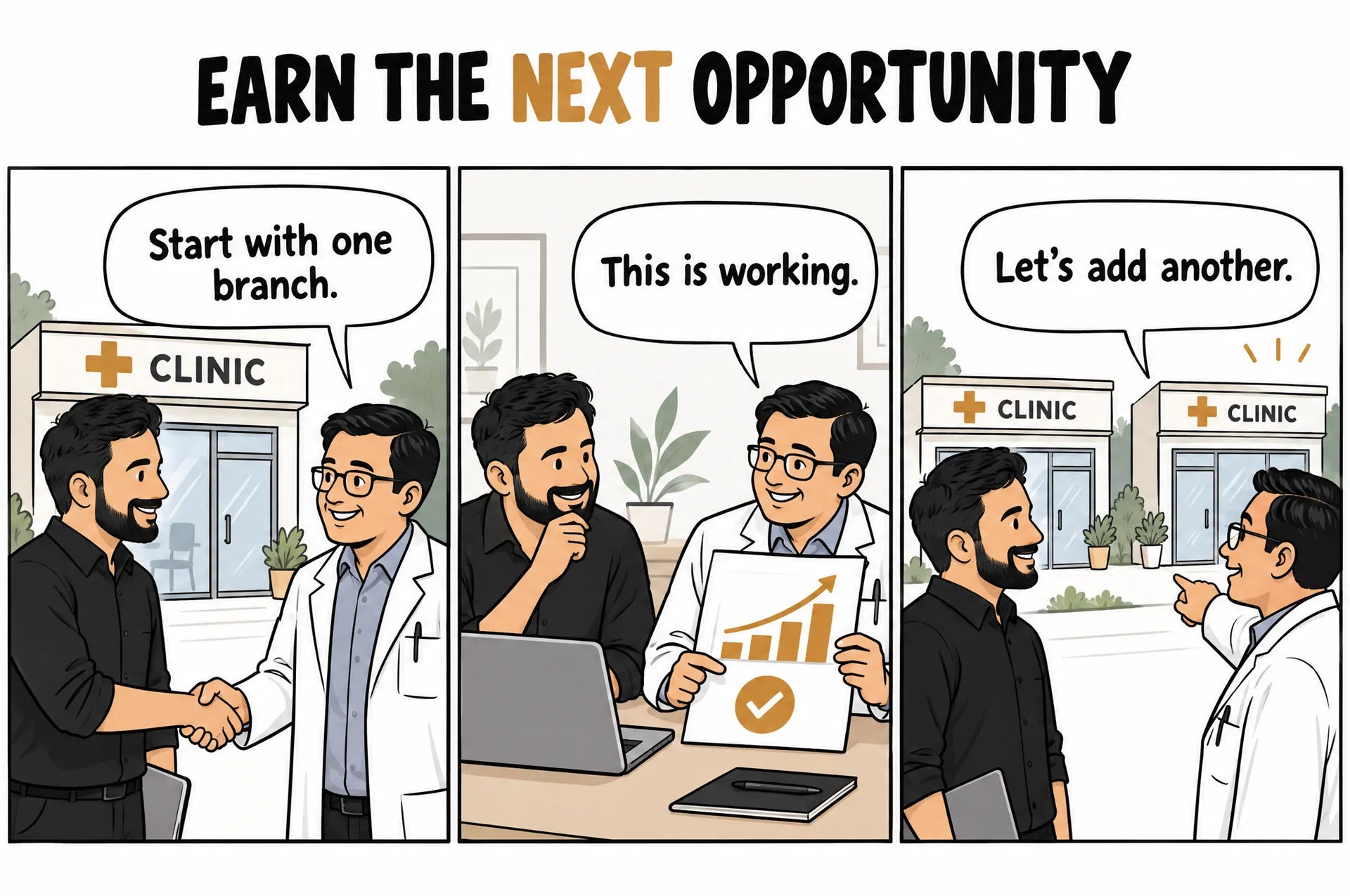
Imagine helping one branch of a business improve its enquiries and follow-up. The owner sees progress. You document what changed and why it worked.
Then you discuss applying the same approach to another branch.
You already know the business. The client has seen how you work. There is less uncertainty on both sides.
Compare that with trying to sell a large engagement to someone who has never worked with you.
The bigger commitment may still make sense. But the buyer needs enough evidence to feel comfortable making it.
A focused first project can help create that evidence.
Solve a clear problem well enough that the client can see the improvement.
Use the first engagement to understand the business more deeply.
Expand the relationship when there is another real problem you are equipped to solve.
This matters when you start approaching larger clients.
It is easy to imagine that a bigger company simply has a bigger budget for the same service.
Larger engagements can also involve more people, more approvals, longer sales cycles, and greater expectations. The person hiring you may have to defend that decision to their manager.
They want to know who will do the work. They want relevant experience. They want to know what happens when something goes wrong.
Your confidence alone cannot answer those questions.
A sensible way to move towards larger clients is to do it gradually. Serve a slightly bigger business. Build proof. Improve your process. Hire the capability needed for the next step.
Keep doing good work for your current clients while you build that capability.
There is no need to abandon a functioning business because you have become excited about a more ambitious one.
As you grow, you will also need to think differently about your team.
A personal brand can create the first conversation. The client’s daily experience depends on the people delivering the service.
If you are excellent at selling but your team misses deadlines, the client experiences missed deadlines.
If your videos are thoughtful but your account manager cannot explain what is happening, the client experiences confusion.
They bought a service. They now have to live with the way your business provides it.
This is why hiring should go beyond impressive company names on a CV. Understand what the person actually did, how they made decisions, and whether they can succeed in the role you need filled.
Good people also need enough authority to do their jobs.
If every decision waits for you, every client problem eventually reaches your desk. Adding more clients adds more decisions to the same queue.
Start by identifying work that someone else can own properly. Give them a clear outcome, access to the information they need, and a way to raise problems early.
You may remain closely involved. The business can still become less dependent on your availability for every small decision.
Building that capacity costs money.
An experienced hire can reduce your profit in the short term. So can better training or spending more time on client delivery.
That does not automatically make the expense a mistake. It also does not automatically make it a good investment.
Look at what changes. Does the team deliver better work? Do clients stay longer? Can you take on work that you previously could not handle?
You should be able to connect the expense to a stronger business.

The same thinking applies to content.
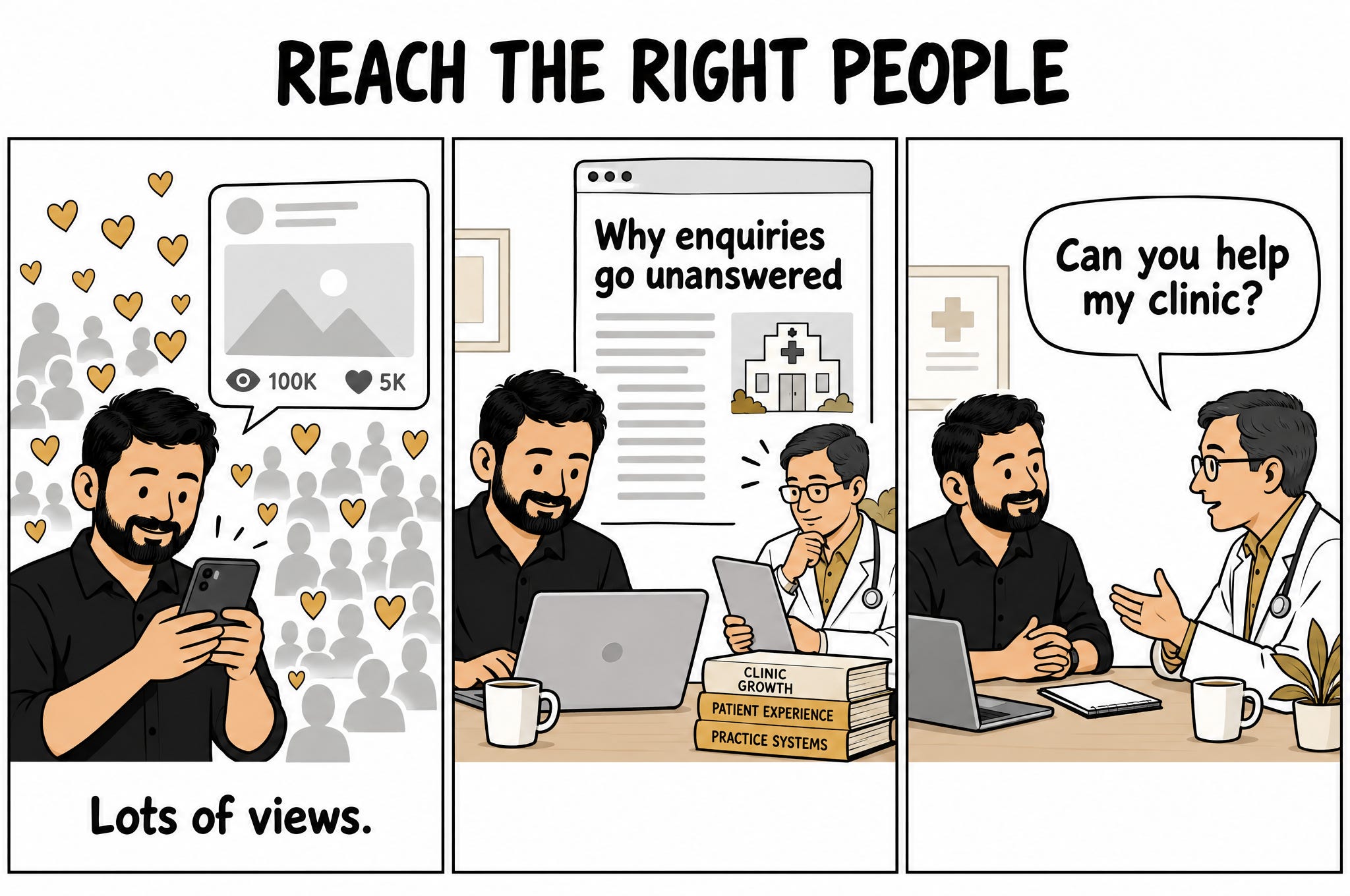
A post can get thousands of views from people who will never need your service.
Another post can reach a small number of people facing exactly the problem you solve.
The second post may create more useful business conversations.
Neil described deliberately moving away from broad topics that attracted traffic towards topics relevant to the clients his agency wanted to serve.
That choice is uncomfortable when you have become used to measuring success through views.
Imagine a consultant who helps established clinic owners improve their operations. A general motivational post might reach a large audience. A detailed explanation of why enquiries fail to become appointments could reach far fewer people.
But a clinic owner dealing with that problem has a reason to pay attention.
Write with that person in mind.
Explain the mistakes they are making. Help them understand a decision. Show them how to recognise a problem before it becomes expensive.
You do not need to make every piece of content appeal to everyone.
You need the right reader to finish it with a better understanding of their situation and greater confidence in your judgement.
AI also belongs in this discussion, but it needs a clear job.
The conversation explored using AI to review client interactions and help teams identify problems. That is a useful direction because it connects the tool to something the business needs to do better.
For example, a team could use AI to help review meeting notes for recurring concerns. People would still need to check the findings and act on them.
You can also use it to speed up routine preparation, organise research, or develop an initial draft.
The benefit depends on what you do with the time saved. You could spend more time understanding the client, checking the work, and making better decisions.
Producing more material has limited value if the client still cannot see progress.

For your own business, these are the insights I would keep close:
Look for demonstrated demand before building a complicated offer.
Understand why clients leave before increasing your acquisition budget.
Connect your deliverables to the business result the client cares about.
Earn larger engagements through useful work and visible proof.
Build a team that can deliver the trust your marketing creates.
Judge content by the relevance of the people it reaches.
Give technology a specific role in improving the client experience.
You can begin with one client this week.
Review what they expected when they hired you. Look at what they have experienced so far. Ask what is working, what is frustrating, and what progress would matter most to them now.
Then choose one improvement and take responsibility for getting it done.
That conversation may teach you more about growing your business than another week spent searching for a new marketing tactic.
A stronger business begins with earning trust before the sale and delivering on that trust after it.
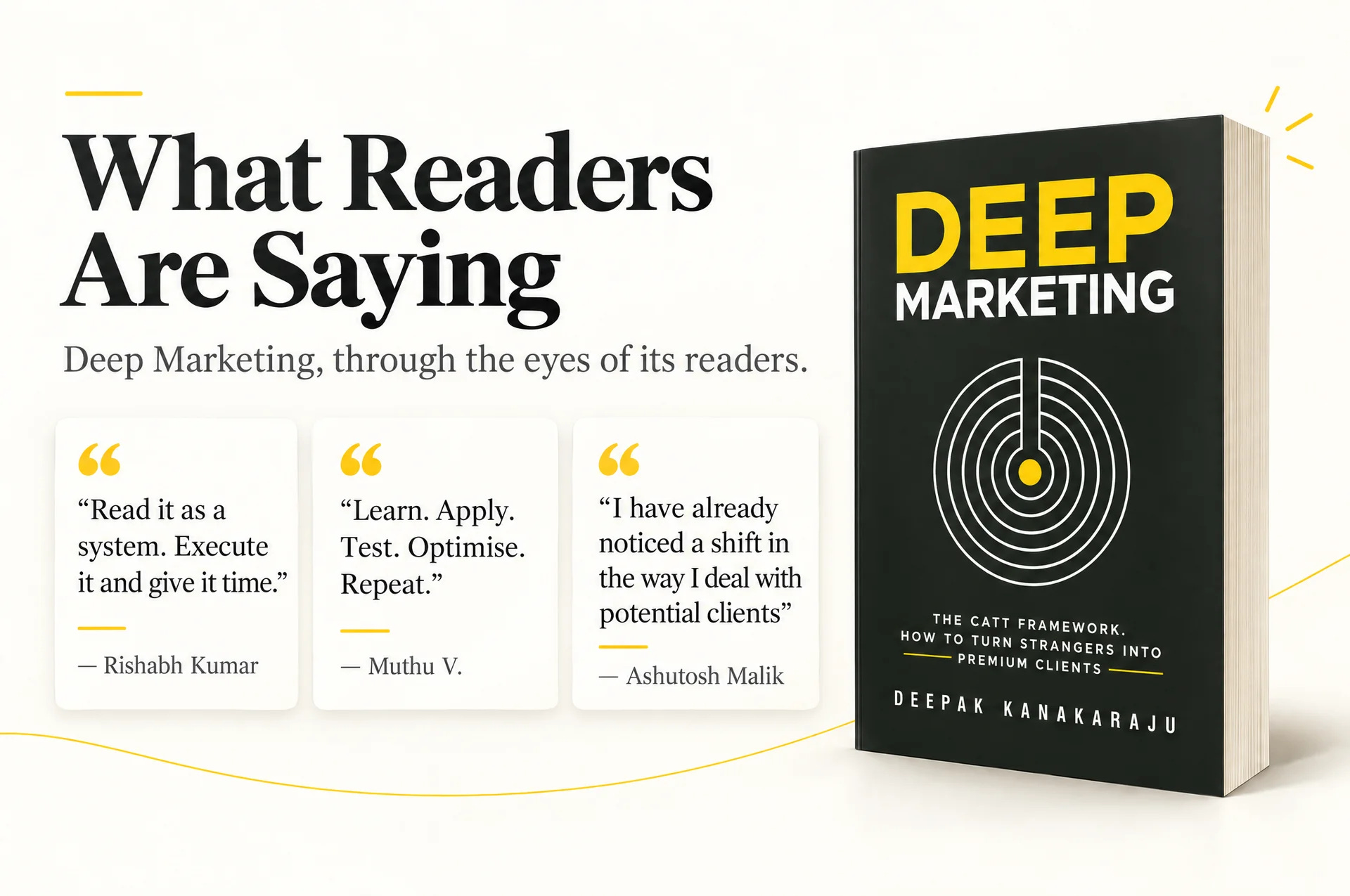
That is the idea behind my book, Deep Marketing: The CATT Framework. How to Turn Strangers Into Premium Clients.
I wrote it for consultants, coaches, freelancers, and experts who are good at their work but struggle to attract clients who recognise its value.
The book explains how to use content to attract the right people, build trust, and turn that trust into business. It also explores what happens after the sale, because the experience you deliver becomes the reputation that brings your next client.
Buy Deep Marketing on Amazon, and start applying the ideas to your business, one client at a time.