

If you have read Deep Marketing, you may remember that I said my next book would be Deep Selling. That was the plan. I wanted to continue the journey from earning someone’s trust to having a useful sales conversation with them.
But as I started writing, I kept running into questions that needed to be answered before the conversation began. What should you ask on a sales call? How should you respond when someone says the price is too high? What should you do when a person wants the result but hesitates to commit?
The answer kept depending on what was being sold. I could explain how to have the conversation. First, though, I needed to examine the offer sitting underneath it.
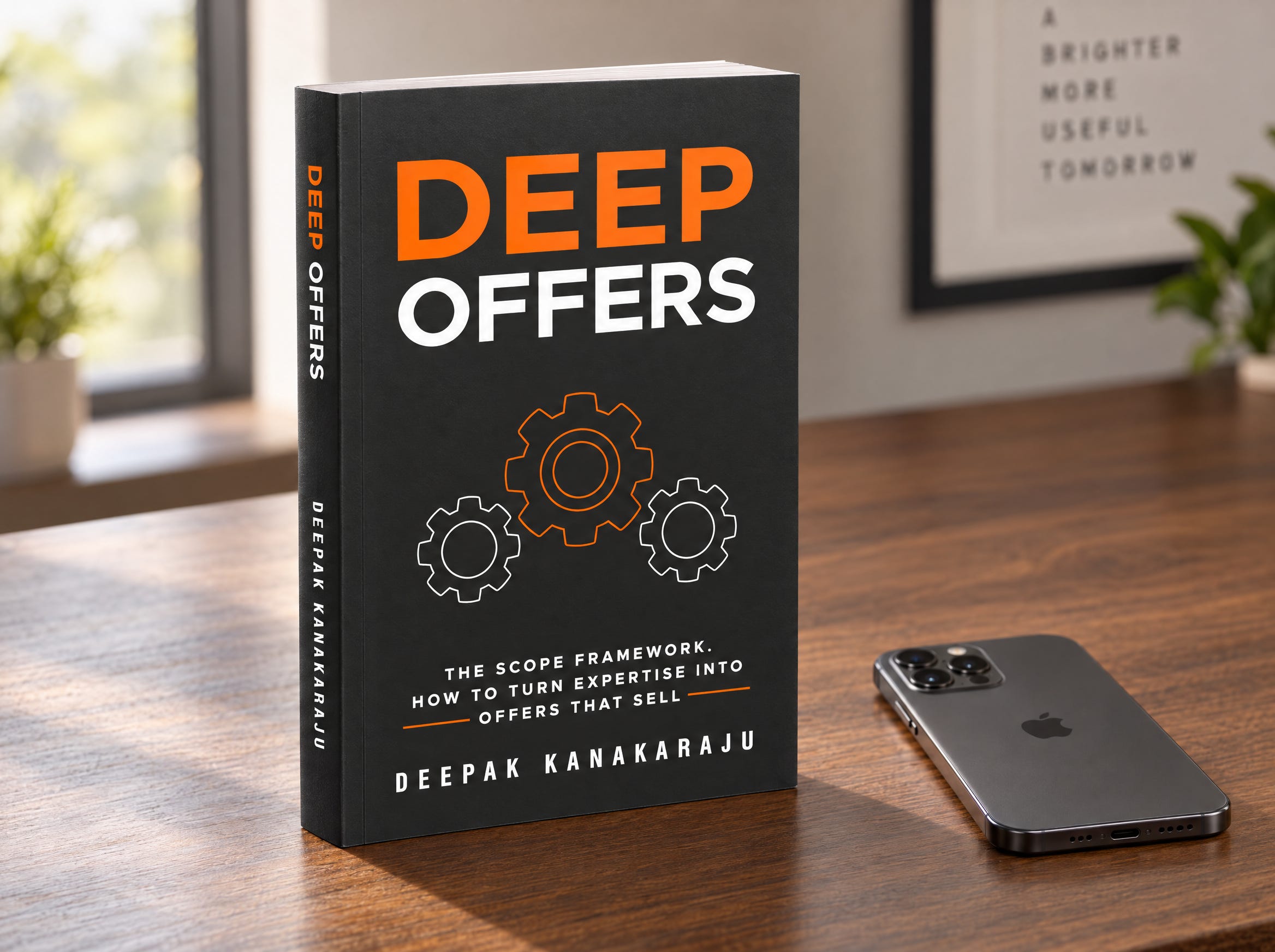
That is why my next book is Deep Offers, and it is coming soon. Deep Selling is still part of the plan. This book gives it the foundation it needs.
Think about what happens when someone who has followed your work finally asks, “What exactly do I get?” A coach might describe the number of sessions. A freelancer might list the deliverables and revisions. A course creator might talk about lessons, access and support.
Those details matter. The client needs to understand what they are paying for. But a list can leave the most important part unexplained: how this work relates to the problem that brought them to you.
It also gives them a convenient way to compare you. Twelve sessions can be divided into a price per session. A monthly retainer can be divided by the number of posts. Once that becomes the basis of comparison, your judgement and experience can be difficult to see.
I know this because I spent years presenting my own work that way. Before marketing became my profession, I ran a motorcycle blog. I had readers and attention, and I monetised that attention through advertising. Other businesses knew what they wanted to sell to the audience I had gathered.
Later, when I started an agency, I knew how to do the work. I had given much less thought to how the client should understand and buy it.
We managed social media for HDFC Bank on a monthly retainer. The client could divide the fee by the number of posts and arrive at a price per post. Eventually, another agency offered a lower price, and the account moved. There was a lesson in that comparison. We wanted our expertise to matter, but the offer made the posts easy to count and the expertise harder to distinguish.
Then I moved into coaching and sold sessions. Clients could work out the price per session just as an agency client could work out the price per post. I had changed the kind of work I did while carrying the same way of selling it into the next business.
Deep Offers grew out of examining those decisions. I wanted to understand how an expert can be good at the work and still struggle to put a clear, valuable offer in front of a buyer.
The offer reaches into more of the business than we usually realise. It determines who the work is for, what progress you are helping them make, what you will do, what they must do and where your responsibility ends. It also determines the price and what someone can examine before deciding whether to trust the promise.
When those choices are vague, the uncertainty travels into the sales conversation. You find yourself adding explanations, making exceptions or including another deliverable to help the buyer feel comfortable. Sometimes the conversation reveals something important that belongs in the offer itself.
One of the more useful shifts for me came through Alpha Club. The early version depended heavily on my time. That placed a limit on what it could become, because my calendar had a limit too.
When I asked members what they valued, the community kept coming up. They could find plenty of content elsewhere. Being around other experts, discussing real decisions and learning from one another was a different kind of value. I had treated that as an addition to the offer. Members helped me see how central it was.
That experience raised a question I wanted to explore in the book: are you giving enough attention to the part of your work that the client values most?
You may be working hard on something easy to describe while overlooking something more useful. It could be your judgement, the order in which you address problems, or the way you help someone avoid an expensive mistake. The answer needs to come from understanding the client.
Throughout Deep Offers, I return to the rebuilding of Alpha Club. You will follow the decisions about what to keep, what to remove and what deserves to become the centre of the offer. You will also see how those choices affect one another, including where the earlier versions fell short.
The framework running through the book is called SCOPE. It brings together five decisions that every offer already contains, whether you made them deliberately or allowed them to accumulate.
Start asks where the client is standing today and what they want to change. This goes beyond naming a profession or choosing a broad audience. Two people with the same job title can need very different help.
Cost examines what the problem is costing them and what solving it is worth. It also leads into pricing, including a decision that may feel backwards: considering price before deciding everything you will include.
Obstacles looks at what prevents someone from moving forward. A person can want the result and still worry about the effort, the disruption, their ability to follow through or whether the approach suits their situation.
Path concerns the work between their starting point and the progress they want. It asks what belongs in the offer, what should come out, how much you do and how much remains their responsibility.
Evidence asks what the buyer can see, check or experience before paying. Expertise becomes easier to judge when people have something more concrete than your assurance that you are good.
Each decision changes the others. A different starting point may require a different path. A different obstacle may require a different first step. A stronger understanding of value may change the scope you choose to offer.
Early in the book, I bring the whole framework together in one chapter. Then we take the decisions apart and examine them more closely. My hope is that you will read with your own offer beside you, noticing which choices need another look.
Let me give you a taste of one idea I explore in detail. Most of us begin by assembling the work. We decide how many calls to include, how much support to provide and what additional material we can add. Then we try to find a price that makes the whole thing attractive.
By then, we may be attached to an offer that was expensive to build and difficult to deliver. Considering price and value earlier changes the design process. It asks whether the problem matters enough to the intended buyer, what they are willing to invest in solving it and whether you can deliver useful work within those economics.
There is more to this than deciding to charge a higher fee. You may discover that the audience is wrong, the scope is too broad or the client needs a smaller first step before a larger commitment makes sense. Those are valuable discoveries to make before you build everything.
Another idea I spend time on is removal. When an offer struggles, adding something feels productive. An extra call, another module or more access can make the package look more substantial.
But each addition asks something of the buyer too. They must understand it, make time for it and decide whether they need it. More material can create more work for someone who already feels stretched.
Imagine a busy consultant considering a programme that requires hours of lessons every week. If time is the obstacle, adding more lessons will not address the hesitation. The design needs to account for the person’s reality.
This is why I want readers to look closely at what each part of their offer contributes. Some elements deserve more attention. Others may be making the decision and the delivery harder.
The book also examines the boundary between persuasion and manipulation. An offer carries a promise. You have a responsibility to consider whether you can deliver it, what conditions matter and what the client should understand before agreeing. Evidence, clear responsibilities and honest limits belong in the design. They help a buyer make a more informed decision and give you a better basis for the work that follows.
Deep Offers is written for people who earn a living from expertise: freelancers, consultants, coaches, trainers, agency owners, course creators and other specialists.
You do need to be good at your craft. The book is about helping valuable work become easier to understand, choose and deliver.
You can read it on its own. If you have read Deep Marketing, you will also see how the books connect. The first explores building an audience and earning trust. Deep Offers examines what you ask people to buy. Deep Selling will continue into the conversation with the person deciding.
While you wait for the book, there is something useful you can do. Write down the offer you currently sell. Then look at it from the point of view of someone considering it for the first time.
Can they recognise their situation? Can they understand the progress the work is meant to support? Do they know what will be expected of them? Can they see why each part belongs? What can they examine before they commit?
You do not have to rewrite everything immediately. Notice where your own explanation becomes uncertain. Those are the places I hope this book will help you think through.
The dedication reads:
“For those who are good at their work, and are learning to ask for what it is worth.”
That is the reader I have had in mind.
Deep Offers is coming soon. I will share the launch details here when it is ready.
For now, I would love to hear about your own experience: when someone hesitates to buy from you, what do they usually say? Leave a comment. Their words may tell you something important about the offer you have built.