

In January, I had a motorcycle accident. A rider friend referred me to Dr. Chirag Thonse.

I’ve been in marketing long enough to appreciate how much happened in that little sentence. A doctor can spend years building a practice. A patient can spend hours trying to figure out whom to see. And somewhere in between, a friend who rides motorcycles with you can make one introduction that carries more weight than a page full of information.
What made Dr. Chirag’s name stand out to me? At that point, the person I knew was my friend. I trusted his judgement. I also trusted that he understood the difference between casually mentioning a doctor over breakfast and giving me a name when I was hurt.
Imagine I’d come across the very same name a week earlier in a sponsored post. I might have scrolled right past it. Same doctor. Same qualifications. A completely different response from me.
That difference is trust. And I think it tells us something about where marketing is headed.
The question AI leaves open
I use AI quite happily. If I want to understand a term, compare options or work out what questions to ask at an appointment, it gives me a useful place to start. As someone who earns a living teaching people, I find it extraordinary how much a curious person can now learn in an afternoon.
But think about the last time you asked a friend, “Do you know someone good?”
You probably knew how to search for an architect, a lawyer or an accountant. You could have found fifty names yourself. What you wanted from your friend was the benefit of a decision they had already had to make. Who did they hire? How did that person behave once the advance was paid? Would they hire them again?
That last question is worth a lot. An architect’s portfolio can show you a beautiful finished kitchen. A friend who lived through the renovation can tell you who picked up the phone when the cabinets arrived in the wrong size. Both pieces of information help. Only one tells you what it might feel like to be the client on a bad Tuesday.
AI makes it easy for every architect in town to publish a thoughtful article about handling delays. That’s useful, especially for a good architect who has never enjoyed writing. It also means a buyer can read five excellent articles and still have the same question. Who actually picks up the phone?
The more polished answers we have to choose from, the more valuable that friend’s answer becomes.
Why a riding community belongs in this story
A riding community is a funny place to find a doctor. You get to know other riders because you like riding. The conversation might start with tyres or where to stop for breakfast. After a while, you know who’ll wait for the last bike to catch up. You learn something about a person that has very little to do with motorcycles. And you carry that knowledge into the day you need help with something else.
This is the part I think businesses miss when they decide to “build a community.” They create a WhatsApp group, add their customers and start posting announcements. They’ve made it easier for the business to reach everyone. The interesting question is whether they’ve made it easier for the members to reach one another.
I’ve taught more than 15,000 students across 35 batches. Think about a student trying to win her first client. I can teach her how to put together a proposal. A fellow student who sent one last Friday can show her the exact sentence the client objected to. A third student might know a business owner looking for precisely her skill. Each person knows something the teacher doesn’t. Why make every conversation go through me?
There’s a responsibility here, too. When I refer you to someone, you may come back and tell me how it went. If the work was poor, I’ll think twice before passing that name along again. A community has a memory. That’s part of what makes its recommendations worth asking for in the first place.
What this changes about marketing
In Deep Marketing, I use a framework called CATT. It stands for Content, Attention, Trust and Transaction. Most of us who work in digital marketing can tell you exactly how many people saw a post and how many bought something. The step in between is harder to see. Somewhere, two friends are having a conversation. Your name either comes up or it doesn’t.
So how do you earn a place in that conversation?
Suppose you’re an accountant who works with freelancers. You could publish a post saying you understand the problems freelancers face. Or you could take a question you’ve answered six times this month and write the email you wish all six people had received a month ago. Show them how to organise their records before tax season. Give them a simple example they can use that afternoon. Let them reply when they get stuck.
Now picture one of those freelancers at dinner. A friend mentions that his records are a mess and he’s dreading the weekend he’ll lose sorting them out. She pulls out her phone. “I had this exact problem. Let me forward you something.”
That forward is easy to overlook. No sale has happened. Yet someone has just put your work in front of a person who needs it, at the moment they need it, along with an endorsement you couldn’t have written for yourself. She can send it with confidence because she’s already tried it. You gave her an experience worth passing on.
That’s the work at the heart of Deep Marketing. Help people often enough that they learn where they can rely on you. Give them opportunities to meet others working through the same problem. In time, some of the most valuable things that happen around your work will happen between two people while you’re somewhere else entirely.
It’s been months since my accident. I’d struggle to tell you which ads I saw in January. Yet here I am, writing to you about Dr. Chirag Thonse, because a rider friend gave me his name when I needed it. I wonder how many businesses have a way of counting something like that.
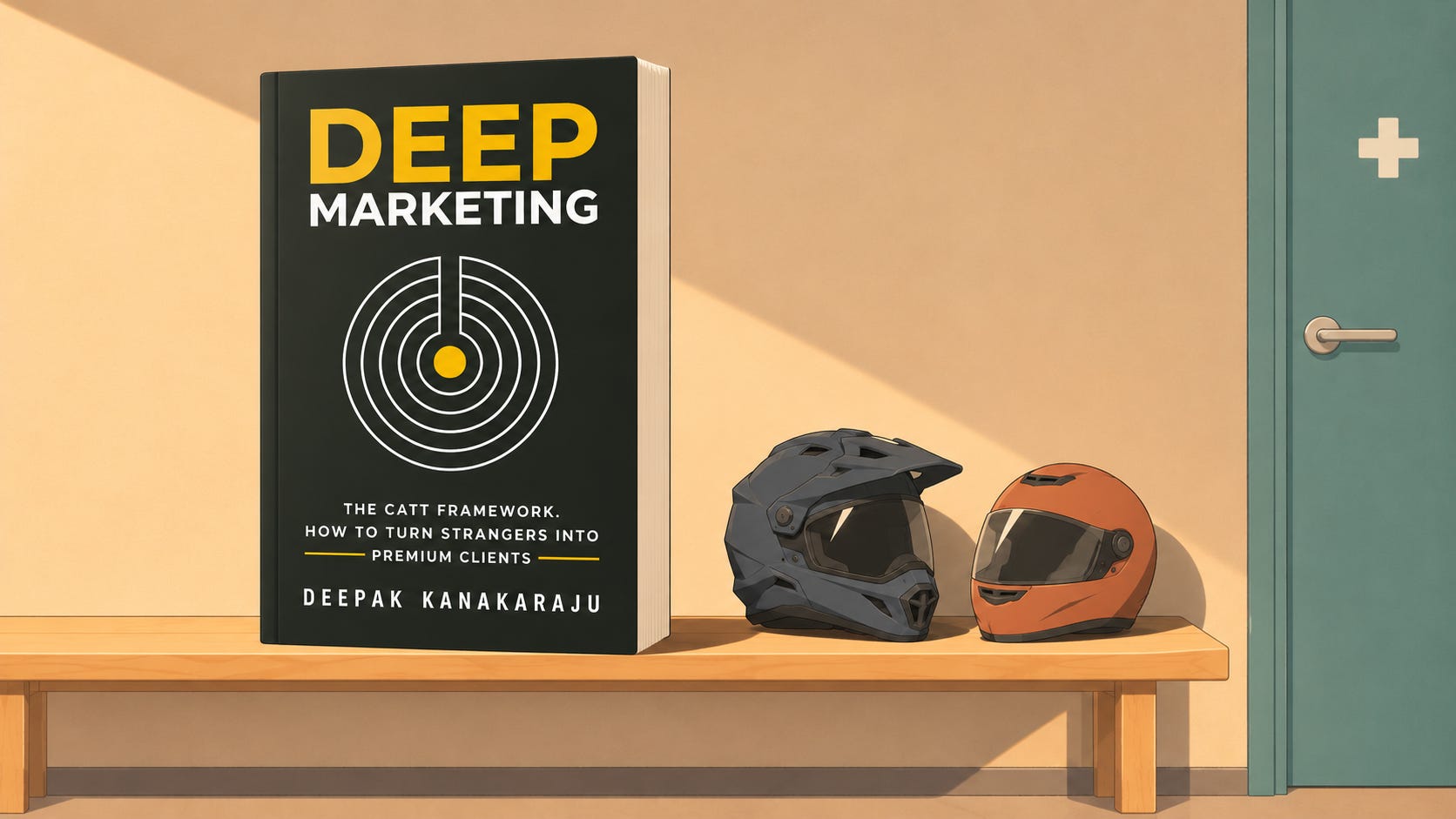
I explore this idea in my book, Deep Marketing. But you can take one question from it and put it to work in your business today.
What would someone have to experience with you before they’d feel comfortable giving your name to a friend who needed help?
Deepak